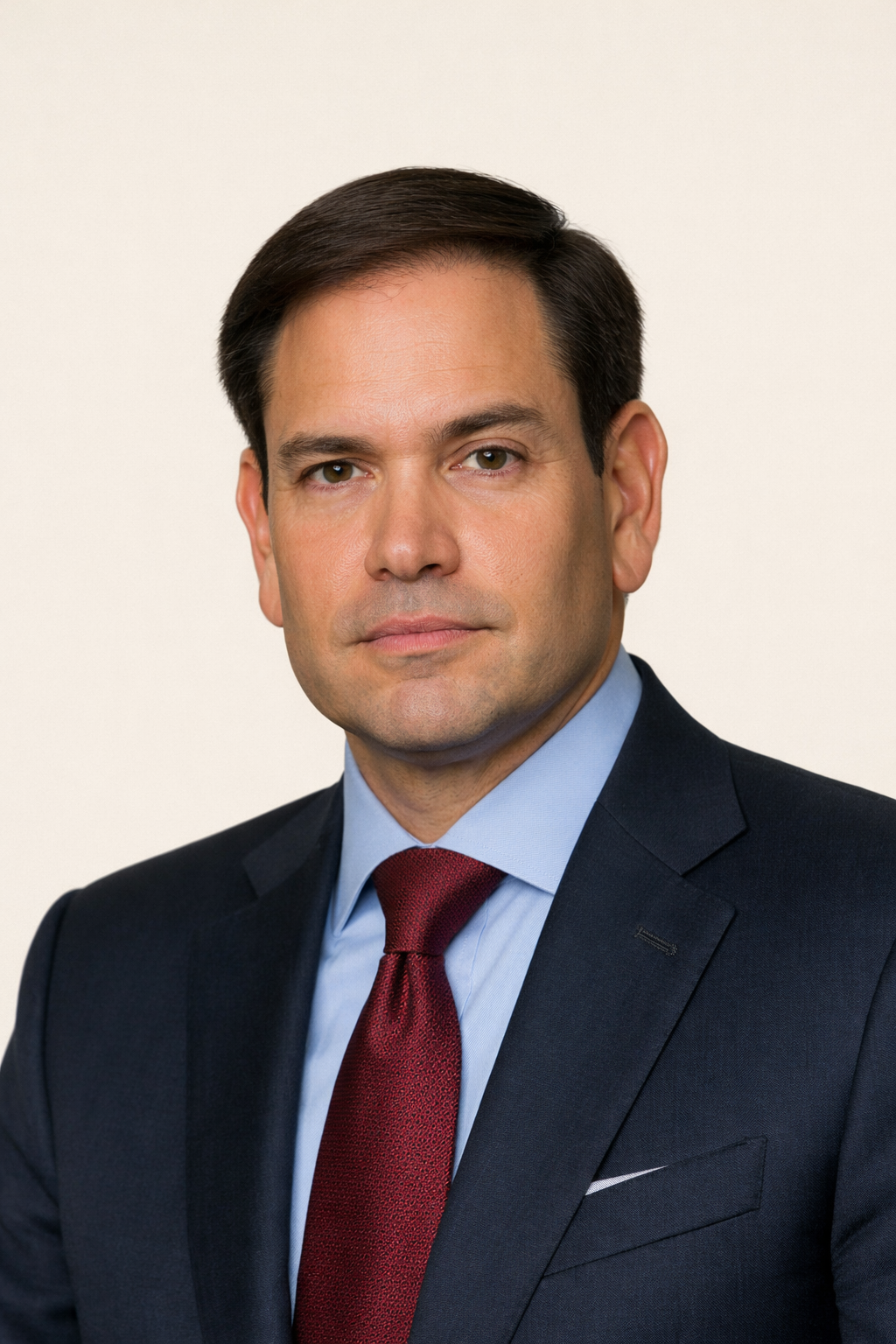
Marco Rubio
Leads 200-plus business leaders to Uzbekistan and India from October 17 to close a trade deal and court a $300 billion Texas refinery, as his ICC sanctions draw UK-Dutch defiance and a federal ruling shielding rights groups.
Marco Rubio leads 200-plus business leaders to Uzbekistan and India starting Saturday, opening at the C5+1 ministerial in Samarkand before meeting External Affairs Minister S. Jaishankar in Mumbai and Reliance chairman Mukesh Ambani in Jamnagar, where talks center on a planned $300 billion Reliance-funded refinery in Brownsville, Texas. Officials say the trade agreement is nearing conclusion after stalls over India's Russian oil imports and threatened tariffs of up to 100 percent.
His sanctions campaign against the International Criminal Court met resistance on two fronts this week. The UK and Netherlands pledged not to comply with State Department sanctions on the court, with the Netherlands activating the EU blocking statute, and a federal judge barred the administration from penalizing two human rights groups for communicating with the court on free-speech grounds.
On Iran, he is rebutting Revolutionary Guard adviser Mohammad Reza Naqdi's declaration that Tehran controls the Strait of Hormuz, saying oil flow has nearly returned to pre-war levels. He credits Operation Epic Fury with dismantling Iran's air, naval and missile capacities, vows Iran will "never have a nuclear weapon" while Trump is in office, and reaffirmed the U.S. security pact with Saudi Arabia.
His NATO tour pressed Portugal, Iceland and Greece toward 5 percent of GDP in defense spending, pressure he calls "not a hostile thing." In Athens he announced $4 billion in military sales with Foreign Minister George Gerapetritis, defended Ambassador Kimberly Guilfoyle against misconduct allegations, and declared, "We choose the unapologetic pursuit of national power," drawing Alexis Tsipras's "Pontius Pilate" jab over his handling of Turkey's cable objections.
Early 2028 polls rank him second to JD Vance among Republicans, a race he says he has "no plans at this time" to run, and critics accuse him of spreading Russian disinformation as the administration shifts toward Moscow on Ukraine.
On their plate
Rubio leads a commercial delegation of more than 200 business leaders to Uzbekistan and India from October 17 to 22, opening at the C5+1 ministerial in Samarkand with officials from Kazakhstan, Kyrgyzstan, Tajikistan, Turkmenistan and Uzbekistan before stops in Mumbai and Jamnagar. U.S. and Indian officials say the bilateral trade agreement is nearing conclusion, with product-specific and tariff-level sticking points left, after earlier talks stalled over New Delhi's Russian oil imports, more than 51 percent of its supply by July, and threatened tariffs of up to 100 percent on Russian-energy importers. In Mumbai he meets External Affairs Minister S. Jaishankar; in Jamnagar, Reliance chairman Mukesh Ambani, with talks centered on a planned $300 billion Reliance-funded refinery in Brownsville, Texas.
His drive to sanction the International Criminal Court is drawing defiance abroad and a legal check at home. The UK and Netherlands issued a joint statement pledging not to comply with State Department sanctions on the court, with the Netherlands activating the EU blocking statute against the U.S. measures, and a federal judge ruled the prohibitions unconstitutionally restrict free speech in barring the administration from penalizing two human rights groups for communicating with the court.
Amid tanker attacks near Qatar and a third U.S. carrier deployment, Rubio is rebutting Revolutionary Guard adviser Mohammad Reza Naqdi's declaration that Iran fully controls the Strait of Hormuz, saying oil flow has nearly returned to pre-war levels. In Athens he said Iran had "lost complete control" of the waterway and its economy is in total freefall, crediting Operation Epic Fury with dismantling Iran's air, naval and missile capacities and vowing Iran will "never have a nuclear weapon" while Trump is in office. He reaffirmed the U.S. security pact with Saudi Arabia, backing Riyadh's right to self-defense against Houthi attacks and describing the offensive to retake Sanaa as a counterattack with U.S. support limited to intelligence and advisory assistance.
His four-day tour pressed Portugal, Iceland and Greece toward 5 percent of GDP in defense spending, pressure he calls "not a hostile thing," and he warned the Ukraine war could escalate into a broader regional conflict through sabotage in neighboring NATO countries. In Reykjavik he met Iceland's leaders to repair relations strained by Trump's AI-generated map of U.S. territorial claims and toured Naval Air Station Keflavik to coordinate surveillance of Russian submarines and undersea infrastructure. In Athens he co-chaired the U.S.-Greece Strategic Dialogue with Foreign Minister George Gerapetritis, announced $4 billion in military sales including F-16 upgrades and Stryker vehicles, and defended Ambassador Kimberly Guilfoyle, the target of protests over misconduct allegations, as an advocate for the administration's agenda; Alexis Tsipras mocked his private handling of Turkey's cable objections as a "Pontius Pilate" stance.
Early polling ranks him second to JD Vance in the potential Republican primary field, prospects he plays down with "no plans at this time" to run. Critics accuse him of spreading Russian disinformation as the administration shifts U.S. policy toward diplomatic support for Russia in the Ukraine war, part of tactics that blame Ukraine for the conflict's trajectory. Phil Gramm and Donald Boudreaux publicly rebutted his op-ed "The Birth and Rebirth of Western Civilization," arguing he omitted international trade's role in Athenian power.
Key relationships
Rubio is set to meet the Indian external affairs minister in Mumbai as the two sides push a trade agreement, which had stalled over Russian oil imports and tariff threats, toward conclusion.
Rubio publicly defended the U.S. ambassador to Greece against misconduct allegations, including that she suggested the U.S. could undermine the Greek government, calling her an advocate for the administration's agenda.
Rubio meets the Reliance Industries chairman at the world's largest single-site refinery in Jamnagar, with talks centered on a planned $300 billion Reliance-funded refinery in Brownsville, Texas.
Rubio is publicly rebutting the Revolutionary Guard adviser's declaration that Iran fully controls the Strait of Hormuz, countering that oil flow has nearly returned to pre-war levels.
