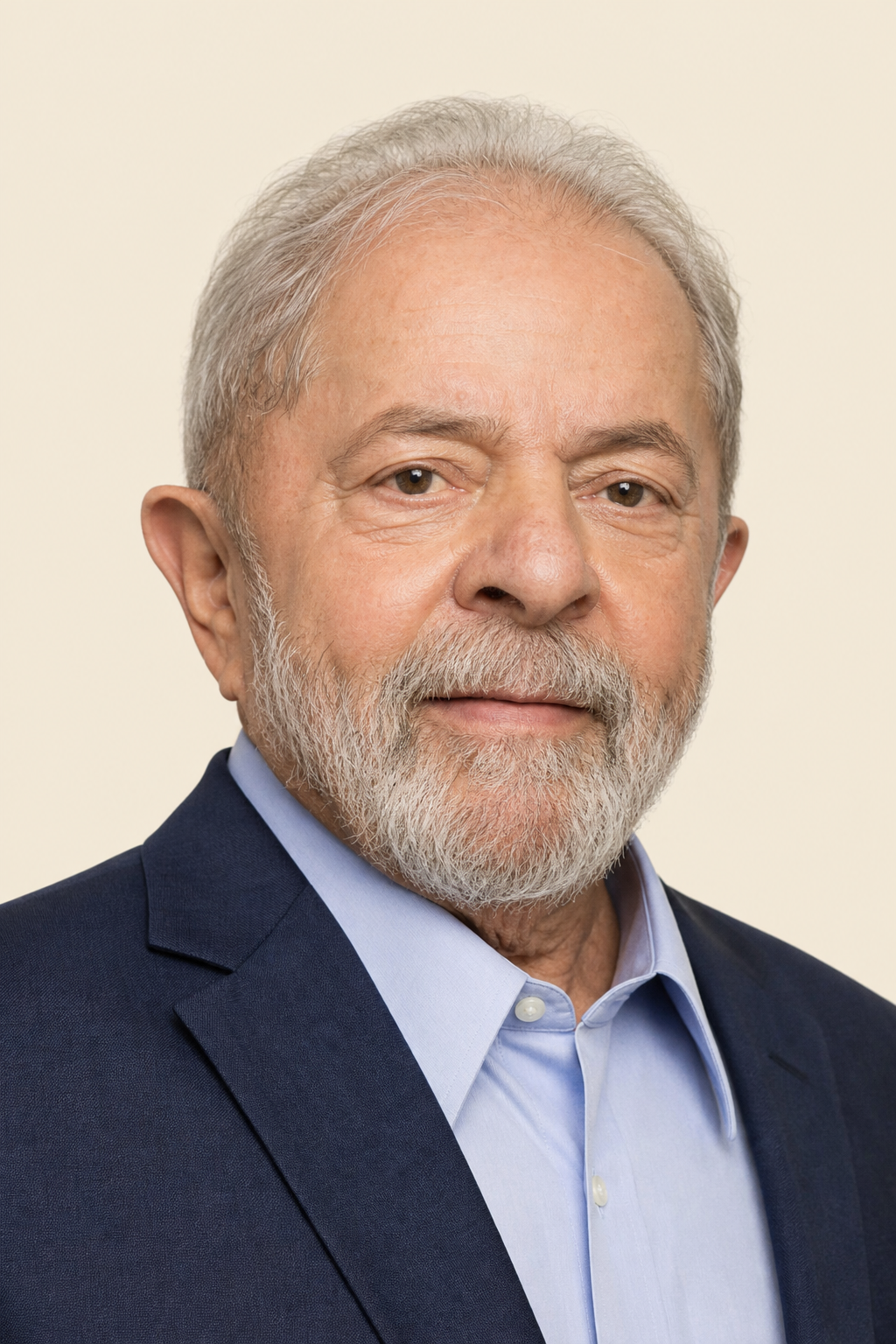
Luiz Inácio Lula da Silva
Won a surprise Nov. 5 runoff over Flávio Bolsonaro behind record-low absenteeism and under-35 voters; the rout and bank growth downgrades that followed set the fiscal test for his new term.
Lula has won reelection, and the bill is coming due. He beat Flávio Bolsonaro in a Nov. 5 runoff few expected, carried by record-low absenteeism and voters under 35, and credits "the generosity of Brazilian youth, who took to the streets to defend democracy." The win is read as a possible slowdown of the region's right-wing, Trump-aligned movement heading into 2027.
Investors answered with a rout after his surprise win: the Bovespa fell about 18% and the real 8.5% against the dollar, with economists expecting rate cuts to pause at a 13.75% Selic. Brazil's biggest banks cut 2027 growth forecasts to between 0.3% and 0.6%, against the 2.46% his administration still projects. Net public debt is at a record 70% of GDP, and interest payments at 8.99% of GDP are now the main driver of debt growth.
He is choosing his next finance minister, balancing leftist ethos against the need to reassure investors, with Vice President Geraldo Alckmin and incumbent Dario Durigan among the contenders. Durigan proposes legislating for the midpoint of the primary-balance goal through salary, pension and earmark reviews, which collides with the roughly $57 billion package Lula promised: a 15% Bolsa Família raise for 20 million families and fuel tax cuts. He calls this his last campaign and wants the term historic.
He also presided over Brazil's first list of 27 critical and strategic minerals, meant to move the country from raw-material exports to domestic processing and position it as a Western alternative to China, and his REDATA tax cut has drawn cloud commitments from Microsoft, AWS and Google.
The rivalry survives the vote. Bolsonaro fled to the United States despite a Supreme Court travel ban, with Trump letting him stay "as long as he wants," and Lula said the family's "first homeland is licking the boots of the US."
On their plate
His surprise win triggered a market rout: the Bovespa fell about 18% and the real 8.5% against the dollar, with 2027 inflation forecasts rising to 4.76% and economists expecting the central bank to pause rate cuts at a 13.75% Selic. Brazil's biggest banks, among them Bradesco, XP, Itaú and BTG Pactual, cut their 2027 growth forecasts to between 0.3% and 0.6%, far below the 2.46% his administration still projects, deepening the squeeze that threatens his welfare programs and primary-surplus target. Net public debt hit a record 70% of GDP, with interest payments, at 8.99% of GDP, now the main driver of debt growth.
He is evaluating candidates to be his next finance minister, balancing his leftist ethos against the need to reassure investors after the post-election selloff. Contenders include Vice President Geraldo Alckmin, Piauí Governor Rafael Fonteles, incumbent Dario Durigan and Planning Minister Moretti.
He promised a roughly 300-billion-real ($57 billion) package for 2026-27: a 15% Bolsa Família increase for 20 million families, fuel tax cuts and free weekend public transit, declaring this his last campaign and saying he wants the term historic. It sits directly against Durigan's push to legislate for the midpoint of the primary-balance goal, to be met by reviewing public-sector salaries, special pension regimes and congressional budget earmarks, with central-bank FX intervention if needed.
He presided over approval of Brazil's first list of 27 critical and strategic minerals, including copper and rare earths, at the inaugural meeting of the National Council for Industrialization of Critical and Strategic Minerals, aiming to shift Brazil from raw-material exports to domestic processing and position it as a Western alternative to China. His REDATA law, signed Sept. 15, cut federal import taxes on data-center equipment and drew commitments from Microsoft ($2.7 billion over three years), AWS ($1.8 billion through 2034) and Google (doubling cloud infrastructure by 2030).
His campaign accused Meta of algorithmic bias and translation errors favoring Bolsonaro and filed complaints with the United Nations and the Organization of American States alleging the platform reduced his profile reach and applied AI restrictions favoring his rival. The Superior Electoral Court ordered equal treatment for both candidates and threatened Meta with daily 500,000-real fines, and U.S. Senator Bernie Sanders joined Democratic lawmakers in demanding an independent Meta audit.
Key relationships
Beat him in the Nov. 5 runoff after trailing in the first round, then condemned his flight to the United States despite a Supreme Court travel ban, saying the Bolsonaros' first homeland is "licking the boots of the US." He ran the runoff on cutting deforestation and illegal mining in Yanomami territory, and attacked Bolsonaro's economic model in a debate, asking whether Argentina under Milei was really the model to follow.
His vice president and a contender for the finance ministry as Lula weighs candidates who can reassure investors after the post-election selloff while holding his leftist base.
