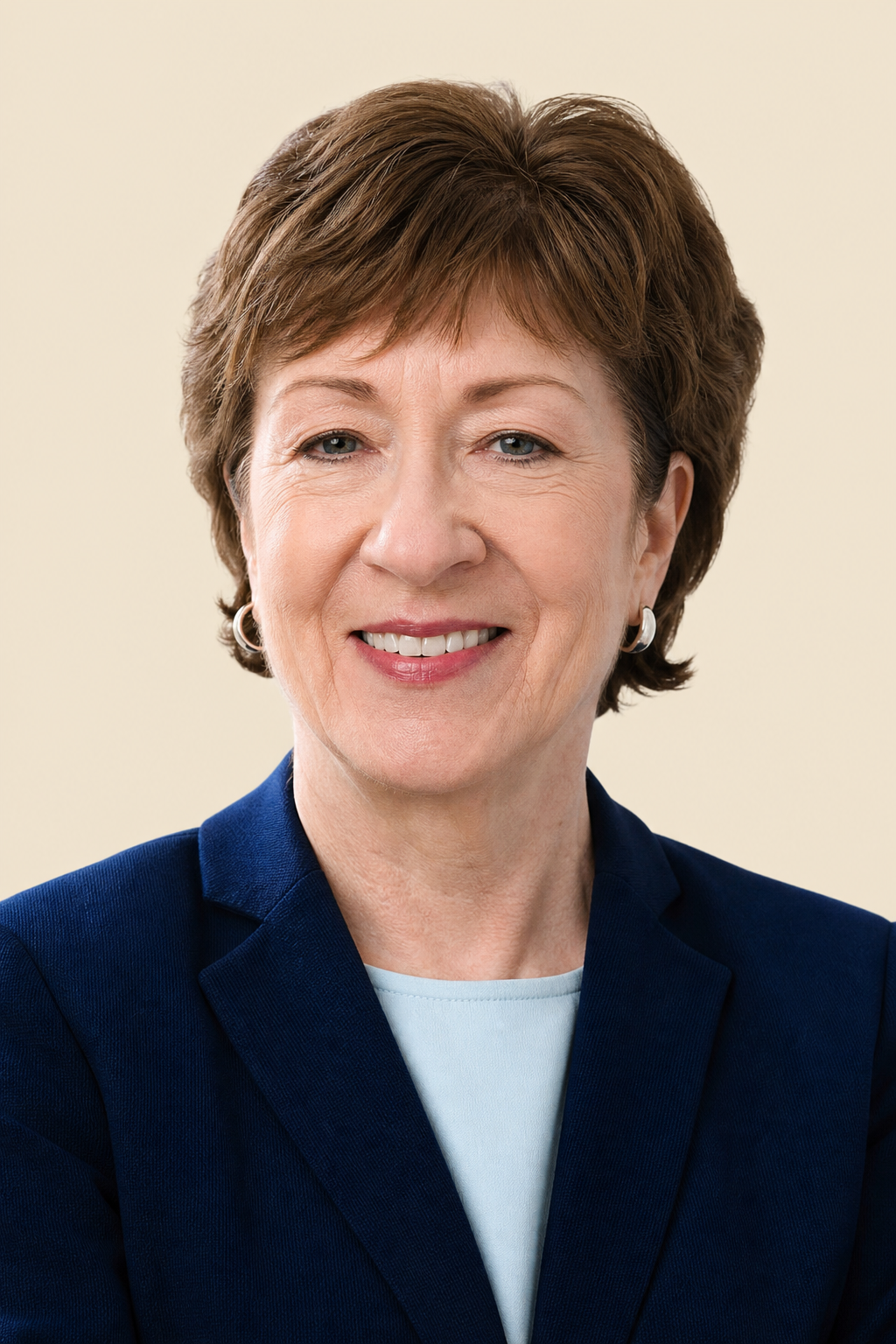
Susan Collins
As Senate Appropriations chair, Collins steered a bipartisan stopgap funding bill through the Senate, is pressing the Trump administration to end the Canada trade war, and accepted four televised debates against challenger Troy Jackson while running for a sixth term.
Susan Collins is running for a sixth Senate term from Maine against Democrat Troy Jackson, a former Aroostook logger and union organizer running on abolish-ICE and socialized-medicine platforms. A mid-July poll had Jackson ahead 49-46. Collins accepted invitations to four televised debates in late August, proposing a first debate in early September, but Jackson has not agreed to the televised format and is pressing for town halls instead.
As Senate Appropriations chair, Collins steered a bipartisan continuing resolution through the Senate on a 90-6 vote on Aug 9, extending funding through Dec 11 and stripping several Trump priorities including Border Patrol transfers, a Trump-class battleship, Iran war funding, and voter-ID riders. The bill also blocked an OMB rule that would have let political appointees review federal grants. The remaining sticking point before recess was a White House-requested delay of the intoxicating hemp ban, which Sen. Ted Budd moved to strip. Collins worked the bill alongside Ranking Democrat Patty Murray.
Collins is pressing the Trump administration to return to negotiations with Canada to end the trade war. After Canada dropped seafood from its retaliatory tariff list, protecting roughly $300 million in Maine seafood exports, she consulted the U.S. Trade Representative and argued that Canada is not China and the border economies are inextricably linked. She slammed Trump's Lake Ontario renaming as a poke in the eye at Canada and warned that 50% tariffs on Canadian goods would raise food and housing costs for rural communities.
On the campaign trail, Collins rolled out a union endorsement from a 38-year Bath Iron Works shipyard worker who argues her Appropriations gavel secures destroyer funding and Navy shipbuilding contracts. Jackson is attacking her for helping Trump slash Medicaid by $990 billion, though Collins voted against the final bill citing harm to low-income families and rural health providers. She opposed Senate Budget Chair Ron Johnson's push for a pre-recess budget resolution, citing fears of a damaging vote-a-rama.
Separately, Collins secured early ICE body-camera deployment for all Maine officers ahead of the national deadline after urging Acting ICE Director David Venturella to prioritize Maine following the fatal Biddeford shooting.
On their plate
Collins is urging the Trump administration to return to negotiations with Canada after Canada dropped seafood from its retaliatory tariff list, protecting roughly $300 million in Maine seafood exports. She consulted the U.S. Trade Representative, slammed Trump's Lake Ontario renaming as a poke in the eye at Canada, and warned that 50% tariffs on Canadian goods would raise food and housing costs for rural communities. She argues Canada is not China and the border economies are inextricably linked.
Collins managed the Senate's bipartisan continuing resolution, passed 90-6 on Aug 9, extending funding through Dec 11 and stripping Trump priorities including Border Patrol transfers, a Trump-class battleship, Iran war funding, and voter-ID riders. The bill also blocked an OMB rule letting political appointees review federal grants. The outstanding unresolved issue is a White House-requested delay of the intoxicating hemp ban, which Sen. Ted Budd is fighting to strip.
Collins accepted invitations to four televised Maine Senate debates and proposed a first debate in early September. Challenger Troy Jackson has not agreed to the televised format, preferring town halls, with his camp noting Collins has not held a public town hall in 25 years.
Following the fatal Biddeford shooting, Collins urged Acting ICE Director David Venturella to prioritize Maine for body-camera deployment. ICE equipped all Maine officers and completed training by Aug 14, more than two weeks ahead of the national deadline. Collins says she will continue pushing for periodic follow-up meetings on training and recruit vetting.
Collins is seeking a sixth term against Democrat Troy Jackson, a former Aroostook logger and union organizer running on abolish-ICE and socialized-medicine platforms. A mid-July poll had Jackson ahead 49-46. Collins is building a blue-collar case, rolling out a union endorsement from a 38-year Bath Iron Works shipyard worker who argues her Appropriations chairmanship secures destroyer funding and Navy shipbuilding contracts. Jackson is attacking her for helping Trump slash Medicaid by $990 billion, though Collins voted against the final bill citing harm to low-income families and rural health providers.
Key relationships
Collins's general-election challenger, who is attacking her Medicaid record and refusing her preferred televised debate format while she presses her Appropriations clout and union endorsements as the contrast.
Collins worked alongside Ranking Democrat Murray on Appropriations to assemble the bipartisan CR, with Murray securing the provision blocking the OMB grant-review rule.
Collins pressed Acting ICE Director Venturella to prioritize Maine for body-camera deployment after the fatal Biddeford shooting, securing early equipment and training for all Maine officers.
Collins sparred with Budd over the White House-requested hemp-ban delay in the continuing resolution; Budd introduced an amendment to strip the delay she identified as the outstanding issue blocking final passage.
Collins opposed Johnson's push to pass a budget resolution before August recess to start a third reconciliation bill, citing fears of a politically damaging vote-a-rama.
Keep reading in the app
Where they stand, in full, free in the app.
 Coming soonGoogle Play