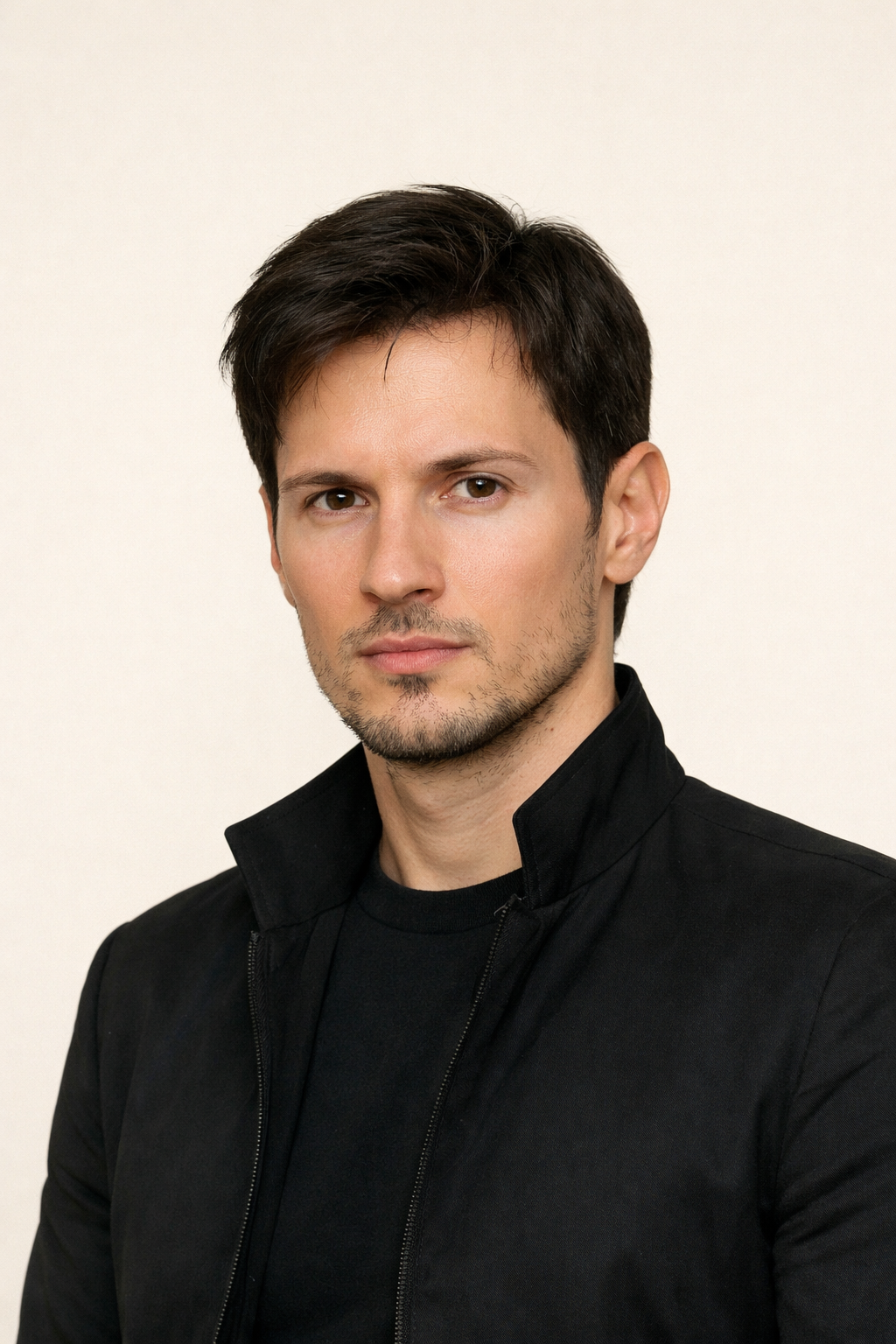
Pavel Durov
Russia's FSB charged Pavel Durov with aiding terrorism on July 29, 2026, placing him on an international wanted list and freezing his Russian assets; he faces up to life in prison. Durov calls the charges fabricated, part of a Kremlin push to force Russians onto a state-run messaging app.
Pavel Durov faces the most serious legal threat of his career. On July 29, 2026, Russia's FSB charged the Telegram founder with aiding terrorism, placed him on an international wanted list, and had Rosfinmonitoring add him to a blacklist that freezes his Russian assets. He faces up to 15 years or life in prison if convicted. Durov responded by accusing the Russian government of fabricating new pretexts to restrict Telegram and suppress privacy and free speech. Telegram's official X account posted an image of Durov raising his middle finger in response to the charges.
The terrorism case caps a five-month Kremlin campaign against Telegram. Russia began throttling the app in February 2026, fined it 35 million rubles for failing to remove banned content within 24 hours, declared it non-compliant, and fully blocked WhatsApp while requiring the state-run MAX messaging app be pre-installed on all new devices sold in Russia. Putin personally weighed in, saying communications platforms not under Russian control endanger personnel and that all such platforms are guilty. The FSB's April claim of foiling a car-bombing plot against Roskomnadzor leadership, allegedly recruited via Telegram by Ukrainian intelligence, fed the narrative tying the platform to terrorism. Durov called Russia's restrictions a sad spectacle of a state afraid of its own people and accused authorities of trying to force citizens onto a state-controlled app built for surveillance and political censorship. Kremlin spokesperson Dmitry Peskov defended the throttling as necessary for legal compliance and promoted MAX as a national alternative.
Durov is also coming off a legal defeat in India. A week-long nationwide Telegram ban imposed in June 2026 to prevent NEET-UG medical-entrance exam leaks cut off roughly 150 million users. Durov condemned the ban as punishing ordinary users rather than the insiders responsible for the leak, alleged Reliance and Meta lobbied for it, and challenged the block in the Delhi High Court. Justice Tejas Karia upheld the restrictions as proportionate, and India's Attorney General branded Telegram's architecture a Frankenstein and the platform a new dark web. Durov argued the ban was self-defeating because leaks simply moved to other apps. India lifted the ban on June 23 but kept Telegram's message-editing feature disabled through June 30.
On their plate
The FSB formally charged Durov with aiding terrorism on July 29, 2026, and Rosfinmonitoring added him to a terrorists/extremists blacklist, freezing his Russian assets. He faces up to 15 years or life imprisonment. Durov accused the Russian government of fabricating pretexts to restrict Telegram, and the platform's official X account responded with an image of Durov raising his middle finger.
Russia has throttled Telegram since February 2026, fined it 35 million rubles for failing to remove banned content, declared it non-compliant, fully blocked WhatsApp, and required the state-run MAX app be pre-installed on all new devices sold in Russia. Putin said communications platforms not under Russian control endanger personnel and that all such platforms are guilty. The FSB's April claim of foiling a car-bombing plot recruited via Telegram fed the narrative underpinning the criminal case.
India imposed a week-long Telegram ban in June 2026 to prevent NEET-UG exam leaks, cutting off roughly 150 million users. Durov condemned the ban as disproportionate, alleged Reliance and Meta lobbied for it, and challenged it in the Delhi High Court. Justice Tejas Karia upheld the restrictions as proportionate; India's Attorney General called Telegram's architecture a Frankenstein and the platform a new dark web.
Key relationships
Putin directly underpinned the crackdown on Telegram, saying communications platforms not under Russian control endanger personnel and that all such platforms are guilty.
Peskov defended Russia's throttling of Telegram as necessary for legal compliance and promoted the state-backed MAX app as a national alternative, while Roskomnadzor accused Telegram of enabling fraud and terrorism.
