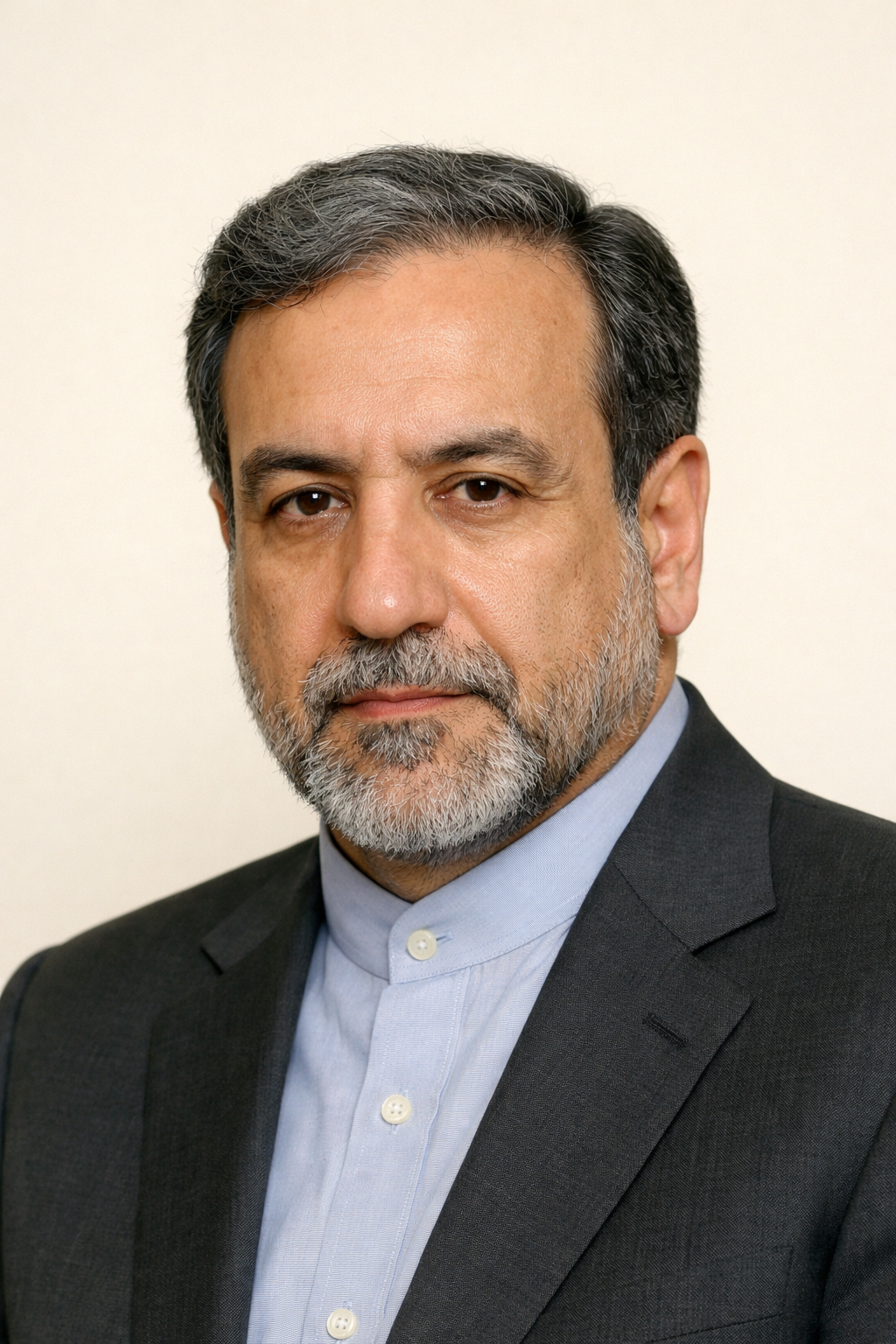
Abbas Araghchi
He offers to reopen the Strait of Hormuz within seven days for a lifted US blockade, released frozen funds, and waived oil sanctions, and warns Iran is "more prepared than before" if Washington returns to war.
Abbas Araghchi is offering to reopen the Strait of Hormuz within seven days, the centerpiece of his diplomacy in the seven-month war with the United States. Trump has rejected the roadmap as "not good enough. Nearly." Araghchi says discussions on the plan continue through Qatari mediators in Doha, with both sides agreeing on the steps and disputing only the sequence.
The plan, carried through Qatari and Pakistani mediators, trades restored maritime passage and resumed nuclear talks for lifting the US naval blockade, releasing at least $12 billion in frozen assets, and waiving oil sanctions. He calls the terms nothing new, only what the US president already signed in the June Islamabad memorandum, and Iran keeps the strait closed pending them. His focus, he says, is solely the strait.
Alongside the offer he has raised the stakes: Iran is "fully prepared for the war to be resumed... even if it comes to a doomsday war," and "more prepared than before" if Washington returns to military solutions. He bargains with oil exports near zero, the rial at a record low, and inflation at 89.8 percent.
Secretary of State Marco Rubio has ended the indirect New York talks over a lack of Iranian concessions and ordered the delegation out. Araghchi calls the expulsion reports "fake," saying his diplomats left on a schedule Washington received on September 17.
He keeps pitching: restoring international inspectors' access to Iran's bombed nuclear facilities for sanctions relief, and political engagement with the Houthis and Iraqi armed groups as an alternative to military action, an idea on the agenda of the emergency defense meeting Pakistan, Saudi Arabia, and Türkiye convened in Riyadh. On the alleged IRGC-linked plot against RAF Fairford, the UK base that staged US strikes on Iran, he says accusers are "barking up the wrong tree."
On their plate
Araghchi carried the plan through Qatari and Pakistani mediators at the UN General Assembly: restored maritime passage and resumed nuclear talks in exchange for lifting the US naval blockade, releasing at least $12 billion in frozen assets, and waiving oil sanctions, with an end to conflicts in Lebanon also offered. Trump rejected it as "not good enough. Nearly." Araghchi says talks continue through Qatari mediators in Doha, with both sides agreeing on the steps and disputing only the sequence; he frames his conditions as nothing new, only what the US president already signed in the June Islamabad memorandum, keeps the strait closed pending them, and says his current focus is solely the strait.
Since Trump's rejection, Araghchi has paired diplomacy with escalation: Iran is "fully prepared for the war to be resumed... even if it comes to a doomsday war," and he warns any renewed confrontation will draw a stronger response than before. He insists "there is no military solution, nor any solution based on new sanctions," and says Iran is "more prepared than before" to defend itself if Washington returns to military solutions. The warnings come as Trump deploys a naval buildup ahead of an anticipated post-midterm decision on Iran, cast as the easy way or the hard way.
Secretary of State Marco Rubio ended the indirect New York negotiations over a lack of Iranian concessions and ordered the delegation Araghchi led out of the United States, with Trump warning of military strikes as it left. Araghchi calls US reports that delegation members were expelled "fake" and says all diplomats left on a schedule communicated to Washington on September 17. Treasury has since expanded sanctions into Iran's automotive, rail, manufacturing, and steel sectors under Operation Economic Outcast.
Araghchi privately proposed at the UN General Assembly restoring international inspectors' access to Iran's bombed nuclear facilities in exchange for sanctions relief, presenting transparency at sensitive sites as a way to break the deadlock with Washington. He defends Iran's 60 percent uranium enrichment as legal, peaceful, and compliant with the Non-Proliferation Treaty while criticizing the US and Israeli bombing campaigns, and he has hinted at leaving the treaty, saying any other country so treated would already have pulled out. Parliament is reviewing a triple-urgency withdrawal plan, but he puts the strait ahead of the nuclear file despite US proposals via Qatari mediators.
Araghchi publicly dismissed allegations of Iranian involvement in an alleged IRGC-linked terror plot against RAF Fairford, the UK base used to stage US strikes on Iran, saying accusers are "barking up the wrong tree." His denial came after Britain's prime minister cited "strong indications" of Iran's role. The US has since withdrawn bombers from the base.
Key relationships
Araghchi's seven-day roadmap is aimed at Trump, who rejected it as "not good enough. Nearly." and is building up naval forces ahead of an anticipated post-midterm decision on Iran. Araghchi answers that Iran is fully prepared for the war to resume, even a doomsday war, and that the choice now rests with the United States.
The secretary of state ended the indirect New York negotiations over a lack of Iranian concessions and ordered the delegation Araghchi led out of the United States. Araghchi rejects the expulsion account, calling the reports "fake" and saying his diplomats left on a schedule communicated to Washington on September 17.
Araghchi deals directly with Pakistan's deputy prime minister and foreign minister, who received his idea for political engagement with the Houthis and Iraqi armed groups as "brainstorming between two foreign ministers" rather than a formal written offer.
