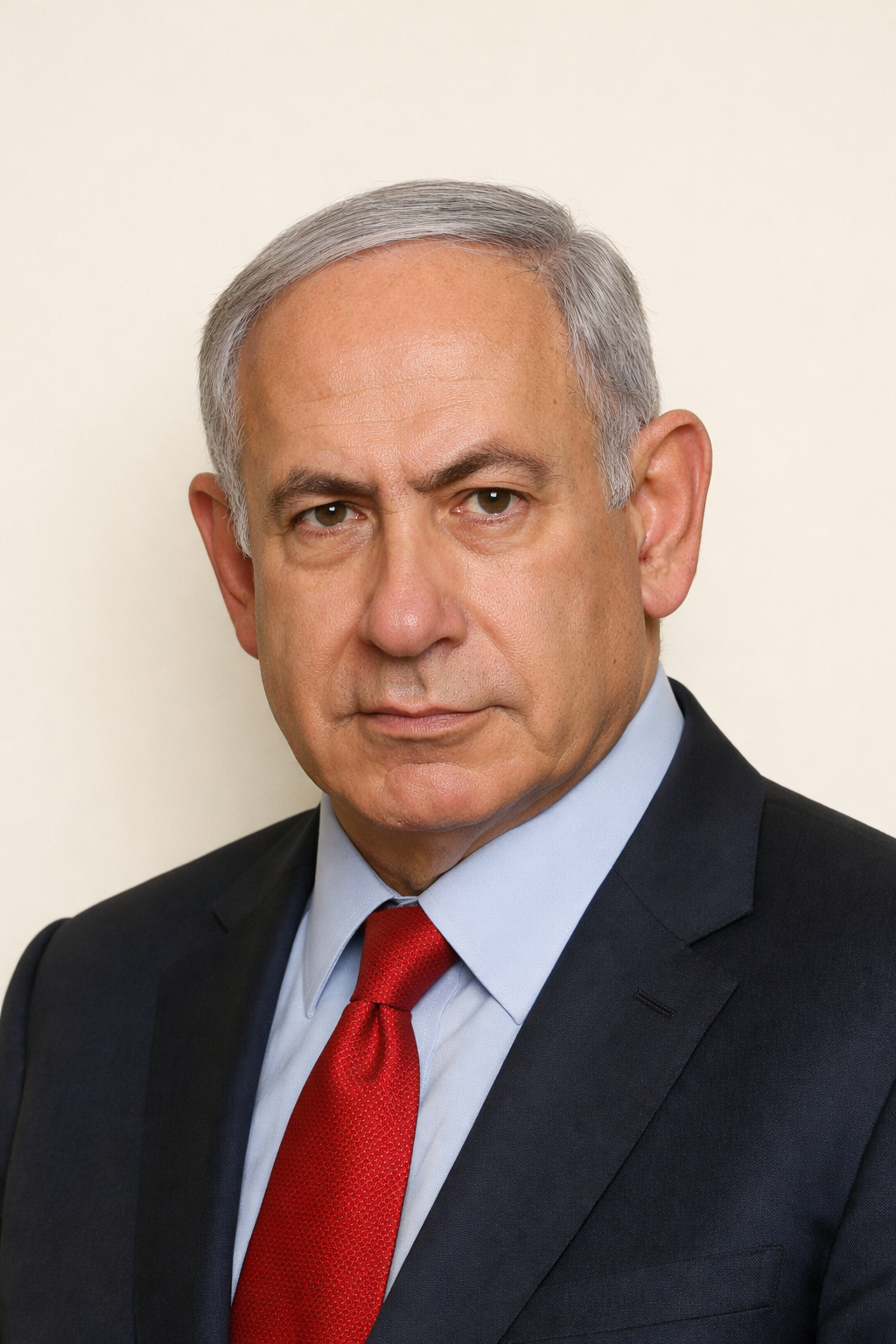
Benjamin Netanyahu
Fighting to keep office in the October 27 election, Likud polling about 20-21 seats to Gadi Eisenkot's 23, while pressing Trump for joint strikes on Iran and battling ex-Shin Bet chief Ronen Bar's defamation suit.
Benjamin Netanyahu enters the final stretch before Israel's October 27 election trailing his main rival. Likud is polling about 20-21 seats to Gadi Eisenkot's 23, with former supporters drifting to Yair Golan's Democrats and Itamar Ben-Gvir's Jewish Power. Naftali Bennett and Yair Lapid have ruled out serving under him, and he has rejected coalitions with Arab-led parties, narrowing his paths. Graft probes and ICC arrest warrants shadow his standing.
He warned Iran, Hezbollah and the Palestinian Authority not to test Israel during the election, and tells right-wing voters that staying home means "a left-wing government led by Eisenkot and Lieberman that will establish a Palestinian state." He is pressing Donald Trump for a joint operation against Iran's nuclear and military sites; Trump told him to get ready but won't strike before the U.S. midterms, and Netanyahu calls an attack before the Israeli vote "not convenient." Avigdor Lieberman accuses him of angling for a war to survive.
October 7 keeps him on the defensive. Ronen Bar is suing him for 3 million shekels, saying Netanyahu's posts falsely accused him of concealing warnings; his camp answers that Bar should have called. He admits Egypt's intelligence chief visited 11 days before the attacks but denies meeting him, calls reports of Egyptian and Emirati warnings an "absolute lie," and blames a "deep state."
He vows "no Arab army west of the Jordan River" as troops raid Ramallah, Jenin and Tulkarm; a year-old Gaza ceasefire exists in name only, with Israeli forces holding roughly 65 percent of the territory. Palestinian officials accuse him of ignoring a record wave of settler attacks on olive farmers to protect right-wing votes, though he has criticized the violence. Colombia moved its embassy to Jerusalem, a rare diplomatic win, and he is sparring by video with Barack Obama over Israel's founding.
On their plate
Likud polls about 20 to 21 Knesset seats to Gadi Eisenkot's 23, with former supporters drifting to Yair Golan's Democrats and Itamar Ben-Gvir's Jewish Power, while graft probes and ICC arrest warrants for him and Yoav Gallant shadow his standing. Naftali Bennett and Yair Lapid have ruled out serving under him, and he has rejected coalitions with Arab-led parties, narrowing his paths in a tight race that voters have met with odd flatness: no rallies, no posters, none of the mass protests of past years. He warns right-wing voters that staying home means "a left-wing government led by Eisenkot and Lieberman that will establish a Palestinian state."
He is urging President Trump toward a joint operation against Iran's nuclear and military sites, including the Pickaxe Mountain facility, citing intelligence that Iran is reconstituting its nuclear program. Trump told him to go ahead and get ready but refuses to strike before the U.S. midterms, and Netanyahu calls an attack before Israel's October 27 vote "not convenient." Avigdor Lieberman openly charges that Netanyahu is seeking a pre-election military move, against Iran, Hezbollah or Hamas, to survive politically.
Former Shin Bet chief Ronen Bar is suing him for 3 million shekels over posts Bar says falsely accused him of criminal failures and concealed pre-attack warnings, filing, he says, because Netanyahu has blocked a state commission of inquiry; Netanyahu's office answered by asking how many lives could have been saved had Bar called in time. Bar counters that he alerted Netanyahu's military secretary and lacked a direct number, and a former military secretary, Avi Gil, alleges the prime minister's office falsified phone records from the morning of the attack. Separately, Netanyahu admits Egypt's intelligence chief Abbas Kamel visited Israel 11 days before October 7 but denies meeting or speaking with him, dismisses reported Egyptian and Emirati warnings as an "absolute lie," and blames a "deep state" for pinning the failure on him.
He has declared Israel is preparing for possible attacks from Palestinian Authority forces and vowed that there will be "no Arab army west of the Jordan River," as IDF raids hit a Ramallah hospital complex, a rights-group office, Jenin and Tulkarm. In Gaza, the year-old ceasefire exists in name only and Israeli forces now control roughly 65 percent of the territory, up from the 53 percent agreed, amid UN warnings that incursions into residential areas may constitute war crimes. Palestinian officials and the rights group Yesh Din accuse him of ignoring more than 170 settler attacks on olive farmers since late September to protect right-wing votes; he has criticized the violence, and his Cabinet has barred Palestinians from working in Area C.
He publicly celebrated Colombia becoming the tenth nation to move its embassy to Jerusalem, calling it a "move of courage and faith" and touting future security, agriculture and AI cooperation. He canceled a scheduled meeting with U.S. Ambassador Mike Huckabee at the last minute without giving a reason, just as Huckabee quietly held a security meeting with his rival Eisenkot. And he rejected Barack Obama's remarks that Israel's founders "took land off people and were excessive," posting a video insisting the Jewish people are not "foreign occupiers in the land of our forefathers" and that Israel's history is not "a colonial enterprise."
Key relationships
Pressing the U.S. president to join a major operation against Iran's nuclear and military sites; Trump encouraged preparations but has so far refused to strike before the U.S. midterms, leaving timing unresolved.
His chief rival, whose party polls ahead of Likud. Netanyahu's camp attacks Eisenkot's pledge to destroy Hamas within 18 months, while Eisenkot blames Netanyahu for Hamas's survival, denies any post-election deal with him, and brands him unfit over ignored warnings.
Snubbed the U.S. ambassador mid-campaign, canceling a scheduled meeting at the last minute without explanation while Huckabee quietly met his chief rival on security matters.
Trading accusations on the campaign trail. Lieberman charges that Netanyahu wants a pre-election war to survive politically; Netanyahu tells right-wing voters a Lieberman-Eisenkot government would establish a Palestinian state.
In an open legal and political fight with the former Shin Bet chief over October 7. Bar is suing him for 3 million shekels over posts he says falsely accused him of concealing warnings; Netanyahu's camp counters that Bar should have picked up the phone.
Publicly rebuked the former U.S. president's remarks on Israel's founding, insisting the Jewish people are not occupiers and that Israel's history is no colonial enterprise, and countering that the obstacle to peace is enemies like Iran refusing to recognize Israel.
Acknowledges the Egyptian ex-intelligence chief's visit to Israel 11 days before October 7 but denies ever meeting or speaking with him, demanding surveillance footage to prove who did.
