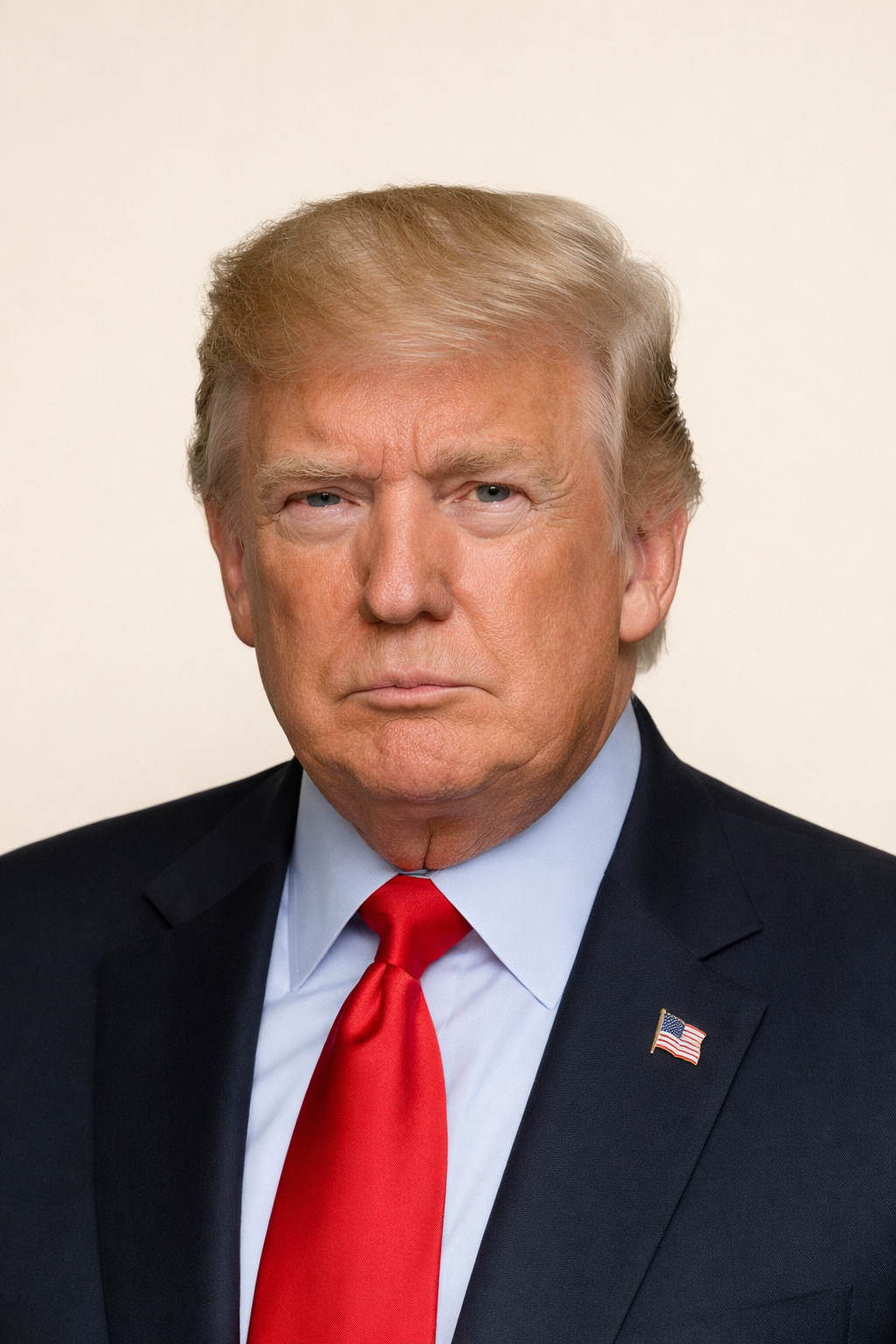
Donald Trump
Trump is rallying battleground states ahead of the November 3 midterms, telling Georgia voters the Iran war is nearly finished and promising $5,000 checks to every adult if Republicans hold Congress.
Donald Trump is touring battleground states in the final stretch before the November 3 midterms, rallying for Kentucky Republicans on October 17 with Fort Myers, Florida next, and telling voters to 'close your eyes and pretend I'm on the ballot.' His closing pitch pairs war claims with cash: at a Georgia rally he declared the U.S. war on Iran nearly finished, claiming 'their navy's gone, their military's gone, their air force is totally wiped out,' while promising $90 rebates to Medicare recipients, $500 payments to ACA enrollees and $5,000 to every adult if Republicans keep both chambers. Forecasts suggest his party could lose the House and Senate.
The numbers at home cut against him. A typical family of four pays about $275 more per month than when he took office, gasoline is up nearly 40 percent, and only a quarter of adults approve of his economic handling, a record he has conceded bluntly: 'People can't live like this.' The national debt has crossed $40 trillion. Off the trail, he is pressing Republican legislators to redraw congressional maps and has sent hundreds of federal investigators to hunt noncitizen voting ahead of the election.
Abroad, he is selling a Ukraine peace plan built on Europe resuming Russian natural gas purchases, having lifted sanctions on Russian diesel, a move drawing bipartisan opposition and criticism from Kyiv. He is pushing to replace Volodymyr Zelenskyy, attacking him over Starshield satellite speed caps he denies ordering, a denial Elon Musk has publicly contradicted. His pressure forced Brussels to drop a planned digital tax, but German Chancellor Friedrich Merz canceled a call with him after he congratulated the far-right AfD, whose co-leader calls his Iran campaign 'a bit of a disaster.'
On their plate
Trump is touring battleground states ahead of the November 3 vote, rallying for Kentucky candidates Andy Barr and Ed Gallrein on October 17 with Fort Myers, Florida next, and telling supporters to 'close your eyes and pretend I'm on the ballot' as forecasts suggest Republicans could lose both chambers. His closing offer is cash: $90 rebates for tens of millions of Medicare Part B recipients, $500 payments to nearly one million ACA enrollees in 30 states, and a promised $5,000 to every adult if Republicans keep both chambers, a package estimated at $1 trillion. Offstage he is pressing Republican state legislators to redraw congressional maps toward more GOP seats, a drive projected to put six Black House members at risk this cycle and five to 14 more by 2028 across Alabama, Louisiana, North Carolina and Texas, and has fielded hundreds of federal investigators to find noncitizen voters, threatened states with Justice Department prosecution if noncitizen ballots are counted, and requested a probe of electronic voting machines after pardoning Tina Peters, a former clerk convicted of tampering with them.
A typical family of four pays about $275 more per month than in January 2025, gasoline is up nearly 40 percent since he took office and electricity 10 percent, and only 25 percent of adults approve of his economic handling while 65 percent blame his policies for higher prices. His 2024 promise to 'drive down prices and make America affordable again' starting on day one is dogging him on the trail, and he has conceded plainly: 'People can't live like this.' The national debt has passed $40 trillion, up from $36.2 trillion when he took office, and Democrats are hammering the cost record, with the DNC's Kendall Witmer blaming his and JD Vance's tariffs and the 'deadly and costly war with Iran' for leaving families, farmers and small businesses struggling.
At a Dalton, Georgia rally, Trump claimed the U.S. war on Iran is nearly finished, saying 'their navy's gone, their military's gone, their air force is totally wiped out' and citing 289 aircraft destroyed and 159 naval vessels sunk in three days, while promising Iran 'will never have a nuclear weapon.' He has declared the Strait of Hormuz 'American territory' and claimed its Iranian mines are cleared, staking maximalist terms on a waterway closed since the conflict began in February, though an Iranian brigadier says it reopens only if America leaves the region. He is defending Defense Secretary Pete Hegseth, whom Democrats are tying to the war and rising gas prices in their midterm strategy, as a 'decorated combat veteran,' having recently overruled Hegseth's plan to livestream a military execution by firing squad.
Trump's plan to end the Ukraine war centers on Europe resuming purchases of Russian natural gas, with envoys Jared Kushner and Steve Witkoff shopping it to European officials and Volodymyr Zelenskyy after he lifted sanctions on Russian diesel and exempted Russia from new congressional sanctions. He has called publicly for new Ukrainian leadership, saying Zelenskyy 'creates problems for the whole world' and that Ukraine needs a leader able to reach a deal with Russia, while denying he ordered the Starshield satellite speed caps crippling Ukrainian drones, a denial Elon Musk has publicly contradicted. The Russia tilt is drawing fire from both parties over his deal to import millions of barrels of Russian fuel, which critics argue violates federal bans on Russian energy imports, and from Kyiv, after he called Ukrainian strikes on Russian refineries a disgrace and his Treasury defended Russia's presence at G20 events even as European delegates walked out of an IMF meeting over Moscow.
Trump's trade pressure on Brussels is still delivering: the European Commission abandoned its planned digital levy on large platforms after the White House framed the tax as a trade weapon against U.S. firms, replacing it with a flat-rate corporate levy. But his political standing in Europe is slipping as the Iran war grates, with Chancellor Friedrich Merz canceling a planned call after Trump congratulated the far-right AfD on regional election wins in Saxony-Anhalt and Mecklenburg-Vorpommern, and AfD co-leader Alice Weidel calling the U.S. campaign 'a bit of a disaster.'
Key relationships
Trump is pressing to replace the Ukrainian president as part of his drive to end the war, attacking him over the Starshield dispute and saying Zelenskyy 'creates problems for the whole world'; Zelenskyy has criticized Trump's diesel deal with Russia and his waiving of sanctions requirements.
Trump is standing by his defense secretary as Democrats make Hegseth a midterm target tied to the Iran war and gas prices, with Hakeem Jeffries promising impeachment of Hegseth as a priority if Democrats retake Congress, though Trump recently overruled Hegseth's plan to livestream a military execution by firing squad.
The two are publicly contradicting each other over the Starshield satellite speed caps crippling Ukrainian drones. Trump denied ordering the limits, saying 'it wasn't me, and I don't think it was Elon'; Musk countered that any usage limits 'are decided by the US military and ultimately POTUS.'
Trump appointed her press secretary and dismissed her five days into the job; she left publicly thanking him as 'a kind, wonderful, gracious, thoughtful, enthusiastic, and hardworking man,' and her farewell photo, showing a blurred map of East Potomac Park on his desk, is undercutting his administration's claim in a federal lawsuit that no final redesign plan exists.
The German chancellor canceled a planned call with Trump after Trump publicly congratulated the far-right AfD on its regional election victories in Saxony-Anhalt and Mecklenburg-Vorpommern, a snub that deepens friction as Trump's popularity slips in European polls.
Trump congratulated Weidel's AfD on its regional election victories even as the party's co-leader joined European nationalists distancing themselves from him, calling his Iran campaign 'a bit of a disaster.'
