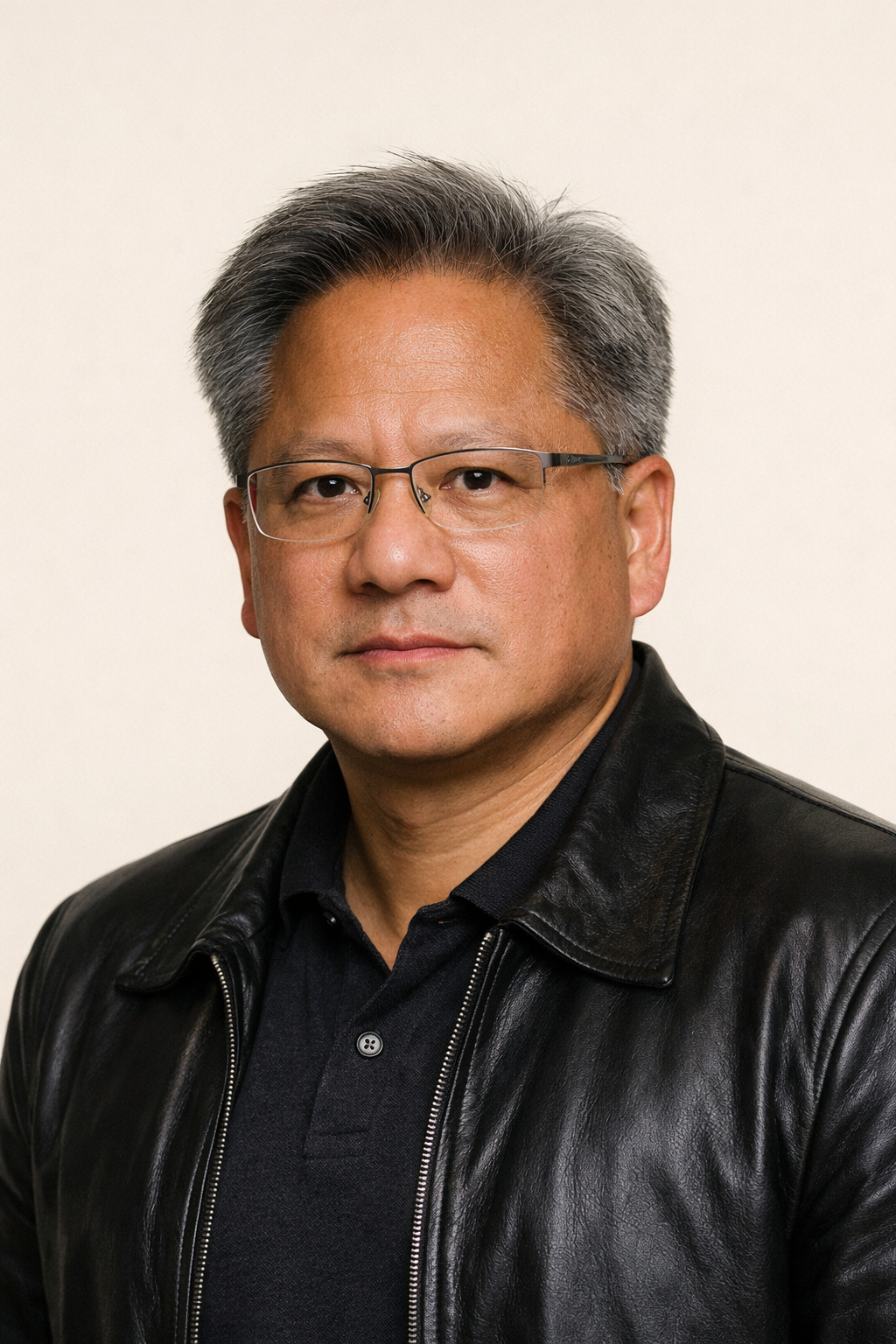
Jensen Huang
Touring Paris, London and Berlin before GTC Berlin opens October 20, Huang called the AI selloff a temporary phase, defended debt-laden CoreWeave, and pledged $2 billion more for European AI.
Jensen Huang is spending the week selling certainty. Midway through a Paris, London and Berlin tour ahead of Nvidia's GTC Berlin conference, he called the AI stock rout a temporary phase and said AI momentum will keep going, positively transforming every industry and country.
The tour doubles as an investment push. After $8 billion deployed across Europe over the past year, he announced $2 billion more, taking minority stakes in the French startups Doctolib, Genesis AI, Pigment and Entalpic, plus a $1.16 billion UK pool backing five more. He met UK Prime Minister Andy Burnham in West London, has a meeting set with German Chancellor Friedrich Merz, and has been blunt that both countries are falling behind, urging Europe to adopt open-source models and "get in the race."
His market defense has a specific target. As debt fears hammered AI stocks and CoreWeave's bonds traded at distressed levels, Huang vouched for the company: strength "improving every day," a bailout likely unnecessary, cost of capital actually falling. Nvidia, which holds a $2 billion stake and helped rescue CoreWeave's downsized IPO, does not need to backstop it, he said. The shares rebounded after his remarks.
In Washington he is fighting the White House on tech immigration, after a $100,000 fee on new H-1B applications, while staying aligned against new AI rules and lobbying to lift China chip bans, with ByteDance ready to order a million units if curbs ease.
Back home he is launching the Vera Rubin platform, which he expects to be Nvidia's fastest ramp, alongside a record $235 billion buyback, even as he says the supply chain fills only 70% of demand. With Volvo chief Håkan Samuelsson, he plans hands-free driving before 2030. "There's no hurry," he said. "Safety first."
On their plate
Touring Paris, London and Berlin ahead of GTC Berlin opening October 20, Huang announced $2 billion in fresh European AI investments on top of $8 billion deployed over the past year, including minority stakes in the French startups Doctolib, Genesis AI, Pigment and Entalpic and a $1.16 billion UK pool backing five more. He is telling the UK and Germany they are falling behind in technology, pitching open-source models as Europe's route to sovereignty and pressing the continent to "get in the race," while resisting regulators' calls to slow development over data-center energy use and autonomous-agent risks.
With AI stocks sold off on debt fears and CoreWeave's 2032 bonds at distressed levels after a four-day slide of more than 20% on $52 billion of debt, Huang called the rout a temporary phase and said AI momentum will keep going, positively transforming every industry and country. He defended CoreWeave directly, saying its strength is "improving every day," a bailout is likely unnecessary and its cost of capital is actually decreasing, and noting that Nvidia, with a $2 billion stake and a hand in rescuing CoreWeave's downsized IPO, does not need to backstop the company. His remarks came as the shares and the broader Nasdaq rebounded.
Huang is clashing with the Trump administration over tech immigration after a $100,000 fee on new H-1B applications and a ban on Microsoft and Adobe from a federal visa sponsorship program, insisting the U.S. must keep attracting "all the world's great minds" while acknowledging immigrants must enter lawfully. He stays aligned with the White House on AI regulation, arguing "we don't need more regulations," and is lobbying to lift export bans on advanced AI chips to China, warning they accelerate Beijing's homegrown chip development, with ByteDance ready to order one million units if gaming-chip curbs go. He has also said Nvidia will revoke technology access from customers engaged in "bad activities," while conceding that distribution through partners like Dell limits Nvidia's direct control.
Huang is launching the Vera Rubin platform, which he expects to be the fastest ramp in company history at 20% of data-center revenue this quarter, targeting $20 billion in sales against what he sizes as a $200 billion central-processor market. He is pairing it with a record $235 billion buyback plus financing moves: memorandums with six financial firms meant to attract $500 billion for AI data centers and up to $105 billion guaranteed for an OpenAI affiliate's Ohio campus, while the Hugging Face acquisition and Groq licensing deal draw antitrust scrutiny. He says the supply chain is meeting only 70% of demand, with constraints projected through 2027, and Taiwan is planning up to $4 billion in Texas industrial parks to relocate Nvidia supplier firms, a dependence he traced to the 30-year TSMC partnership in a podcast interview.
Huang expanded Nvidia's partnership with Volvo Cars on a hands-free Level 2++ automated driving system built on Nvidia's Hyperion, Alpamayo and Halos stacks, set for rollout in multiple regions, excluding China, before 2030. He is working directly with Volvo chief executive Håkan Samuelsson on the rollout, with both committing publicly to a cautious deployment. "There's no hurry," Huang said. "Safety first."
Key relationships
Huang is clashing with the president over tech immigration, pushing back on a $100,000 H-1B fee order and visa-program bans, while staying aligned with Trump against new AI regulations and lobbying him to lift China chip curbs.
Huang is working directly with the Volvo Cars chief executive on a hands-free automated-driving rollout, and both have committed publicly to a cautious, safety-first deployment.
Huang sat for a video interview with Fridman, recounting how Nvidia's 30-year TSMC manufacturing partnership began with a direct call from founder Morris Chang.
Huang met the UK prime minister in West London during his European tour, pairing the visit with a $1.16 billion UK startup funding pool and a public push for Britain to move faster on technology.
Huang has a meeting scheduled with the German chancellor during his European tour, part of his pitch for Germany to accelerate on technology.
The French economy minister attended Huang's Place Vendôme reception in Paris, where Huang unveiled Nvidia's minority stakes in four French startups.
