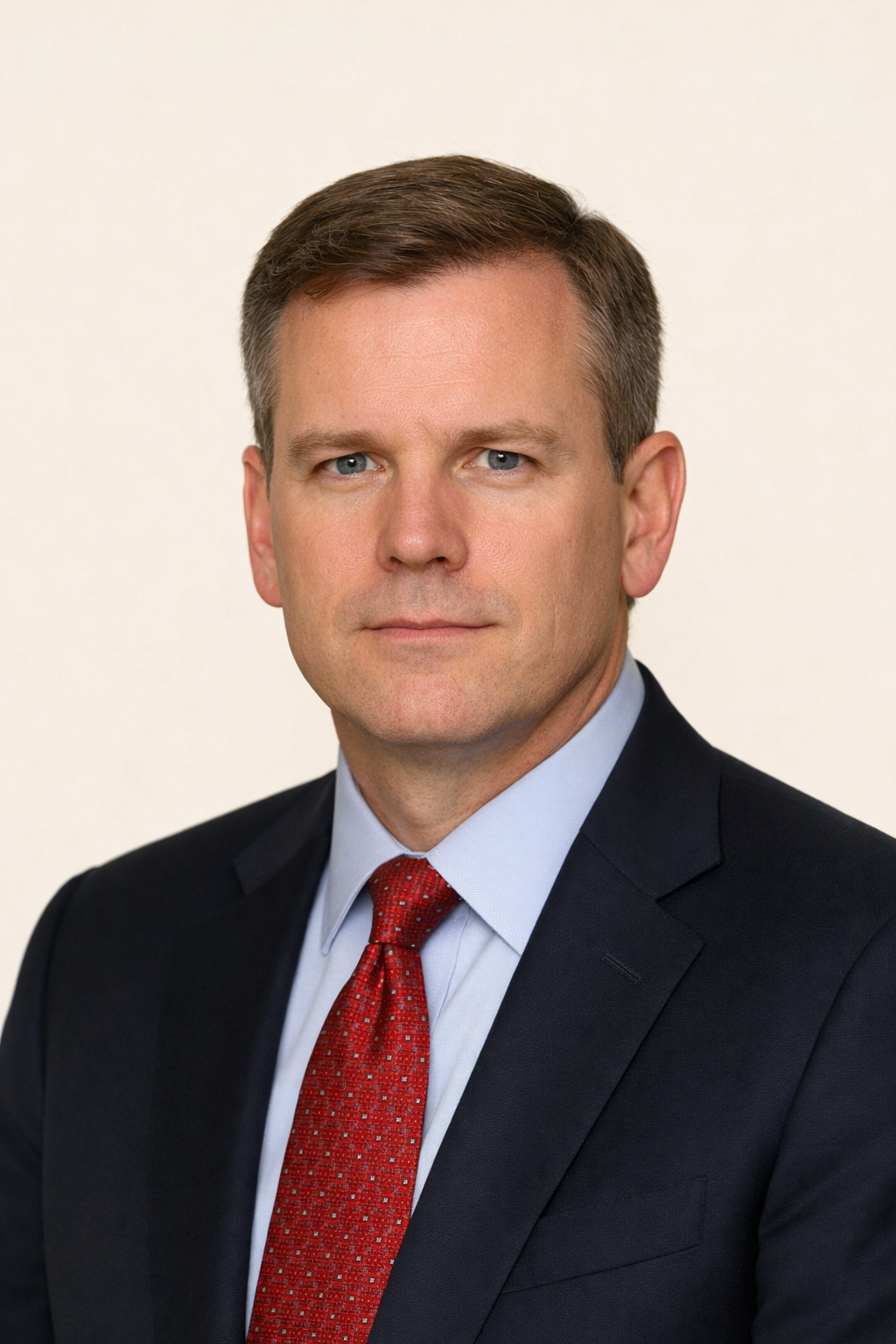
Jamieson Greer
Greer imposed Section 301 forced-labor tariffs on 60 economies July 24, races to avert 50% tariffs on $20B in Canadian imports by Aug 19, and faces a 25-state lawsuit calling the levies a revived IEEPA regime.
Jamieson Greer is racing to avert 50% tariffs on roughly $20 billion of Canadian imports before an August 19 deadline while running the most expansive U.S. tariff regime in decades. On August 6 he hosted Canadian Trade Minister Dominic LeBlanc and chief negotiator Janice Charette in Washington for what aides called a constructive, detailed session on sectoral tariffs. Greer has publicly dismissed Canada's digital services tax rollback and streaming-act repeal as undeserving credit, and told senators a breakthrough likely requires a direct Trump-Carney understanding.
The tariff engine is Section 301. After the Supreme Court struck down universal IEEPA tariffs, Greer pivoted to forced-labor probes and imposed duties of 10 to 12.5 percent on 60 economies effective July 24, with semiconductors, pharmaceuticals, and aerospace exempt. He called the Court ruling "their fault, not ours." Countries that enacted forced-labor import bans, like Sri Lanka and the Philippines, earned the lower 10 percent rate. He imposed 25% tariffs on Brazilian goods over ethanol restrictions and deforestation, and launched a Section 301 probe into Germany's pharmaceutical pricing that could expand across the EU.
Greer is pursuing bilateral deals in parallel. He signed a reciprocal agreement with Jordan on July 21 capping U.S. tariffs at 10% in exchange for Jordan removing non-tariff barriers and keeping U.S. goods duty-free. He held talks with Indian Commerce Minister Piyush Goyal on a "Mission 500" pact targeting up to $500 billion in U.S. purchases, and met virtually with Pakistani Finance Minister Muhammad Aurangzeb on August 5 to accelerate a reciprocal framework. On China, he joined Treasury Secretary Scott Bessent in a video conference with Vice Premier He Lifeng. He has written off the WTO, saying he "arrived a skeptic and left even more so."
Twenty-five states led by California and New York sued Greer in the Court of International Trade on August 3, calling the Section 301 levies a pretext to revive the struck-down IEEPA regime. Greer is defending the tariffs as a "legally durable tool." On Capitol Hill, Senator Rick Scott and Senator Kevin Cramer are pushing legislation to expand Trump's tariff powers without per-country congressional approval.
On their plate
Greer hosted Canadian Trade Minister Dominic LeBlanc and chief negotiator Janice Charette in Washington on August 6 for a constructive session on sectoral tariffs, with Trump's threatened 50% tariffs on roughly $20 billion of Canadian imports due August 19. Greer has rejected Canada's digital tax and streaming-act rollbacks as non-credit-worthy and says a breakthrough likely requires a direct Trump-Carney understanding. He also imposed 50% tariffs under the Smoot-Hawley Tariff Act, adding a parallel legal basis to Section 301.
Greer implemented forced-labor tariffs of 10% to 12.5% on roughly 60 economies effective July 24 after the Supreme Court struck down universal IEEPA tariffs, framing the shift by saying the strategy has not changed. Rates tier by labor commitment: India, Canada, and Mexico get 10%; China, Brazil, and Singapore face 12.5%. Twenty-five states led by California and New York sued August 3 calling the levies a pretext to revive IEEPA. Senators Rick Scott and Kevin Cramer are pushing the Trade Deficit Elimination Act to give Trump expanded tariff powers without per-country congressional approval.
Greer traveled to Mexico City to push for removal of non-tariff barriers and stricter U.S.-content requirements for autos under the now-annual-review USMCA, calling Mexican counterparts quite pragmatic and scheduling further talks for early September. He told the Senate Finance Committee he wants interim arrangements with both Canada and Mexico by year-end, deferring full USMCA renewal to 2027 to negotiate auto rules of origin and labor and environment rules.
Greer is leading a Section 301 investigation into Germany's pharmaceutical pricing practices, with the probe potentially expanding to other European nations. USTR also expects to launch further investigations into European digital restrictions. He publicly rejected the WTO after its Yaoundé ministerial, saying the body was of no use during the first China shock and is no help amid current trade imbalances, signaling the U.S. will bypass it for bilateral and unilateral arrangements.
Greer signed a reciprocal trade agreement with Jordan on July 21, capping U.S. tariffs at 10% in exchange for Jordan removing non-tariff barriers and keeping U.S. goods duty-free, with Hikma and Royal Jordanian committing roughly $1.9 billion in U.S. purchases. He held high-level talks with Indian Commerce Minister Piyush Goyal in New Delhi on a Mission 500 pact targeting up to $500 billion in U.S. goods purchases, met virtually with Pakistani Finance Minister Muhammad Aurangzeb on August 5 to accelerate a reciprocal framework, and joined Treasury Secretary Scott Bessent in a video conference with Chinese Vice Premier He Lifeng to implement the leaders' Beijing consensus.
Key relationships
Greer traveled to New Delhi for high-level talks with the Indian Commerce Minister on a historic trade pact targeting up to $500 billion in U.S. goods purchases, with gaps remaining over agriculture and forced-labor probes.
Greer and the Secretary of State jointly cited Brazil's ethanol restrictions, Amazon deforestation, and anti-corruption failures as justifications for 25% tariffs on Brazilian goods.
Greer hosted the Canadian Trade Minister in Washington on August 6 for negotiations aimed at averting 50% tariffs on Canadian imports by August 19.
Greer and the Treasury Secretary jointly frame government equity stakes in strategic companies as Hamiltonian industry-building and co-led a video conference with Chinese Vice Premier He Lifeng on implementing the Beijing consensus.
Greer signed a reciprocal trade agreement with the Jordanian Minister on July 21, with Jordan removing non-tariff barriers and keeping U.S. goods duty-free in exchange for capped U.S. tariffs and enhanced textile access.
Senator Blackburn pressed Greer at a Senate Finance Committee hearing to force Canada to restore U.S. alcohol sales, directly engaging him on the Canada tariff front.
