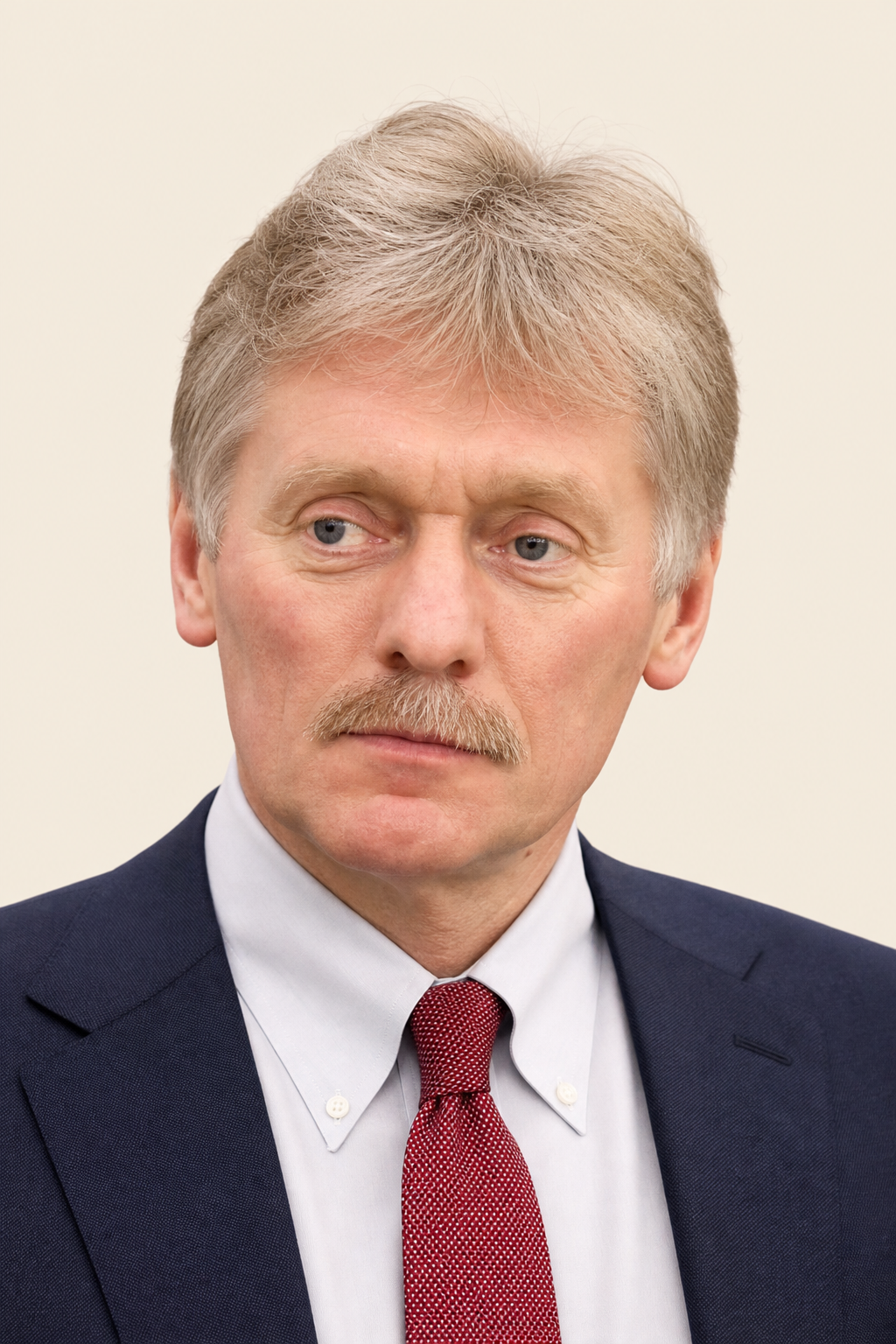
Dmitry Peskov
Peskov is dismissing every Western and Ukrainian peace initiative while framing Russian escalation as reactive deterrence. His latest moves: calling the Trump administration "sincere" but waiting for concrete proposals, defending a missile strike that killed four Indian seafarers, mocking European security coalitions, and announcing territorial gains and buffer-zone expansion.
Dmitry Peskov is holding the line against every peace initiative on the table while framing Russian military escalation as reactive necessity. His most recent posture toward the Trump administration is carefully calibrated: he calls Washington "sincere" in seeking settlement options but says Russia will "wait for new proposals" while continuing operations. He dismissed reports of a U.S.-Ukraine air ceasefire as "media speculation" and rejected Ukraine's push for Türkiye-hosted talks, declaring there are "no immediate prospects for resuming the negotiation process." Russia insists on a permanent peace deal, not a tactical pause.
Peskov is managing a volatile diplomatic rupture with India after a Russian missile strike on the MV Golden Leo off Odesa killed four Indian seafarers. He defended the strike, saying Russian forces "will continue to strike" vessels transporting ammunition for Ukraine, and said Moscow is "continuing our contacts with our Indian partners and explaining our position."
On Europe, Peskov is in full-throated opposition. He dismissed the Coalition of the Willing as a "dead end," warned that Europeans who insist on deciding Ukraine security guarantees without Russia will have "no role in the settlement process," mocked Macron's Bastille Day parade as a display by a "coalition of enlightened and war-loving nations," and branded the ten-nation anti-ballistic missile coalition "a coalition of warmongers" and "a coalition of the deluded." He rejected coordinated EU-UK cyber sanctions on the FSB's Turla group as "baseless" and framed Russia as sanctions-proof, asserting Moscow has "learned how to circumvent these sanctions."
On the battlefield, Peskov announced the capture of Kostiantynivka and the full "liberation" of the Luhansk People's Republic. He tied the expansion of a "security buffer zone" in eastern Ukraine to Ukrainian drone strikes on Russian refineries, warning that "the more Kyiv tries to escalate, the more we're going to keep expanding" the zone. He also confirmed Russia has held discussions with Ankara over Turkey's planned S-400 sale to Qatar, calling it "an extremely sensitive issue" that intersects with Trump's CAATSA sanctions relief and Turkey's F-35 re-entry bid. He framed the China-Russia Joint Sea-2026 naval exercises as contributing to regional "predictability and security," insisting they were "not directed against anyone."
On their plate
Peskov calls the Trump administration "sincere" in seeking settlement options but says Russia will "wait for new proposals" while continuing military operations. He dismissed reports of a U.S.-Ukraine air ceasefire as "media speculation" and rejected Ukraine's proposal for Türkiye-hosted peace talks, saying there are "no immediate prospects for resuming the negotiation process." Russia insists on a permanent peace deal, not a tactical pause.
Peskov defended Russia's missile strike on the MV Golden Leo off Odesa that killed four Indian seafarers, insisting Russian forces "will continue to strike" vessels transporting ammunition for Ukraine. He said Moscow is "continuing our contacts with our Indian partners and explaining our position," managing a diplomatic rupture with New Delhi over the incident.
Peskov dismissed the European "Coalition of the Willing" as a "dead end," warning that if Europeans insist on deciding Ukraine security guarantees without Russia they will have "no role in the settlement process." He mocked Macron's Bastille Day parade as a show by a "coalition of enlightened and war-loving nations" and branded the ten-nation Integrated Anti-Ballistic Missile Coalition "a coalition of warmongers" and "a coalition of the deluded."
Peskov announced the capture of Kostiantynivka and the full "liberation" of the Luhansk People's Republic, and tied the expansion of a "security buffer zone" in eastern Ukraine directly to Ukrainian drone strikes on Russian refineries. He warned that "the more Kyiv tries to escalate, the more we're going to keep expanding" the zone, while insisting Russia remains "ready for a peaceful resolution" but has "enough capability to act independently."
Peskov rejected coordinated EU-UK cyber sanctions targeting the FSB's Turla group as "baseless" and "never substantiated." He framed Russia as sanctions-proof, asserting Moscow has "learned how to circumvent these sanctions" and "minimize the negative impact," dismissing the EU's largest-ever single sanctions listing as manageable.
Peskov confirmed Russia has held discussions with Ankara over Turkey's planned sale of its Russian-made S-400 missile systems to Qatar, a transfer requiring Moscow's re-export consent. He called it "an extremely sensitive issue," managing a decision entangled with Trump's CAATSA sanctions relief and Turkey's push to re-enter the F-35 program.
Key relationships
Peskov told Die Weltwoche that Zelenskyy can end the war in a single day by ordering Ukrainian troops to withdraw from the Donbass and recognizing current territorial reality, and dismissed Kyiv's proposal for Türkiye-hosted peace talks.
Peskov mocked Macron's Bastille Day parade and the Coalition of the Willing as a "coalition of enlightened and war-loving nations," dismissing European support for Ukraine as hostile posturing.
Peskov and foreign policy aide Ushakov coordinated Kremlin messaging around the Trump-Putin-Zelenskyy phone calls of July 4, with Ushakov providing the official readout while Peskov managed the broader diplomatic framing.
Peskov directly countered German Chancellor Merz's position on European security guarantees for Ukraine, warning that if Europeans insist on deciding guarantees without Russia they will have no role in the settlement process.
