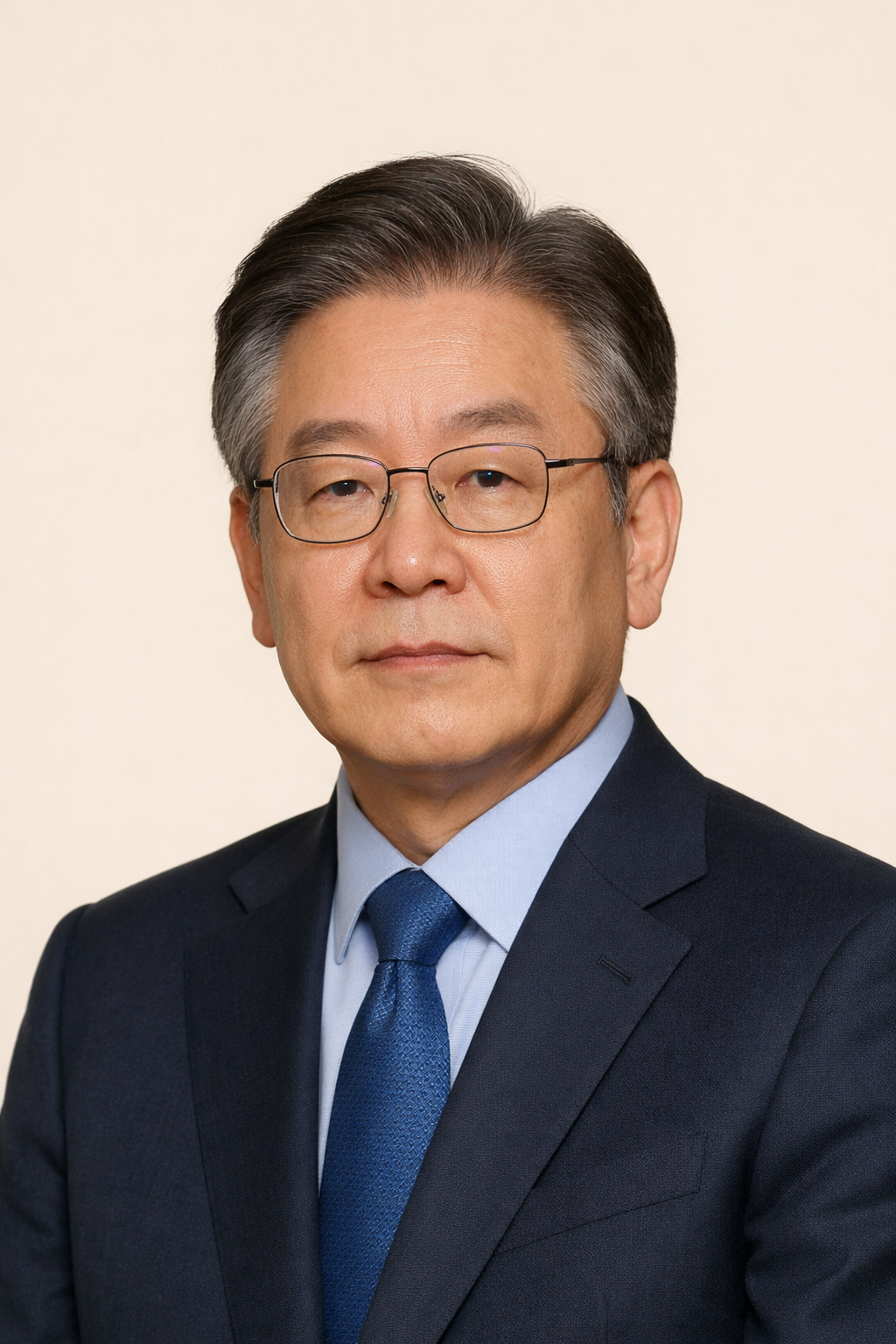
Lee Jae Myung
South Korea's president proposed phased North Korea denuclearization and met Donald Trump to negotiate a wartime command transfer at the UN General Assembly, after deciding before the trip to refuse Trump's requests for troops in the Iran war and assets in the Strait of Hormuz. He has publicly accused Volodymyr Zelenskyy of breaking a secrecy pact by disclosing at the UN the secret transfer of two North Korean POWs.
Lee Jae Myung came to the United Nations selling a Korean Peninsula plan and bidding to take wartime command from Washington, a week after telling Donald Trump no.
His General Assembly speech proposed a three-step denuclearization blueprint of stop, reduction and dismantlement, urging Washington to trade sanctions relief for a freeze on Pyongyang's nuclear and missile programs, arguing that aiming for denuclearization under current circumstances "guarantees that nothing will be accomplished." He calls Trump's resolve to revive talks with Kim Jong Un a "hard-won opportunity for change." North Korea answered in missiles: hypersonic tests timed to the assembly's opening, an upgraded long-range rocket, and Foreign Minister Choe Son-hui's declaration that the North's nuclear status is irreversible.
The pre-trip refusal still hangs over dealings with Trump. Lee rejected requests for South Korean troops in the Iran war and military assets in the Strait of Hormuz, saying "There will be no dispatch of troops that will lead to involvement in a conflict," and Trump answered with public needling and curtailed joint exercises. In New York they met on transferring wartime operational control of combined forces to a South Korean general before Lee's term ends in 2030, a push staffed by Defense Minister Kang Shin-chul and a ruling-party task force despite expert warnings about missile defense and command-system gaps.
He has publicly accused Volodymyr Zelenskyy of breaking a secrecy pact by disclosing the secret June transfer of two North Korean prisoners of war. At home, chief of staff Kang Hoon-sik's resignation offer over five failed cabinet nominations awaits a verdict after Lee's September 27 return, approval has ticked up to 34.8 percent, its first rise in ten weeks, and Lee is extending fuel-price caps while finalizing a $100 billion-plus US energy investment with a first $2 billion payment possible this month.
On their plate
Lee broke with decades of South Korean policy at the General Assembly, proposing a three-step blueprint of stop, reduction and dismantlement and urging Washington to trade sanctions relief for a freeze on Pyongyang's nuclear and missile programs, since immediate total denuclearization is unrealistic. He backs renewed Trump-Kim talks as a "hard-won opportunity for change" and argues that resuming North Korea-US dialogue would be far easier than resuming inter-Korean dialogue. North Korea answered with hypersonic missile tests timed to the assembly's opening, an upgraded long-range rocket system, Foreign Minister Choe Son-hui declaring its nuclear status irreversible, and Kim Yo Jong dismissing denuclearization believers as "idiots knowing nothing of the world."
After his government sent an advance survey team to the UAE to scope noncombat naval options, Lee refused Trump's requests for South Korean troops in the Iran war and military assets in the Strait of Hormuz, saying "There will be no dispatch of troops that will lead to involvement in a conflict," while leaving room to expand a destroyer's anti-piracy mission to protect Korean shipping. The refusal matched public opinion, with 55 percent of South Koreans and 69 percent of his own party's supporters opposed to a deployment, but Trump publicly needled it ("why are we involved in helping you?") and curtailed the Ulchi Freedom Shield joint exercises. In New York, Lee met Trump to negotiate transferring wartime operational control of combined forces to a South Korean general, targeting completion before his term ends in 2030, a push staffed by appointed Defense Minister Kang Shin-chul and a party task force despite expert warnings about missile defense and C4ISR gaps if rushed.
Lee publicly accused Volodymyr Zelenskyy of breaking a confidentiality pact when Zelenskyy disclosed at the UN the secret June transfer of two North Korean prisoners of war to South Korea, calling the leak "very disappointing" and dangerous for national security. His Democratic Party defended the secrecy as a safety measure while the opposition People Power Party attacked the administration's opacity, with some suggesting the government feared offending Kim Jong Un. The two soldiers, who want to defect, are in government care in a high-risk resettlement.
Chief of staff Kang Hoon-sik offered his resignation on September 21 over five failed ministerial appointments, including Justice nominee Kim Seung-won's withdrawal and Gender Equality nominee Yong Hye-in's September 14 pullout after she refused to vacate her Basic Income Party seat, with 61 percent of Gallup Korea respondents calling her unqualified. Lee has not decided whether to accept, with a decision expected after his return from New York and Mexico on September 27. He says he is reflecting on "what the people, as the sovereign, intended when they created this government" and vows to "take a more humble approach in carefully managing state affairs," as a Realmeter poll shows approval ticking up to 34.8 percent, its first rise in 10 weeks after record lows.
Lee is extending fuel-price caps on petrol and diesel with an additional 1.5 trillion won on top of the initial 4.2 trillion to cushion households through Chuseok, though refiners complain they have not been compensated. His government is finalizing a $100 billion-plus energy investment in the United States, financing up to eight nuclear plants and a $20 billion Texas gas plant to power AI data centers, to fulfill the trade pact that caps tariffs at 15 percent in exchange for $350 billion in manufacturing and $100 billion in energy, with an initial $2 billion seed payment possible by the end of September. His Value-Up corporate governance push is showing its first big test, as Samsung Electronics and SK Hynix announced record shareholder payouts exceeding 130 trillion won on the AI chip boom, though Samsung drew criticism for favoring dividends over buybacks in a way critics say shields the controlling family.
Key relationships
Lee refuses Trump's requests for troops in the Iran war and assets in the Strait of Hormuz, drawing public needling and curtailed joint exercises, yet met him in New York to negotiate transferring wartime command and backs his resolve to revive talks with Kim Jong Un as a "hard-won opportunity for change."
Lee publicly accused Zelenskyy of breaking a confidentiality pact when Zelenskyy disclosed at the UN the secret June transfer of two North Korean prisoners of war to South Korea, calling the leak "very disappointing" and dangerous for national security.
Kim answered Lee's General Assembly overtures with hypersonic missile tests and an upgraded long-range rocket, has his foreign minister declare the nuclear status irreversible, and continues to characterize South Korea as a hostile state while rejecting Lee's efforts to improve ties. A Seoul court has ordered Pyongyang to pay $32.5 million for demolishing the Kaesong liaison office, a practically unenforceable ruling.
Lee's chief of staff offered his resignation on September 21 to take responsibility for five failed ministerial appointments; Lee has not decided whether to accept, with a decision expected after his return from New York and Mexico on September 27.
