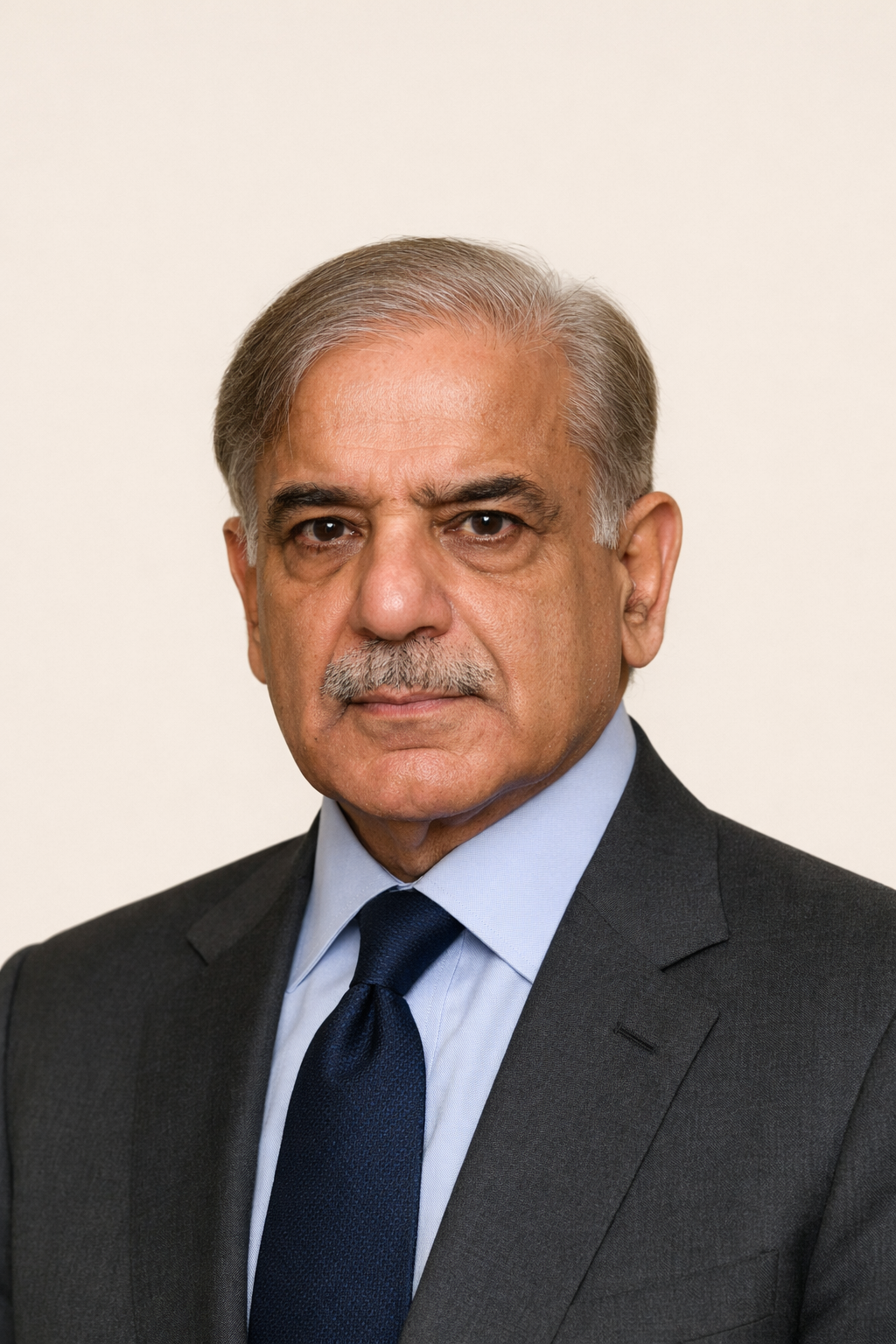
Shehbaz Sharif
He relaunched Pakistan's US-Iran mediation at the UN, warned India that 'water is our red line' over the suspended Indus Waters Treaty, and hosts SCO coordinators in Islamabad as fuel protests pause.
Shehbaz Sharif brings the Shanghai Cooperation Organisation's national coordinators to Islamabad for three days from today, the first set-piece of its 2026-27 chairmanship, with India's coordinator in the room days after the two governments traded threats at the United Nations.
His General Assembly address, framed around Palestine, Kashmir and UN reform, called for a Kashmir solution, claimed President Trump mediated the end of the May 2025 conflict, and declared that 'water is our red line,' reserving Pakistan's options against India's suspension of the Indus Waters Treaty. India's defence minister warned of potential strikes, and External Affairs Minister S. Jaishankar and diplomat Petal Gahlot branded Pakistan a serial practitioner of terrorism with a military-controlled puppet government. Turkish President Erdogan voiced solidarity with Kashmiris in Sharif's presence, and Sharif pledged Saudi Arabia's security under the Makkah Defence Alliance after Houthi drone attacks on Makkah.
New York burnished his mediator brand. He relaunched Pakistan's effort to bridge the United States and Iran, citing the Islamabad memorandum he signed with Trump and Iranian President Pezeshkian, drawing praise from the European Council and Commission presidents. He met Iran's president on strategic cooperation, met Bill Gates on polio and agriculture, and pitched US investors on IT, AI, mining and ports, citing tax and privatization reforms. Field Marshal Asim Munir traveled in his delegation.
At home, the fuel-price fight dominates. His relief scheme now pays motorcycle and rickshaw riders a weekly Rs500 token, petrol and diesel fell across three daily revisions, and he negotiated a pause in Jamaat-e-Islami's planned long march by proposing a relief package and a one-year petroleum levy abolition. His PML-N held Bahawalpur's National Assembly seat on September 27 with PPP backing, a result he cast as public confidence in the party. He stopped in London on September 26 for a medical check-up.
On their plate
Pakistan hosts the three-day Shanghai Cooperation Organisation Council of National Coordinators in Islamabad from September 28, the first set-piece of its 2026-27 chairmanship. Sharif is tabling initiatives on artificial intelligence, energy development and poverty reduction, with India's coordinator attending despite the week's public clash between the two governments. Sharif broke his journey home in London on September 26 for a two-to-three-day medical check-up.
Sharif used his General Assembly address, built around Palestine, Kashmir, climate and UN reform, to call for a Kashmir solution, claim President Trump mediated the end of the May 2025 conflict, and declare 'water is our red line' while reserving Pakistan's options against India's suspension of the Indus Waters Treaty. India's defence minister warned of potential strikes, and External Affairs Minister S. Jaishankar and diplomat Petal Gahlot branded Pakistan a serial practitioner of terrorism with a military-controlled puppet government. Turkish President Erdogan voiced solidarity with Kashmiris in Sharif's presence, Sharif pledged Saudi Arabia's security under the Makkah Defence Alliance after Houthi drone attacks on Makkah, and New Delhi rejected any third-party mediation outright.
Sharif relaunched Pakistan's mediation between the United States and Iran at the UN, citing the Islamabad memorandum he signed with President Trump and Iranian President Pezeshkian and insisting that events since had 'got a bit unpredictable' but Pakistan stayed focused on de-escalation. European Council President Antonio Costa and Commission President Ursula von der Leyen publicly praised the initiative, and he met Iran's president in New York to discuss strategic cooperation. He courted US investors in IT, AI, agriculture, mining and ports, citing tax reforms, PIA privatization and planned power-distribution privatization, met Bill Gates on polio eradication and agriculture, and argued that debt servicing limits developing countries' capacity for social progress.
Sharif expanded his fuel relief scheme as petrol and diesel fell in three consecutive daily revisions, replacing the five-litre minimum for motorcycle and rickshaw riders with a weekly Rs500 token and raising vehicle eligibility from 15 to 20 years. He negotiated a pause in Jamaat-e-Islami's 'super long march' on Islamabad by proposing a public relief package and a one-year abolition of the petroleum levy, with party chief Hafiz Naeem-ur-Rehman postponing the march pending talks on the levy and independent power producers. Petroleum Minister Ali Pervaiz Malik credited Sharif with capping consumer exposure to half of an 80 percent global price rise, while warning prices could hit Rs1,000 a litre if shortages strike.
Sharif's PML-N retained the NA-168 Bahawalpur seat in the September 27 by-election, with the PPP backing its nominee Malik Munir Iqbal Channar. Sharif publicly congratulated Channar and cast the result as public confidence in his party.
Key relationships
Pakistan's president issued a joint International Day of Peace message with Sharif stressing a constructive regional role, and spotlighted the Iran-US diplomacy.
India's external affairs minister joined the sharp public rebuttal of Sharif's UN speech, which branded Pakistan a serial practitioner of terrorism and its government a military-controlled puppet regime.
The Indian diplomat joined the same rebuttal of Sharif's speech, part of the exchange branding Pakistan a serial practitioner of terrorism run by a military-controlled regime.
Sharif's petroleum minister carries his fuel-relief agenda and publicly credited him with capping consumer pass-through of an 80 percent global price rise at 50 percent.
Met Sharif on the UN sidelines to coordinate agricultural collaboration and polio eradication.
The European Commission president joined Costa in publicly praising Sharif's US-Iran mediation initiative.
