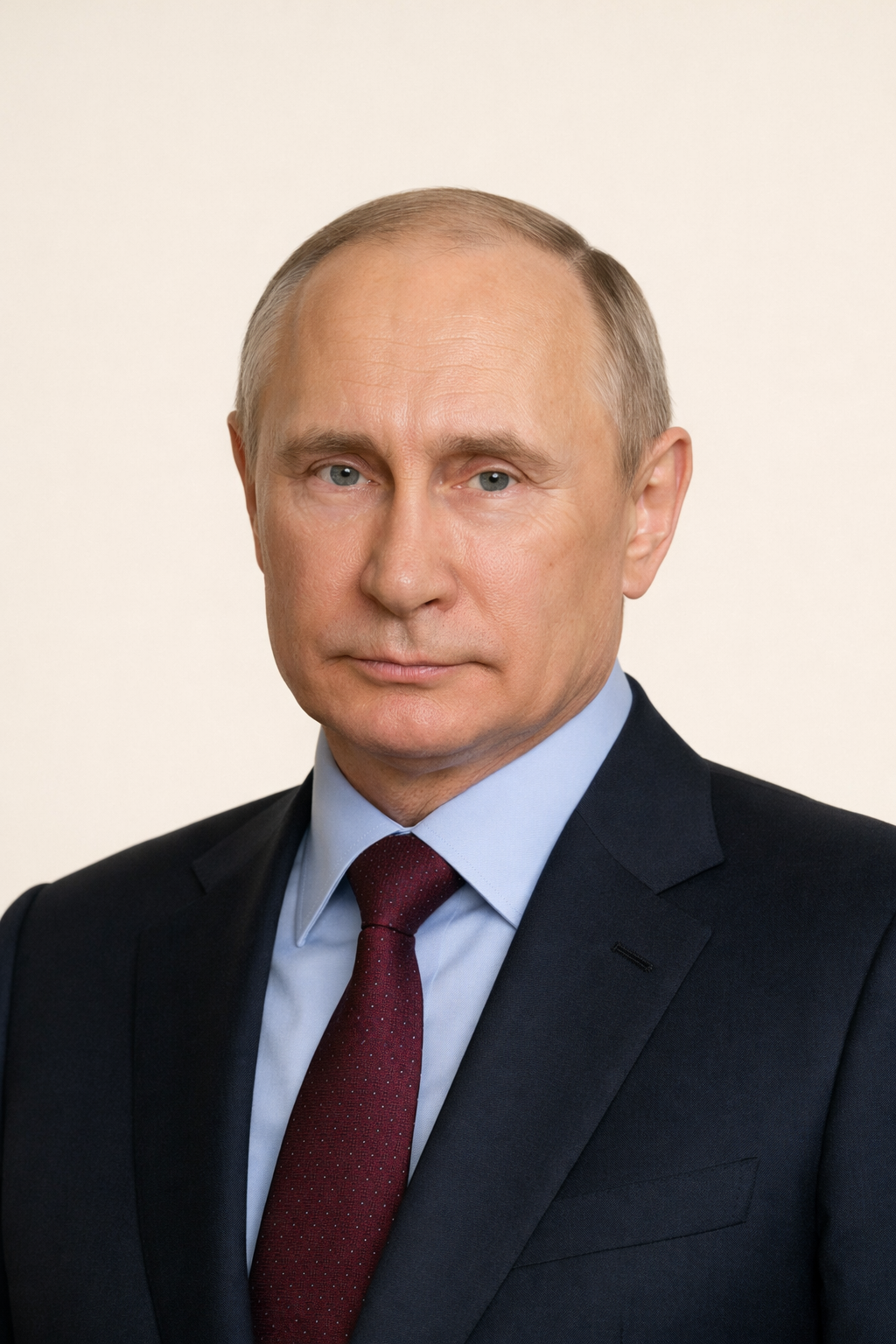
Vladimir Putin
He traded Russian diesel to Washington for Donald Trump's October 16-17 waiver of most Graham Act sanctions, then declared a 660-kilometre security zone inside Ukraine off-limits from any peace talks.
Vladimir Putin is collecting on his diesel bargain with Washington. Donald Trump signed an executive order on October 16-17 waiving most Graham Act sanctions and tariffs on Russia, in exchange for 300,000 tonnes of diesel now, 500,000 in November and a million tonnes thereafter. Volodymyr Zelenskyy calls the deal a 'weak decision' that 'plays into Russia's hands.'
From a military command post on October 16, he declared a 660-kilometre security zone inside Ukraine, roughly 70 percent held by Russian forces, off-limits from any peace negotiation, and met general staff chief Valery Gerasimov to confirm its execution. Russian missile, drone and glide-bomb strikes across Ukraine from October 10 to 12 killed more than 60 people, 33 of them on two Kramatorsk buses. He frames the war as existential, saying Russia could cease to exist if it fails, while thousands of Russian men fly out through Istanbul ahead of an expected forced induction wave.
Europe is the other front. A decree signed October 16 seizes the Russian assets of four European companies plus the Dutch unit of US-owned Sonoco, retaliation for the EU's freeze of about 210 billion euros in Russian sovereign assets, a move he concedes carries 'certain downsides.' NATO supreme allied commander Alexus Grynkewich accuses him of a sabotage, arson and terror campaign aimed at scaring Europeans away from backing Ukraine. He has voiced support for the Vatican's effort to aid famine-stricken Oleshky, and the Kremlin says it is ready to cooperate on evacuations, though no corridor agreement has been reached as of October 17.
Trump has invited him to the G20 summit in Florida on December 14-15, his first offer of a seat at major international talks since the 2022 invasion, but the Kremlin calls travel speculation premature.
On their plate
Trump signed an executive order on October 16-17 waiving most Graham Act sanctions and tariffs on Russia in exchange for 300,000 tonnes of diesel now, 500,000 in November and one million tonnes thereafter; Russia had already lifted its diesel export restrictions on October 10, with Kremlin spokesman Dmitry Peskov crediting global demand. Critics warned Putin was exploiting a concession Trump had proposed to lure him back to Ukraine talks, and analysts describe the wider American shift toward backing the Kremlin as a victory he has extracted from Washington. Volodymyr Zelenskyy calls the deal a 'weak decision' that 'plays into Russia's hands.'
From a military command post on October 16, Putin announced a 660-kilometre security zone inside Ukraine, a belt roughly 70 percent held by Russian forces, and declared it off-limits from any peace negotiations, meeting chief of the general staff Valery Gerasimov to confirm the task is being executed. Russian missile, drone and glide-bomb strikes across Ukraine between October 10 and 12 killed more than 60 people, including 33 when a guided bomb hit two buses in Kramatorsk. He frames the conflict existentially, claiming Russia could cease to exist if it fails, funds it with budget transfers from non-defense sectors, and is expected to launch a forced induction wave after the September 18 elections, with thousands of Russian men pre-emptively flying out through Istanbul.
A decree signed October 16 seizes the Russian assets of Tarkett of France, Menshen of Germany, Sverige International Holdings of Sweden, Ontex of Belgium and the Dutch unit of US-owned Sonoco, framed as retaliation for the EU freezing about 210 billion euros in Russian sovereign assets; the Kremlin calls the moves reversible, but Putin concedes they carry 'certain downsides.' NATO supreme allied commander Alexus Grynkewich accuses Putin of a campaign of sabotage, arson and terrorist attacks meant to scare European publics away from supporting Ukraine, and retired SACEUR Curtis Scaparrotti says the alliance is already effectively 'at war with Russia' through Putin's hybrid campaign. Putin has also threatened Russia's 4,400 nuclear warheads against NATO countries over Kaliningrad, part of what the UN Secretary-General calls the most dangerous nuclear moment since 1989.
Putin has voiced support for the Vatican's effort to aid famine-stricken Oleshky, under Russian occupation, and the Kremlin expressed readiness to cooperate on evacuations. No formal humanitarian corridor agreement had been reached as of October 17.
Trump has invited Putin to the G20 summit in Florida on December 14-15, his first offer of a seat at major international talks since the 2022 invasion. Putin has not decided whether to accept; the Kremlin expressed gratitude but called travel speculation premature.
Key relationships
Deal partner in Washington: Trump waived most Graham Act sanctions and tariffs on Russia in exchange for Putin's diesel, and has invited him to the G20 summit in Florida, which the Kremlin has not yet answered.
The Ukrainian president attacked Putin's diesel deal with Trump as a 'weak decision' that 'plays into Russia's hands,' allowing it to kill more and wage war for longer.
Putin met the chief of the general staff to confirm the armed forces are executing the task of establishing the security zone inside Ukraine.
