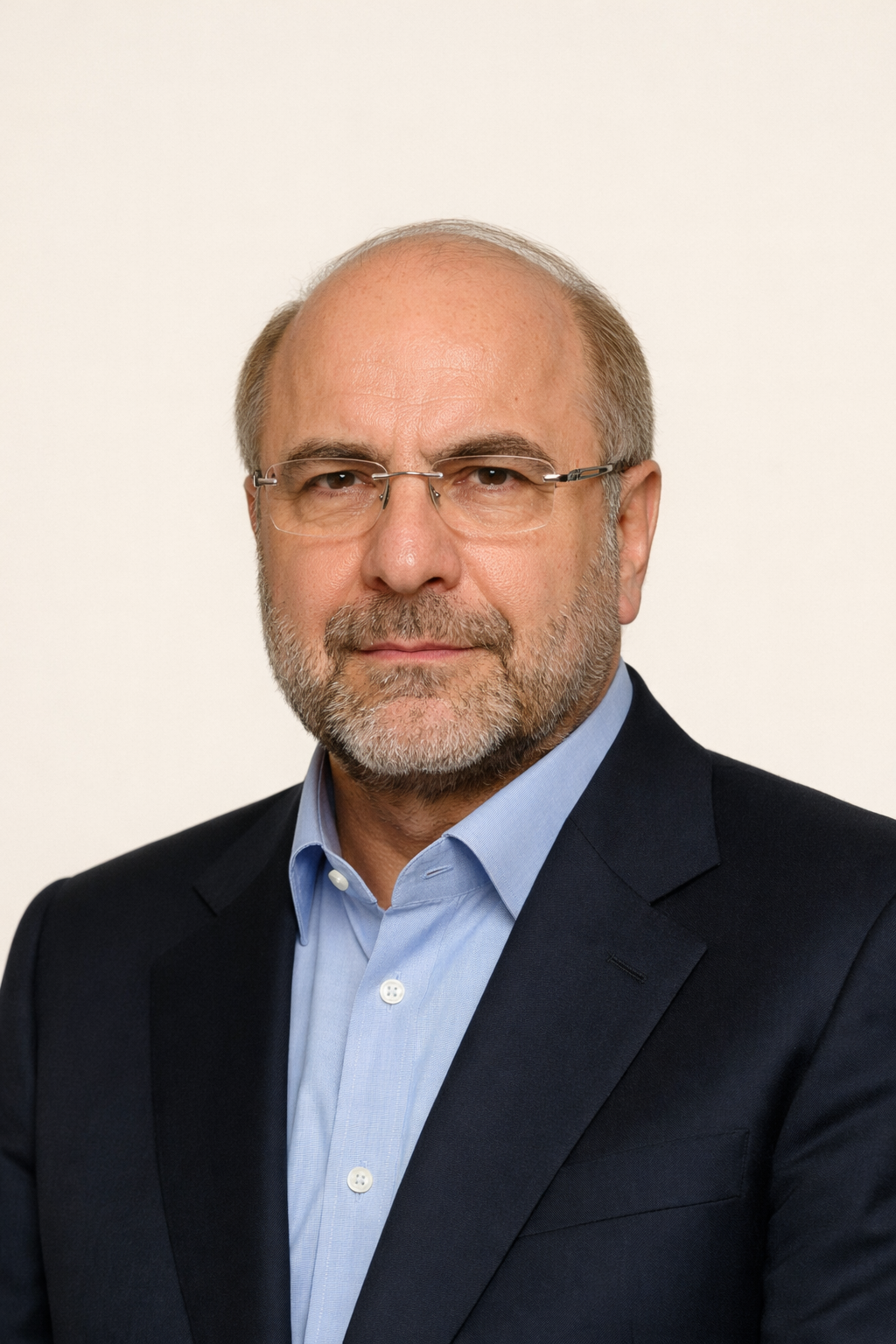
Mohammad-Bagher Ghalibaf
Iran's Parliament Speaker and chief public face through an active U.S.-Iran war: declaring the conflict existential, vowing Iran will never surrender, keeping the door to talks technically open while framing the "era of one-sided deals" as over.
Mohammad Bagher Ghalibaf is Iran's Parliament Speaker and the primary public voice of the Iranian leadership during an escalating war with the United States now in its second week of sustained exchanges. As of July 16, with six consecutive nights of U.S. strikes hitting Iranian command centers, air defenses, and infrastructure, Ghalibaf has held a dual posture: declaring Iran is fighting an "existential war" while keeping the door to talks technically ajar. He stated "doors are open for talks" but insisted that "negotiations at this stage does not mean capitulation."
His rhetoric has hardened steadily since the June 17 ceasefire collapsed. He declared "the era of one-sided deals is OVER" and warned the U.S. that "if you strike, you will be struck back." After Trump considered expanding operations to seize Kharg Island, Ghalibaf asserted the country's armed forces have "complete freedom of action" against enemy aggression. He told the U.S. that "only those prepared for war can negotiate."
Ghalibaf conditioned any resumption of negotiations on full implementation of the 14-point Islamabad MoU, halted all new U.S. negotiation rounds, and blocked IAEA inspector access to bombed nuclear sites, stating "under no circumstances do we allow access to sites that have been bombarded and damaged." He sparred directly with IAEA Director General Rafael Grossi, demanding Grossi "stop issuing political statements." He set five prerequisites for a final nuclear deal, including complete Israeli withdrawal from Lebanon and termination of U.S. military presence in the region, and declared plainly: "We do not trust the United States."
On the Strait of Hormuz, Ghalibaf asserted Iranian sovereignty and said the waterway "will be reopened only under Iranian arrangements, not through U.S. threats." He announced a 60-day toll-free window after the ceasefire, after which Iran intends to impose mandatory passage fees by mid-August. The U.S. has categorically rejected any tolls.
He met Hamas Chairman Mohammad Darwish in Tehran on the sidelines of Ayatollah Khamenei's funeral, discussing a Gaza ceasefire and an independent Palestinian state with Jerusalem as its capital. He operates under internal pressure: 63 of 88 Assembly of Experts members demanded his negotiating team adhere to Supreme Leader Mojtaba Khamenei's red lines, and state broadcaster IRIB cut a Ghalibaf interview mid-sentence as he discussed unfreezing Iranian assets. He also faces personal risk: the U.S. warned Iran that Israel plotted to assassinate him, and an April trip to Islamabad was disrupted when Israeli fighter jets entered Iranian airspace to target his aircraft, forcing an emergency landing.
On their plate
Ghalibaf frames the U.S.-Iran conflict as existential while keeping talks technically open. After six consecutive nights of U.S. strikes, he declared "doors are open for talks" but insisted negotiations do not mean capitulation, and asserted Iran's armed forces have "complete freedom of action" against U.S. aggression. He warned that "only those prepared for war can negotiate with the U.S."
Ghalibaf blocked IAEA inspector access to bombed nuclear sites, backed by parliament and the Supreme National Security Council, and sparred directly with Director General Rafael Grossi. He conditioned the next stage of talks on full U.S. implementation of the 14-point MoU and declared "nuclear rights and red lines are non-negotiable." He set five prerequisites for a final nuclear deal including Israeli withdrawal from Lebanon and termination of U.S. military presence in the region.
Ghalibaf asserted that the strait "will be reopened only under Iranian arrangements, not through U.S. threats" and announced a 60-day toll-free window after the ceasefire, with mandatory passage fees to follow by mid-August. The U.S. has categorically rejected any Iranian tolls; Oman proposed a voluntary framework that Iran insists will be mandatory.
63 of 88 Assembly of Experts members issued a statement demanding Ghalibaf's negotiating team adhere to Supreme Leader Mojtaba Khamenei's red lines. State broadcaster IRIB abruptly cut a Ghalibaf interview as he discussed unfreezing Iranian assets, signaling opposition from security-aligned IRGC factions to his diplomatic posture.
Ghalibaf met directly with Hamas Chairman Mohammad Darwish in Tehran on the sidelines of Ayatollah Khamenei's funeral, discussing the Gaza ceasefire, humanitarian aid, settler violence in the West Bank, and establishment of an independent Palestinian state with Jerusalem as its capital.
Key relationships
President Pezeshkian defended the legality of the diplomatic track and announced the potential release of $6 billion in frozen assets, working alongside Ghalibaf who conditioned a final agreement on full MoU implementation.
The U.S. warned Iran that Israel plotted to assassinate Ghalibaf; Israeli fighter jets entered Iranian airspace to target his aircraft during an April Islamabad trip, forcing an emergency landing. Netanyahu dismissed the reports as "fake news."
Ghalibaf barred IAEA inspectors from bombed nuclear sites and demanded Grossi "stop issuing political statements," while Grossi maintained inspections are essential to verify the Isfahan stockpile of highly enriched uranium.
