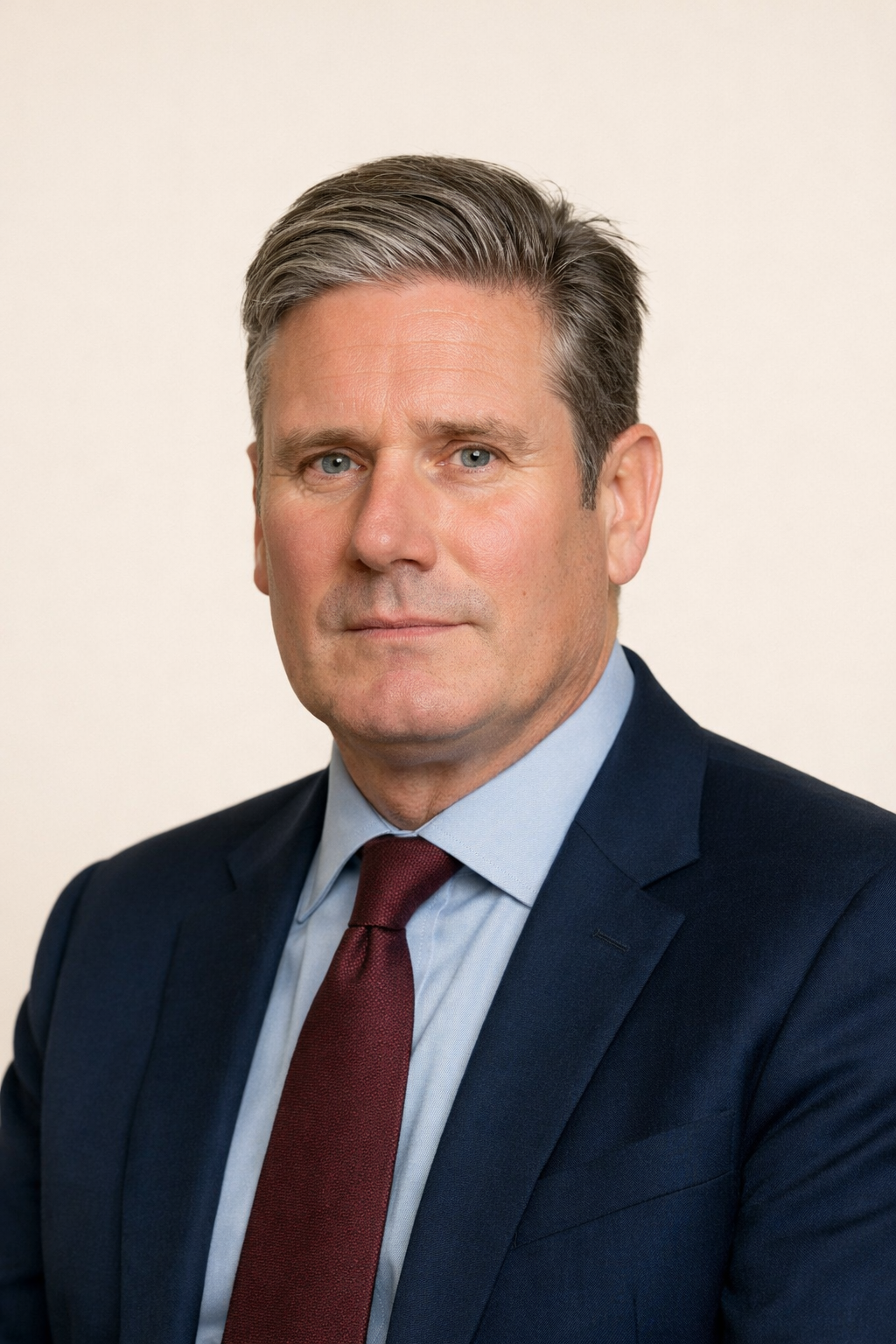
Keir Starmer
Former UK prime minister who resigned July 20, 2026 after catastrophic local elections; now a backbench MP as Andy Burnham systematically reverses his policies and clears his appointees, while Starmer's own record draws sustained criticism over the Sue Gray appointment, a record £500k civil-service payout, resignation peerages, and a 20% membership collapse.
Keir Starmer resigned as prime minister on July 20, 2026, declaring "my work is done" and offering full support for an orderly transition to Andy Burnham. His exit followed catastrophic May local elections that saw Labour lose Barnsley to Reform UK, and public unpopularity driven by National Insurance hikes and Winter Fuel Allowance cuts. He is now a backbench MP.
His premiership's record is under sustained attack from multiple directions. In an August interview, Starmer admitted that appointing Sue Gray as chief of staff was his own misjudgment, saying "Sue wasn't the right person for this job" — his only public comment as Gray's account of an "unbearable" No. 10 environment circulated. Electoral Commission figures released in August showed Labour lost 20.6% of its membership under his leadership, falling from 333,235 to 264,754, while donations collapsed 84% to £6.5 million, leaving a £2.6 million deficit. A report surfaced in August that Starmer authorized a record roughly £500,000 payout to dismissed Cabinet Secretary Chris Wormald, overriding value-for-money concerns via a ministerial direction, and then nominated Wormald for a crossbench peerage.
Former transport secretary Louise Haigh publicly accused Starmer and chief of staff Morgan McSweeney of running a sexist "boys' club" that briefed against female ministers, calling denials "fanciful." Health Secretary Yvette Cooper criticized his leadership style on a podcast, saying it "didn't fit with that emotion that you need to drive change and involve people." His own defence secretary John Healey resigned over Starmer's £10 billion defence investment plan, calling it "well short of what is required."
In one of his final acts, Starmer nominated 26 life peers including Sadiq Khan, drawing cronyism charges from Reform UK and Conservatives. Burnham is now systematically clearing Starmer-era appointees, including chief economic advisor Minouche Shafik, and reversing his policy approach.
On their plate
Starmer admitted in an August 2026 interview that appointing Sue Gray as chief of staff was his own misjudgment, saying she "wasn't the right person for this job." It was his only public comment as Gray's account of an "unbearable" No. 10 environment circulated.
While still in office, Starmer authorized a record roughly £500,000 payout to dismissed Cabinet Secretary Chris Wormald, overriding value-for-money concerns via a ministerial direction, and nominated Wormald for a crossbench peerage. The arrangement surfaced in August 2026.
Electoral Commission figures showed Labour lost 20.6% of membership under Starmer's leadership, falling from 333,235 to 264,754, while donations collapsed 84% to £6.5 million, leaving a £2.6 million deficit. Starmer's response at the time was: "If you don't like the changes that we've made, I say the door is open, and you can leave."
In one of his final acts, Starmer nominated 26 life peers including Sadiq Khan, Gen Patrick Sanders, and Sir Brian Leveson, claiming he was "proud to hand over the party in good shape." The Sadiq Khan elevation drew cronyism charges from Reform UK's Laila Cunningham and Conservative Gareth Bacon.
Burnham has systematically reversed Starmer-era policies and cleared his appointees, including removing chief economic advisor Minouche Shafik. Burnham contrasted his own direct-to-camera, devolution-focused style against Starmer's formal approach, though he kept Starmer's punitive immigration regime and US base-use authorization for Iran strikes.
Key relationships
Starmer resigned and handed power to Burnham, declaring "my work is done" and offering full support for an orderly transition. Burnham is now systematically reversing Starmer-era policies and clearing his appointees.
Healey resigned as Defence Secretary over Starmer's £10 billion four-year Defence Investment Plan, calling it "well short of what is required." Starmer had pushed the plan before the Ankara NATO summit to resolve difficult issues before his departure.
Former transport secretary Haigh publicly accused Starmer and his chief of staff Morgan McSweeney of running a sexist "boys' club" that briefed against female ministers including Rayner, Phillipson, Nandy, Gray, and Haigh herself.
Starmer authorized a record roughly £500,000 payout to dismissed Cabinet Secretary Wormald via a ministerial direction overriding value-for-money concerns, and nominated Wormald for a crossbench peerage.
Starmer appointed Gray as chief of staff and later publicly admitted it was his misjudgment, saying she "wasn't the right person for this job," as Gray's account of an unbearable No. 10 environment circulated.
Cooper publicly criticized Starmer's leadership on the Political Currency podcast, accusing his office of sidelining her during the May 2025 immigration white paper launch and saying his style didn't fit the emotion needed to drive change.
