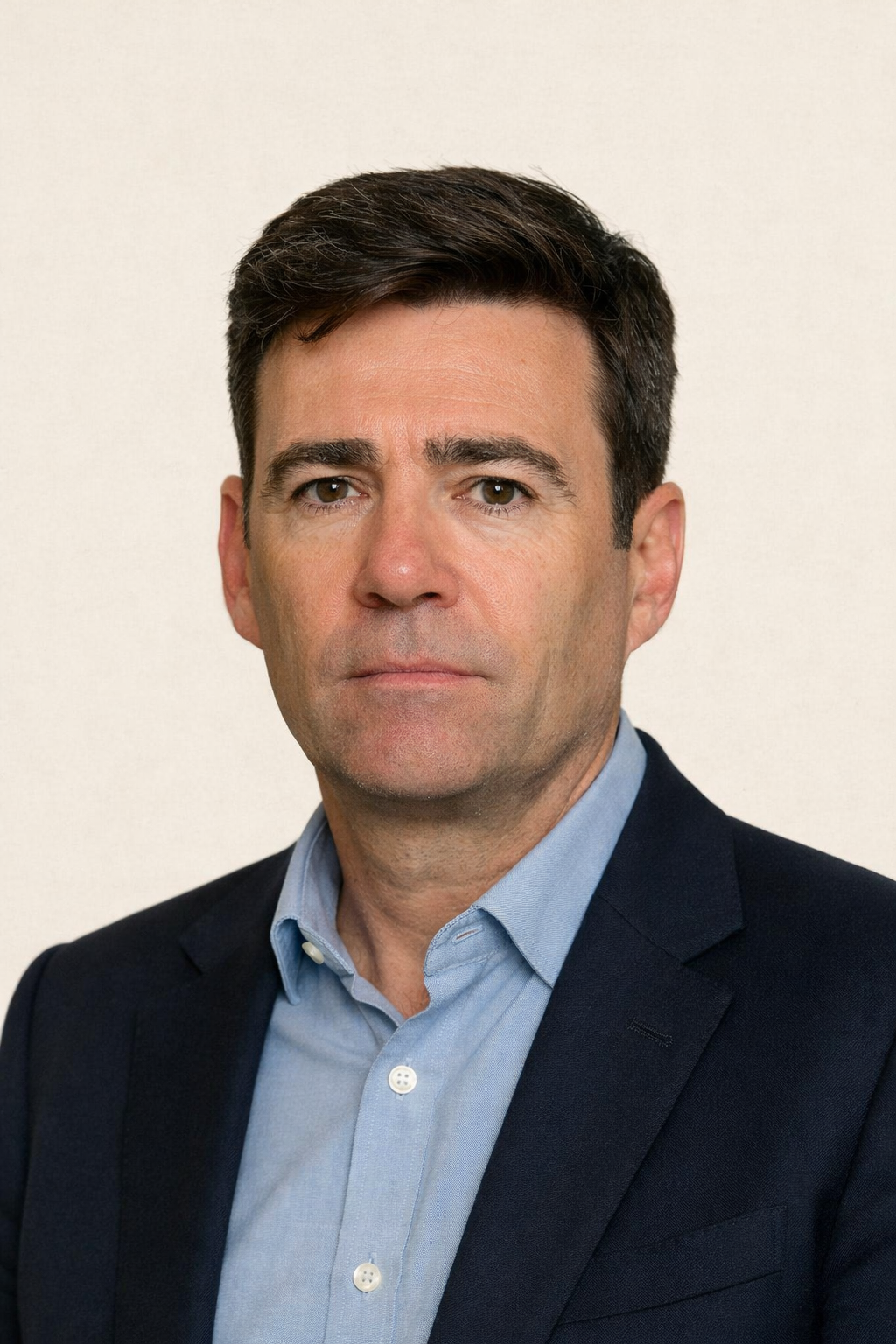
Andy Burnham
Now openly weighing Brexit reversal on claims Russia manipulated the 2016 vote, he is also offering Scotland regional devolution and withholding backing for Heathrow's £33bn third runway.
Andy Burnham is openly considering reversing Brexit and taking Britain back into the EU, framing the case around claims that Russia manipulated the 2016 referendum. The claim cuts against the Electoral Commission's earlier findings of no successful interference; his economic case rests on £240bn of Brexit damage.
In Scotland he has offered regional devolution, employment-support powers first and potentially transport and housing, casting it as 'No10 North' rewiring the state. The offer has no timetable, funding plan or list of transferred powers. John Swinney has signaled he will work constructively with him, though ties stay strained; the SNP's Stephen Flynn challenged him to allow a second independence referendum before 2031.
He has split with Chancellor John Healey on Heathrow, declining to endorse the £33bn third runway, telling Transport Secretary Heidi Alexander he remains unconvinced and suggesting London residents should decide, while Healey backs it as a growth case and Heathrow's chief warns sovereign-wealth investors cannot wait forever.
The Oct. 28 budget looms with the fiscal buffer shrunk from £24bn to an estimated £8.5–16bn. Healey affirms 'lockstep' with Burnham on the fiscal rules and won't rule out tax rises. Burnham has announced Great British Grid, a publicly owned energy networks company, and is pressing laws to take failing water firms into public ownership while the government weighs a £10bn Thames Water rescue; customers, he says, 'cannot be treated as a blank cheque.'
He hosted Volodymyr Zelenskyy with £17m for Chernobyl repairs and accelerated air-defence missiles, and holds the final call with Healey on the £2.4bn Skynet 6 satellite contract, where Airbus's Guillaume Faury warns a US pick could close plants in Stevenage and Portsmouth. A Jackdaw gas-field ruling sits with his energy secretary, with a Rosebank verdict taking longer; he insists the government is not backing away from either field.
On their plate
Burnham is openly considering reversing Brexit and taking Britain back into the EU, framing the case around claims Russia manipulated the 2016 referendum, a step beyond merely revisiting red lines that cuts against the Electoral Commission's earlier findings of no successful interference. He is making the economic argument publicly: a £240bn Brexit damage estimate, food exports to the EU down more than a third, and Scottish salmon facing 100% document checks that cost about £100m in lost exports. A deal to ease food checks, largely agreed in May, is set to be implemented next summer, and he says the agreement on the table could reverse some of the export damage.
Burnham used an Oct. 15–16 visit to North Lanarkshire to offer regional devolution to Scotland, DWP employment-support powers first with transport and housing potentially following, framing it as 'No10 North' rewiring the state so Scottish regions are fully part of it. The offer so far has no timetable, funding plan or definitive list of which decisions would transfer. Scottish Secretary Douglas Hart has publicly backed it, calling Burnham a practitioner of devolution from his Manchester mayoralty, and John Swinney has signaled willingness to work constructively to secure powers for the Scottish Parliament despite strained ties.
Burnham has declined to endorse the £33bn third runway, telling Transport Secretary Heidi Alexander he remains unconvinced by the expansion case and suggesting the decision should rest with London residents. That leaves him split from Chancellor John Healey, who backs the project as a growth case. Heathrow chief executive Thomas Woldbye has kept up his warning about the non-endorsement, saying sovereign-wealth investors from Singapore, Saudi Arabia and Qatar cannot wait forever.
Healey's first budget arrives Oct. 28 amid rising global borrowing costs, with the fiscal buffer shrunk from £24bn in March to an estimated £8.5–16bn on higher debt interest; Healey affirms the two are in 'lockstep' on the fiscal rules and on balancing non-investment spending with tax revenue by 2029/30, while refusing to rule out tax rises, with capital gains and a higher 3% bank profit surcharge in play. Burnham is pairing the moment with his state-control push: Great British Grid, a publicly owned networks company meant to speed up connections and cut energy costs, plus laws to enable public ownership of failing water firms, with Environment Secretary Angela Eagle expected to bring a strengthened Water Bill to Parliament. As the government weighs a £10bn rescue takeover of debt-laden Thames Water, his line is that customers 'cannot be treated as a blank cheque.'
Burnham hosted Volodymyr Zelenskyy at Downing Street, pledging £17m for Chernobyl shelter repairs and confirming accelerated delivery of British lightweight multi-role air-defence missiles against Russian drones, telling him he 'won't be going away from Britain today empty-handed.' He also holds the final call, jointly with Healey, on the £2.4bn Skynet 6 military satellite contract, where the MoD prefers Lockheed Martin and Airbus chief Guillaume Faury has lobbied him directly, warning that a US pick could force closure of Airbus plants in Stevenage and Portsmouth and jeopardize the UK's long-term place in the European space industry.
Key relationships
His chancellor, publicly aligned with Burnham on the Oct. 28 budget and joint holder with him of the £2.4bn Skynet 6 satellite decision, though the two have split openly on Heathrow: Healey backs the £33bn third runway as a growth case; Burnham declines to endorse it.
Burnham hosted him at Downing Street with £17m for Chernobyl shelter repairs and accelerated delivery of British lightweight multi-role air-defence missiles against Russian drones, positioning Britain as Ukraine's reliable partner at a moment Zelenskyy reports US betrayal over Starlink restrictions.
Has signaled willingness to work constructively with Burnham to secure as many powers as possible for the Scottish Parliament, though the relationship stays strained; Swinney previously predicted Burnham would be the last prime minister of the United Kingdom.
His energy secretary, with the imminent Jackdaw gas-field ruling on her desk and a Rosebank verdict taking longer. Burnham has left the decisions with her while publicly committing that the government is not backing away from Jackdaw or Rosebank; ministers are staying deliberately circumspect because earlier Conservative approvals ended up in court over missing environmental impact assessments.
The Scottish secretary publicly backing Burnham's devolution offer, saying Burnham is not just an advocate of devolution but a practitioner from his Manchester mayoralty.
The SNP economy secretary directly challenging Burnham to allow a second independence referendum before 2031, accusing him of hypocrisy over EU relations given his own Brexit reconsideration.
The Airbus chief lobbying Burnham directly against the MoD's preferred Lockheed Martin bid for the £2.4bn Skynet 6 contract, arguing a US pick could force closure of Airbus plants in Stevenage and Portsmouth and jeopardize the UK's long-term place in the European space industry. Burnham holds the final call, jointly with Healey.
His transport secretary on the open Heathrow decision. Burnham has told her directly that he remains unconvinced by the third-runway case and suggests the call should rest with London residents.
