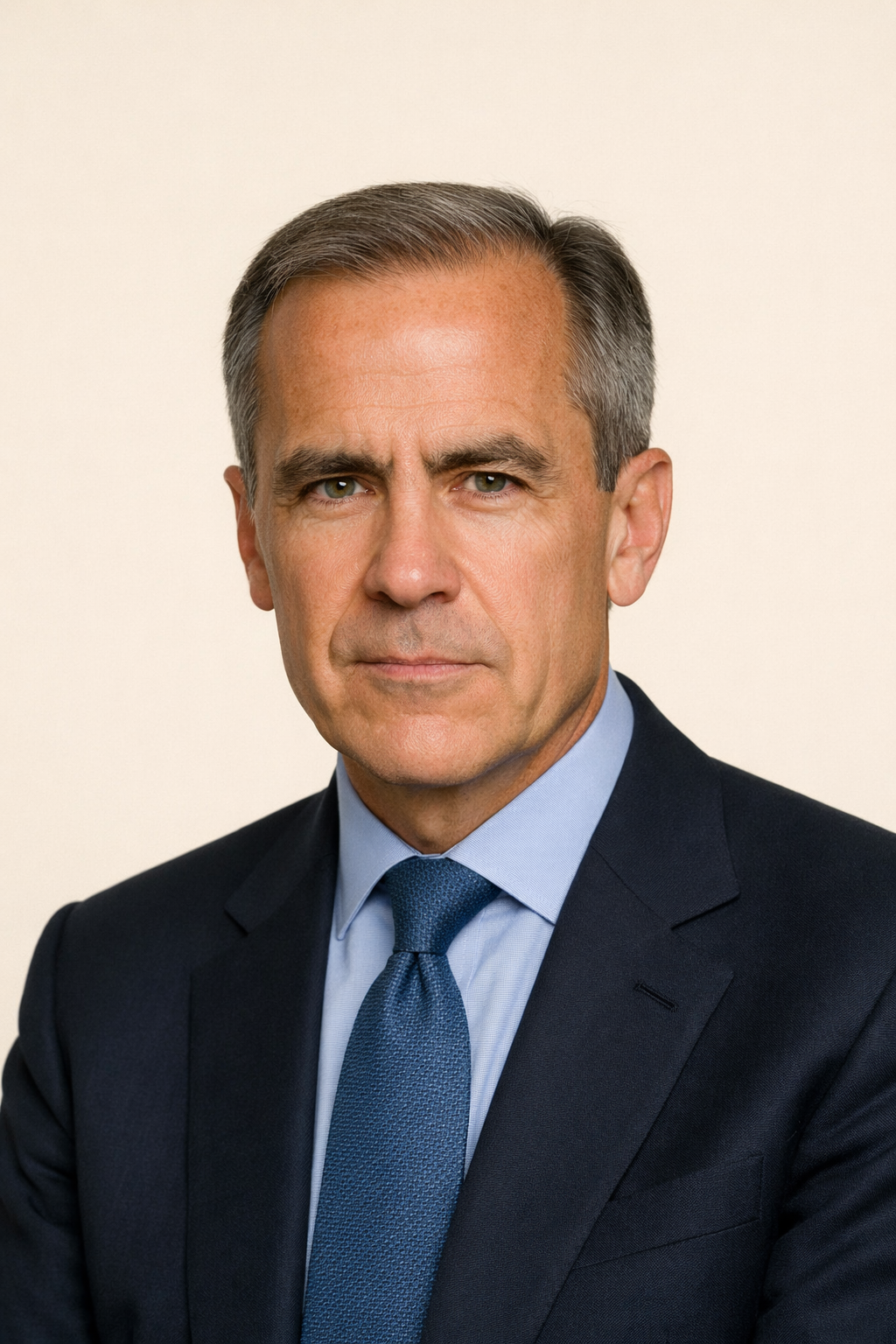
Mark Carney
Carney is rallying Calgary and Edmonton against Alberta's Oct. 19 separation referendum, calling a vote to leave "a dangerous bluff" and warning that outside forces are "working to break us so they can own us."
Two days before Alberta votes, Prime Minister Mark Carney is rallying Calgary and Edmonton for a no on all ten ballot questions, separation included. He calls a vote to leave "a dangerous bluff" that would bring "years of deep uncertainty and lost opportunities," and says "there couldn't be a worse time for this referendum" in a dangerous and divided world. His case rests on federal cuts to temporary foreign workers and students that he says answered the grievances behind the vote. To Elon Musk's suggestion that three provinces separate, he replied that Canadians alone will decide the country's future. The Pacific Link pipeline he fast-tracked to cut Alberta's U.S. dependence is already in Federal Court, where Cold Lake First Nations are suing to quash his national-interest designation over a claimed failure to consult.
The campaign runs against Premier Danielle Smith's ballot and against Washington. He rejected Donald Trump's claim that Canada will become the 51st state and his renaming of Lake Ontario, saying "naming reality means calling it Lake Ontario – then, now and always," and accused the administration of working to break Canada "so they can own us." He told Volodymyr Zelenskyy on Oct. 11 that Canada will maintain and possibly tighten its 3,500 Russia sanctions, and criticized the U.S.-Russia diesel deal for financing Russia's war.
At home he is spending into a weakening job market, answering September's 68,000 lost jobs and 6.5 percent unemployment with a $4.7 billion VIA Rail car order stacked on his retrofit, trades-training and grid-building agenda. He is also steering immigration back toward "some controlled increase in the population," with the caps holding until a Nov. 1 levels plan.
Abroad he presses middle powers into "coalitions of the willing," and his India reset closed 34 deals worth nearly $300 million, with Narendra Modi due in December.
On their plate
Carney is rallying Calgary and Edmonton for a no on all ten questions on the Oct. 19 ballot, separation, Senate abolition, provincial opt-outs and immigration controls among them, calling a vote to leave "a dangerous bluff" that would bring "years of deep uncertainty and lost opportunities." He argues federal cuts to temporary foreign workers and students have already addressed the grievances behind the vote, and is campaigning directly against Premier Danielle Smith's referendum while signaling post-referendum cooperation: "I don't need a referendum to tell us to co-operate more with the provinces on immigration." He is fast-tracking the Pacific Link oil pipeline to cut Alberta's economic dependence on the United States, and Cold Lake First Nations sued Oct. 8 to quash his national-interest designation, arguing the government breached its duty to consult.
Carney is holding the line against Donald Trump's annexation push, rejecting his claim that Canada will become the 51st state and his renaming of Lake Ontario with the reply: "naming reality means calling it Lake Ontario – then, now and always." He has accused the administration of working to break Canada "so they can own us" and criticized the new U.S.-Russia diesel supply agreement, saying it "provides revenue to finance Russia's war and opposes efforts to create stability in Europe." U.S. Ambassador Pete Hoekstra has warned Canadian politicians to stay out of November's midterms and Peter Navarro has threatened Canadian lobbyists, but Carney is still booked for the New York Times DealBook Summit on Nov. 18.
After years of intake restrictions, Carney is asking aloud: "when do we resume some controlled increase in the population, which is the nature of Canada?" The guardrails hold, with temporary residents capped at 5 percent of the population by the end of 2027 and permanent-resident admissions kept under 1 percent. Immigration Minister Lena Diab updates Express Entry on Nov. 3 to favor health, IT and engineering workers, and a formal 2027-2029 levels plan is due Nov. 1.
September erased 68,000 jobs and pushed unemployment to 6.5 percent, with youth hit hardest, and Carney answered with a $4.7 billion VIA Rail investment to buy 313 passenger cars from Alstom Canada, expected to support nearly 700 jobs across Ontario and Quebec. His affordability agenda keeps building underneath, with Jobs Minister Patty Hajdu layering a new $258.6 million Sectoral Workforce Innovation Fund on top of a $2 billion home-retrofit program, the $8 billion Team Canada Strong plan to train 100,000 Red Seal trades workers by 2030-31, and a grid-doubling strategy that just drew a $479 million Hitachi Energy factory in London, Ontario, backed by $30 million in federal money. He is also pushing to entrench the federal labor minister's power to end strikes deemed contrary to the national interest, a move a Nanos poll splits: 32 percent back direct ministerial authority, 36 percent want formal back-to-work legislation, 25 percent oppose any government power to end strikes.
At Davos he pressed middle powers to form "coalitions of the willing" against a predatory global order, warning that "the old rules-based order no longer constrains the mighty" and that AI and space firms such as Nvidia, Apple, Amazon, SpaceX and Anthropic are displacing nation-states as geopolitical actors. He told Volodymyr Zelenskyy on Oct. 11 that Canada will maintain and possibly tighten its 3,500 Russia sanctions, called for an immediate stop to Russian strikes on Ukraine's energy grid, and discussed expanded air-defense coordination on top of a recent $355 million commitment. His India reset keeps delivering: the largest Canadian trade mission to India in 30 years closed 34 commercial agreements worth nearly $300 million, with both countries aiming to conclude a Comprehensive Economic Partnership Agreement by end-2026 and Narendra Modi due in Toronto and Ottawa Dec. 11-12.
Key relationships
Carney is campaigning against the ten-question referendum Smith initiated, urging no votes on separation and her five immigration-control questions, while signaling he will cooperate with the provinces on immigration once the vote is past.
Carney rejects Trump's annexation push, disputing his claim that Canada will become the 51st state and accusing his administration of working to break Canada "so they can own us."
Carney's March New Delhi visit, which secured a $2.6 billion Cameco uranium deal, opened a reconciliation that is now producing trade results; Modi is scheduled to visit Toronto and Ottawa on Dec. 11-12.
Carney rebuffed Musk's suggestion that Alberta, Saskatchewan and Quebec should separate, insisting the country's future will be decided by Canadians themselves.
Carney reaffirmed Canada's solidarity with Ukraine on an Oct. 11 call, pressing for an immediate stop to Russian strikes on the energy grid and discussing expanded air-defense coordination on top of a recent $355 million Canadian commitment.
