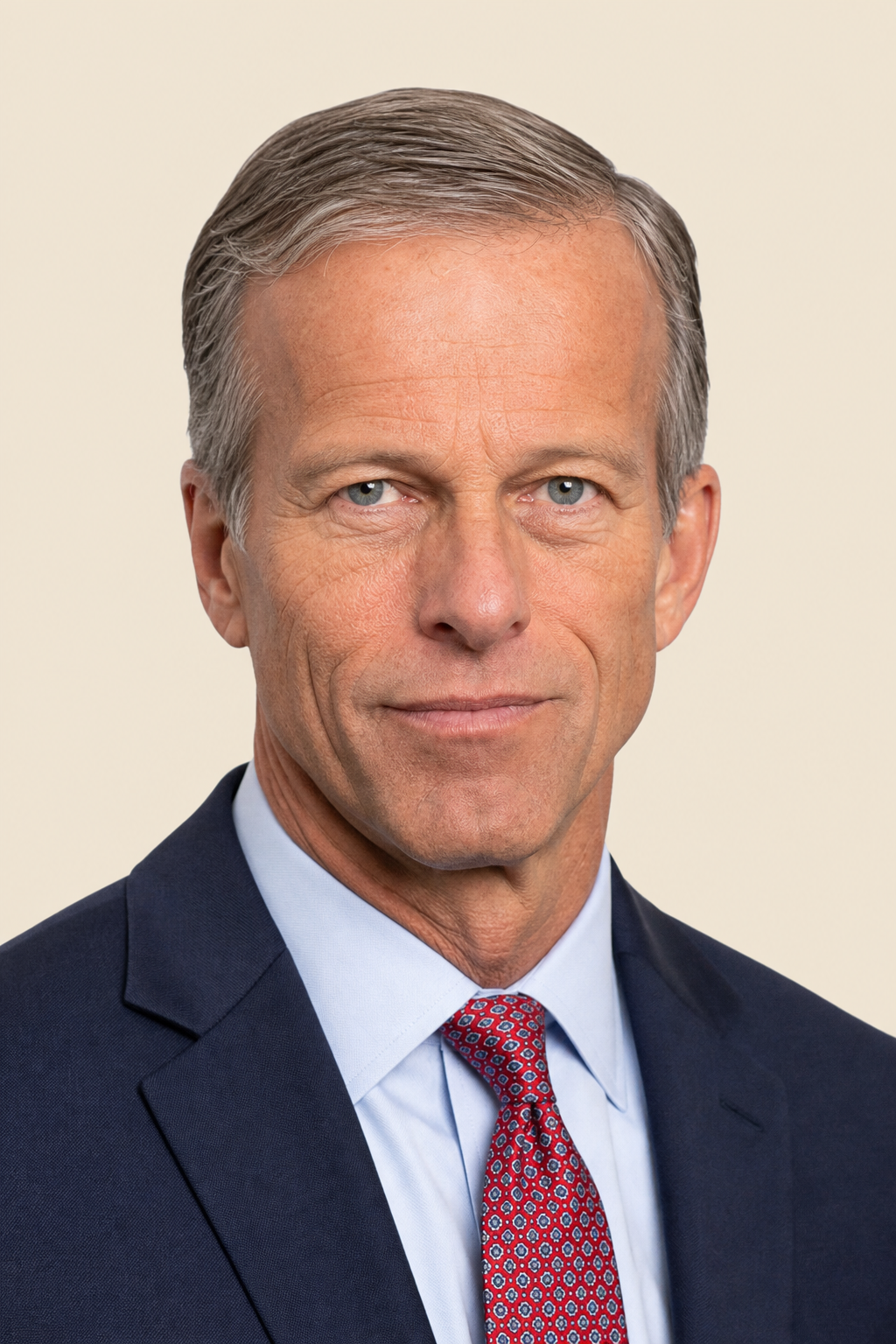
John Thune
Thune filed cloture Aug. 8 to make the crypto CLARITY Act September's top Senate item, rejected Trump's recess-cancel and filibuster-termination demands for the SAVE Act, and called his own conference meeting "kind of a train wreck" amid internal clashes over reconciliation and the college sports bill.
John Thune adjourned the Senate for August recess after filing cloture to make the Digital Asset Market Clarity Act the chamber's top September item — prioritizing crypto regulation over Trump's SAVE America Act, which failed a sixth procedural vote. The move caps a stretch in which Thune openly defied the president on the Senate's most charged fight.
Trump demanded Thune cancel the recess and terminate the filibuster to pass the SAVE Act, with the White House warning the president's "patience is running out." Thune rejected both, noting the Senate had voted on the bill five times and Democrats would not budge. When Trump publicly questioned Thune's leadership and claimed the votes were there, Thune dismissed the arithmetic as "a different form of math" and quipped that being replaced "might be a big relief." He confirmed he intends to seek another term as leader. Thune told Politico the loss of Lindsey Graham as an intermediary with Trump has complicated managing the president.
The pre-recess stretch exposed sharp caucus divisions. Thune called his own conference meeting "kind of a train wreck," with Ron Johnson pushing a third reconciliation bill, Susan Collins opposing it over vote-a-rama risks, and Josh Hawley clashing with Ted Cruz over whether the college sports bill overrides state transgender-athlete bans. Right-flank pressure from Tommy Tuberville and Larry Kudlow to pursue reconciliation was declined by Thune, who prioritized a December continuing resolution, 74 Trump nominees, and the college sports bill — exposing him to a "no wins" attack from his right.
Thune is also steering Republicans toward kitchen-table economic messaging to protect swing-state incumbents, framing an expanded competitive map as a Democratic disadvantage. The CLARITY Act he teed up for September needs 60 votes and eight Democrats, with a bipartisan amendment forcing Trump to divest crypto holdings complicating the path.
On their plate
Trump demanded Thune cancel August recess and terminate the filibuster to pass the SAVE America Act; Thune rejected both, citing five failed floor votes and Democratic opposition. Trump publicly questioned Thune's leadership and declined to back him in a Punchbowl interview. Thune dismissed Trump's vote count as 'a different form of math,' quipped replacement 'might be a big relief,' and confirmed he intends to seek another term as leader. The loss of Lindsey Graham as a Senate-Trump intermediary has further complicated managing the president.
Thune filed cloture Aug. 8 to make the Digital Asset Market Clarity Act the Senate's top item when it returns Sept. 14, leapfrogging the SAVE Act. The bill needs 60 votes — eight Democrats — and remains snagged on Democratic demands for a congressional crypto-issuance ethics ban, consumer protections, and illicit-finance penalties. A bipartisan Tillis-Gallego amendment forcing Trump to divest crypto holdings, including World Liberty Financial, adds a state-AG enforcement backstop Thune must manage alongside his push for the procedural path.
Thune told reporters his conference meeting was 'kind of a train wreck,' reflecting clashes on multiple fronts. Ron Johnson is pushing a third reconciliation bill before recess; Susan Collins opposes it over vote-a-rama risks and also opposed Todd Blanche's confirmation. Josh Hawley and Ted Cruz are fighting over whether the Protect College Sports Act overrides state transgender-athlete bans. Right-flank pressure from Tommy Tuberville and Larry Kudlow, who say Republicans 'are doing nothing' and urge a reconciliation push for pre-election wins, was declined by Thune — who prioritized a December CR, 74 Trump nominees, the Blanche AG nomination, and the college sports bill, leaving him exposed to a 'no wins' attack from his right. Lankford separately challenged Thune's recess schedule by urging a delay to finish the SAVE Act and a $95B reconciliation package.
Thune is countering Schumer's 2026 Senate-recapture effort, framing the leftward shift of Democratic nominees as a GOP opening and insisting Republican candidates are well-resourced in key races. He argues an expanded competitive map — Mississippi, Iowa, Kansas, Nebraska — stretches Democrats too thin to flip the seats they need, directly countering Schumer's and Alsobrooks' push into Republican states.
Thune's en bloc nominee fast-track, established in September 2025, will have confirmed 375 Trump nominees — roughly 63% of civilian confirmations — after the next 74-nominee batch, the process Thune built to resist Trump's push for recess appointments while preserving Senate advice-and-consent power. He deflected questions about Todd Blanche's IRS tax-immunity settlement for Trump, saying Republican senators had input and 'got to a place where they were satisfied,' while Tillis and Cornyn forced DOJ to rescind a $1.8B MAGA-weaponization fund by threatening to block Blanche's confirmation.
Key relationships
Trump publicly questioned Thune's leadership, declined to back him, and demanded he cancel recess and terminate the filibuster to pass the SAVE Act. Thune rejected both demands, dismissed Trump's vote count as 'a different form of math,' and quipped that being replaced 'might be a big relief.'
Thune is countering Schumer's 2026 Senate-recapture effort, framing an expanded competitive map as stretching Democratic resources too thin to flip the seats they need.
Cornyn backs Thune's resistance to the SAVE Act, warning that promising unattainable results disappoints voters.
Johnson is pushing a third reconciliation bill before recess, creating an internal clash Thune must manage alongside competing floor priorities.
Collins opposes Johnson's third reconciliation bill over vote-a-rama risks and opposed Todd Blanche's confirmation, complicating Thune's legislative agenda.
Keep reading in the app
Where they stand, in full, free in the app.
 Coming soonGoogle Play