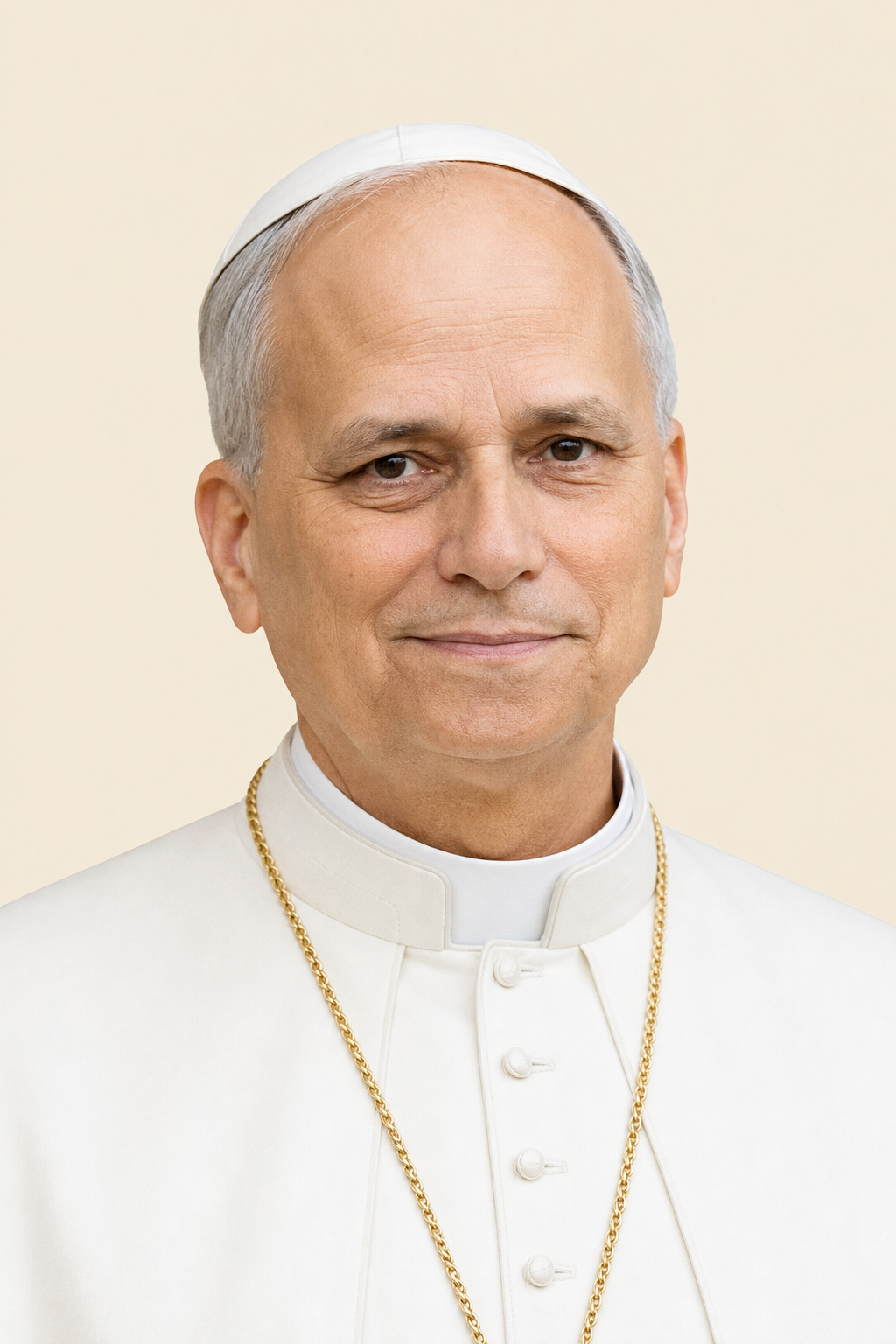
Pope Leo XIV
Pope Leo XIV is simultaneously confronting multiple power centers: issuing a landmark encyclical demanding global AI slowdown and disarmament over tech-industry objections, delivering a politically charged speech to Spain's Congress challenging domestic policy, endorsing a US-Iran peace framework against the Trump administration's pressure, and facing an imminent schismatic rupture from the SSPX — all while proactively advancing his own agenda rather than retreating.
Pope Leo XIV is in the most active and confrontational phase of his young pontificate, pressing a ambitious moral agenda across AI ethics, migration, nuclear disarmament, and Church unity — and drawing pushback from tech executives, nationalist politicians, and dissident clergy.
His first major encyclical, "Magnifica Humanitas," released May 25, 2026, is the centerpiece: a 42,300-word call for global AI disarmament and slowdown, prohibiting lethal autonomous warfare decisions and repudiating "just war" theory as outdated. The document drew public pushback from Mistral AI CEO Arthur Mensch, who defended military AI partnerships, and Anthropic co-founder Christopher Olah, who contested the Pope's claim that AI lacks moral conscience. AFL-CIO praised the encyclical, which also warned of mass unemployment and cited child slavery in Congo mineral mining.
A weeklong apostolic visit to Spain, ending June 12, 2026, put him at the center of domestic Spanish politics. He delivered the first-ever papal address to the Congress of Deputies, declaring a "profound spiritual and cultural crisis" marked by polarization, clashing with Spain's abortion reform by calling for protection of human life "from conception to its natural end," and criticizing European military spending. He met migrants at Gran Canaria, urged safe migration pathways, and directly criticized Donald Trump's hard-line anti-immigrant policies — drawing fire from Vox leader Santiago Abascal. He planned to meet clergy sexual abuse survivors, calling abuse "an open wound," though survivor groups were reportedly excluded from meetings.
On June 17, 2026, the Pope endorsed a US-Iran peace framework from Castel Gandolfo, calling for dialogue and the elimination of nuclear weapons threats — positioning himself against the Trump administration's coercive posture, which had seen the President publicly attack the Pope as weak on crime and terrorism and dispatch Secretary of State Marco Rubio to the Vatican with demands that Iran be denied nuclear capability.
He faces the first major internal crisis of his pontificate: the Society of St. Pius X plans to consecrate four bishops on July 1, 2026 without papal mandate. Cardinal Víctor Manuel Fernández warned this constitutes a schismatic act triggering automatic excommunication. The Pope had prayed for and sought dialogue to prevent the rupture, but SSPX superior general Father Davide Pagliarani confirmed the group will proceed.
He also received South Korean President Lee Jae Myung in a private audience, discussing Korean Peninsula peace; Lee invited the Pope to 2027 World Youth Day in Seoul and floated a Pyongyang visit, though the Vatican said any such trip requires a formal North Korean invitation.
On their plate
Pope Leo XIV's encyclical "Magnifica Humanitas" (May 25, 2026) demands global AI disarmament, slowdown of AI acceleration, prohibition of lethal autonomous warfare decisions, and repudiation of "just war" theory. He faces direct pushback from Mistral AI CEO Arthur Mensch, who defends military AI partnerships, and Anthropic co-founder Christopher Olah, who contests the Pope's assertion that AI lacks moral conscience. AFL-CIO praised the document.
A weeklong visit ending June 12, 2026 included the first papal address to Spain's Congress of Deputies, where the Pope declared a "profound spiritual and cultural crisis," clashed with abortion reform, criticized European military spending, and warned against AI in warfare. He met migrants at Gran Canaria, criticized Trump's anti-immigrant policies, and drew rebuke from Vox's Santiago Abascal. He met PM Pedro Sánchez on clergy abuse reparations, though survivor groups were reportedly excluded.
On June 17, 2026, the Pope endorsed a US-Iran peace framework from Castel Gandolfo, calling for dialogue and elimination of nuclear weapons threats. This follows a May 7-8 private audience with Secretary of State Marco Rubio, where Trump publicly attacked the Pope and demanded Iran be denied nuclear capability. He also received South Korean President Lee Jae Myung to discuss Korean Peninsula peace, with Lee proposing a papal visit to Pyongyang.
Key relationships
Trump publicly attacked the Pope on social media as weak on crime and terrorism, dispatched Rubio to deliver demands on Iran, and the Pope's Spain trip included direct criticism of Trump's anti-immigrant policies.
Met the Spanish PM during the Spain apostolic visit to discuss clergy sexual abuse reparations, though survivor groups were reportedly excluded from the meetings.
The Vox leader criticized the Pope's migration stance during the Spain apostolic visit.
The Mistral AI CEO rejected the Pope's call to curb military AI, defending Mistral's military partnerships with the French military and arguing Europe must maintain its own AI capabilities.
Received Rubio in private audience at the Apostolic Palace on May 7-8, 2026 to repair strained Vatican-US ties after Trump publicly attacked the Pope; Rubio carried Trump's demand that Iran be denied nuclear weapons.
