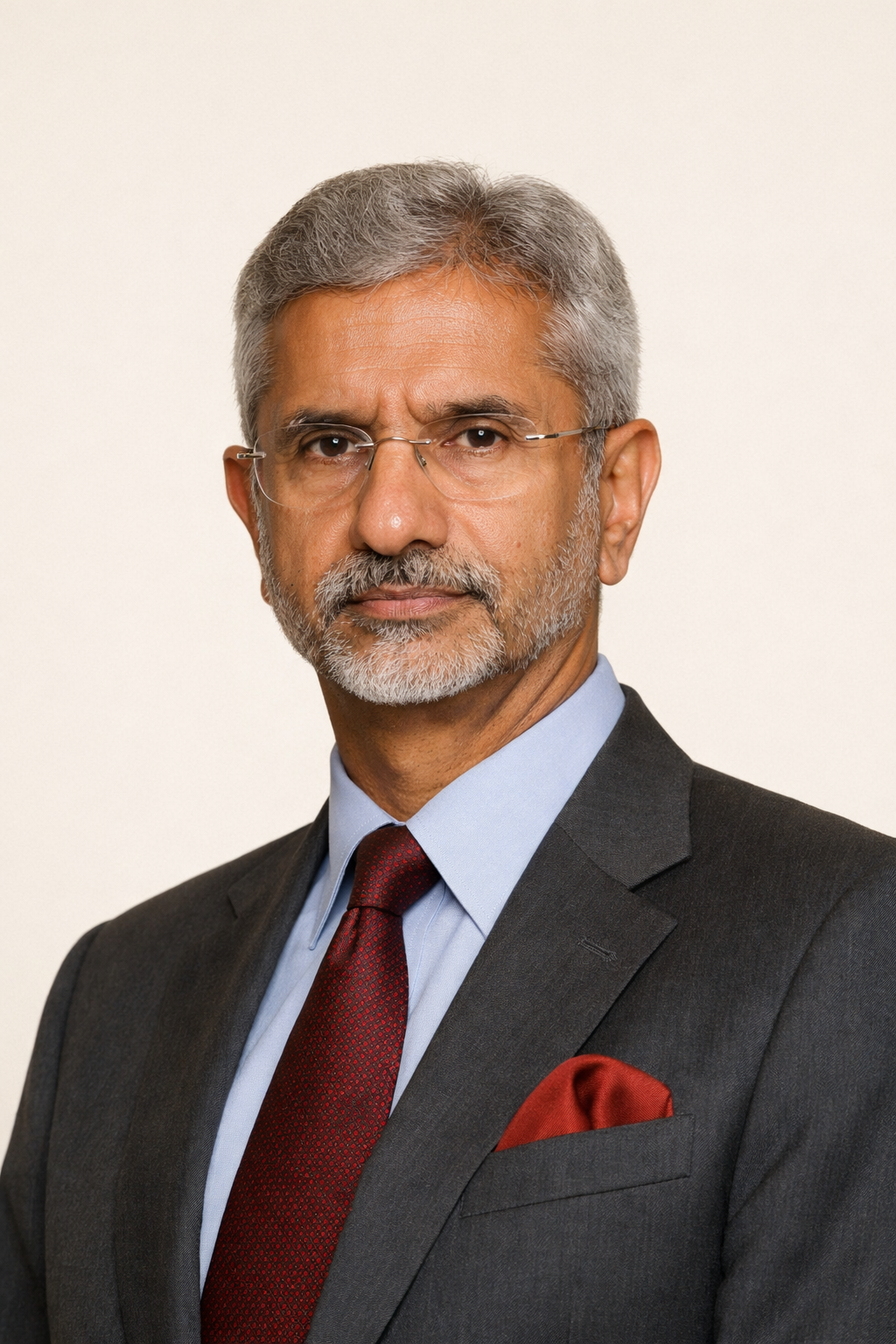
S. Jaishankar
He wrapped India-EU trade talks on October 13, says the US deal is 'heading towards a landing point,' and warns of a major food crisis as India moves into active mediation between Russia and Ukraine.
S. Jaishankar is wrapping his Abu Dhabi visit after reviewing the India-UAE Comprehensive Strategic Partnership with Sheikh Abdullah bin Zayed Al Nahyan, and told the Raisina Middle East Forum that 'reform of multilateralism is urgent' and can be supported through 'stronger minilateralism.'
He announced the conclusion of India-EU free trade negotiations on October 13, calling 2026 India's 'Europe Year' and hoping it enters force by end-2026 or early 2027. He says the US deal is 'heading towards a landing point,' with talks narrowed to product-specific and tariff-level sticking points. In New Delhi he advanced the Canada reset with Foreign Minister Anita Anand, targeting a trade pact by mid-December and a Modi visit to Canada on December 11-13 to potentially sign it.
He has moved India from advocacy to active mediation in the Russia-Ukraine war, announcing at the Munich Security Conference in New Delhi that he is brokering direct Moscow-Kyiv conversations on Black Sea shipping safety, grain and energy exports, and possible non-attack arrangements. The Persian Gulf file stays open: he is managing the safety of 4,500 Indian seafarers amid attacks on shipping, India runs a 24-hour control room and has co-launched a UN Group of Friends on shipping safety, and he has told the UN General Assembly that targeting ships and crews in international waterways is 'simply unacceptable.'
He is warning that 'there is going to be a major food crisis probably in the coming months,' linking it to super El Niño drought and conflict-driven fertilizer shortages, with India's reservoirs 28 percent below capacity.
In Addis Ababa he pressed for joint India-Africa Security Council representation, saying it 'neither delivers effectively nor represents fairly.' He says ties with China are back to normal since the border standoff resolution, though 'the state of the border determines the state of the relationship.'
On their plate
In Abu Dhabi October 14-16 he reviewed the India-UAE Comprehensive Strategic Partnership with Sheikh Abdullah bin Zayed Al Nahyan and told the Raisina Middle East Forum that 'reform of multilateralism is urgent' and can be supported through 'stronger minilateralism.' At the UN General Assembly he argued the 'post-1945 order is giving way to new realities,' dismissed choosing between BRICS and the UN as 'a false choice,' and warned against the 'weaponization of everything,' from finance and technology to supply chains and connectivity. In Addis Ababa he said the Security Council 'neither delivers effectively nor represents fairly,' pressing for joint India-Africa representation with bilateral trade nearing $100 billion.
He says the bilateral trade agreement talks are 'heading towards a landing point,' with US officials narrowing the file to product-specific and tariff-level sticking points and Washington focused on reindustrialization and resetting market access terms. The talks stalled in early October, with Marco Rubio expected in India to resume them, and he has kept pushing for a deal within a multi-alignment strategy, saying 'We can't say US is to blame for all the trade problems.' He has also publicly criticized the Trump administration's close ties with Pakistan and its insensitivity to India's cross-border terrorism concerns since Operation Sindoor, saying that when a primary concern is not fully appreciated by a partner, it clearly has an impact on the relationship.
He announced on October 13 that India and the European Union have concluded their free trade agreement negotiations, calling 2026 India's 'Europe Year.' He hopes the deal enters into force by the end of 2026 or early 2027.
He met Canadian Foreign Minister Anita Anand in New Delhi to advance the 2025 Joint Roadmap on security, defense, and people-to-people ties, saying 'we are advancing our Strategic Partnership.' The two had earlier co-launched the Partners for Multilateralism, International Law, Peace & Prosperity initiative at the UN General Assembly. Both sides are targeting a comprehensive economic partnership agreement by mid-December, with a Modi visit to Canada on December 11-13 to potentially sign it, and a $2.6 billion Cameco uranium supply deal and C$70 billion in two-way trade by 2030 also in view.
At the 62nd Munich Security Conference in New Delhi he announced that India has shifted from diplomatic advocacy to active mediation in the war, brokering direct Moscow-Kyiv conversations on Black Sea shipping safety, grain and energy exports, and possible non-attack arrangements. Ukraine's Foreign Minister Andrii Sybiha called India's peace proposal the most comprehensive of four international initiatives.
He is managing the safety of 4,500 Indian seafarers in the Persian Gulf amid attacks on commercial shipping, telling the UN General Assembly that 'Indian seafarers have lost their lives' and that targeting commercial ships and crews in international waterways is 'simply unacceptable.' India runs a 24-hour control room and has co-launched a UN Group of Friends on shipping safety.
Key relationships
Worked with Ghana's foreign minister to lift bilateral ties, witnessing a five-year agricultural research pact in New Delhi and meeting in Accra as relations rose to a Comprehensive Partnership.
Met Ghana's president in Accra as the two countries elevated ties to a Comprehensive Partnership, discussing African Union and ECOWAS engagement while Ghana bids to join BRICS.
Held bilateral talks with Nepal's home minister on border management and security cooperation on the sidelines of the BIMSTEC Home Ministers' meeting in New Delhi.
Met the US Pacific Command chief in New Delhi to advance the security partnership and Indo-Pacific maritime cooperation under the Major Defence Partnership.
Received the Sri Lankan JVP general secretary's delegation in New Delhi, pledging India's backing across trade, infrastructure, energy connectivity, and Indian Ocean maritime security.
Met twice in three weeks to rebuild the relationship, co-launching a UN multilateralism initiative in New York and advancing the 2025 Joint Roadmap in New Delhi.
