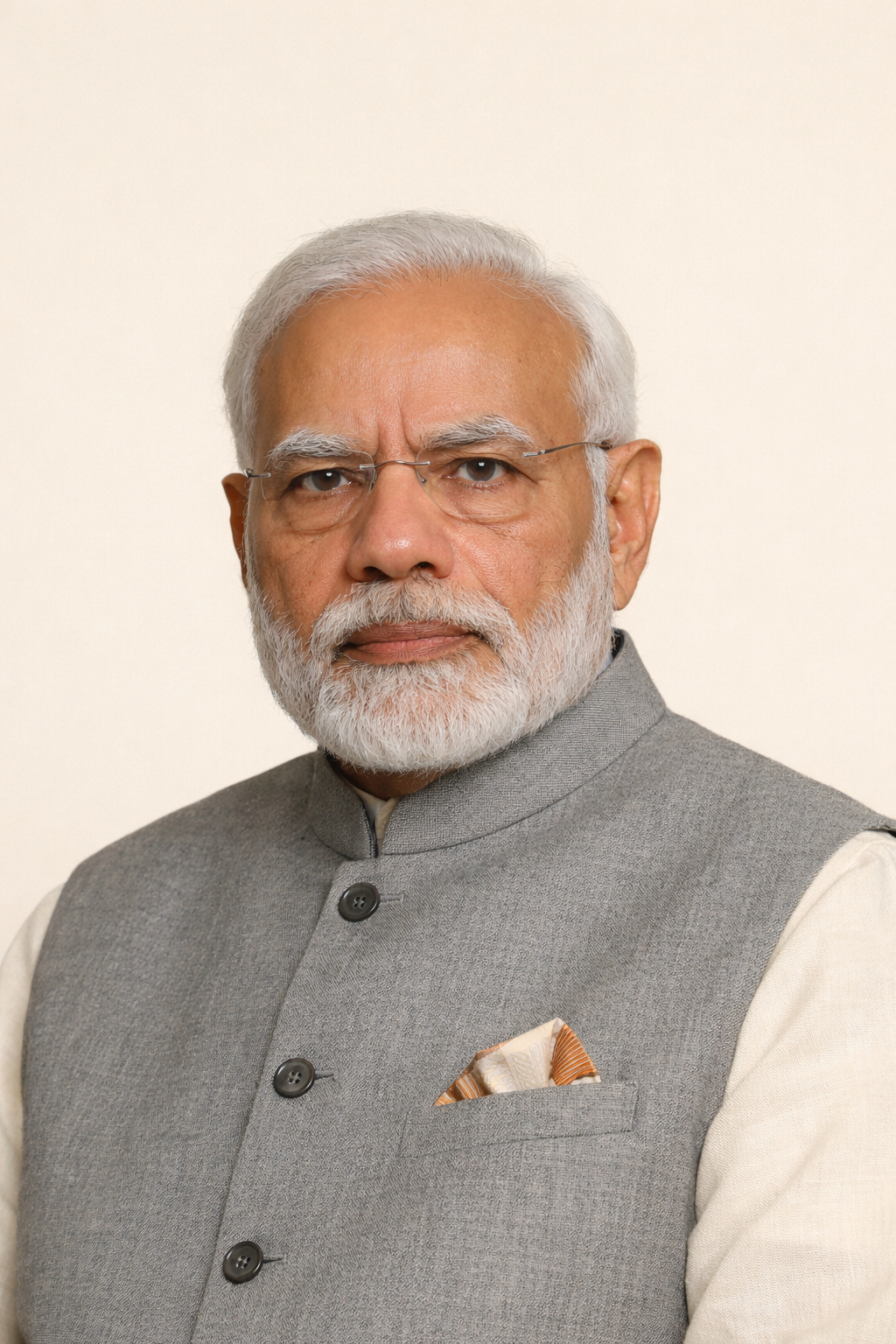
Narendra Modi
Days past 25 years in power, Modi hosted the Bloomberg New Economy Forum pitching India as a reliable partner, and Amit Shah declared his Naxalism deadline met; Congress demands his resignation over food inflation.
Narendra Modi, days past 25 unbroken years as head of government, is selling India's moment. He hosted the Bloomberg New Economy Forum, pitching India as a reliable partner in shaping the global future, backed by a nearly $1.22 trillion outlay for the power grid and energy storage; the IMF calls India the fastest-growing major economy. The milestone doubled as a lap of honors, from Odisha and Rajasthan cabinet resolutions to eight Tripura crossings renamed for his service, and Home Minister Amit Shah declared Naxalism eliminated in Bastar, the goal he set for March 2026.
Washington is the busiest front. A bilateral trade agreement has cleared its framework and is down to product-specific and tariff-level detail, a first-ever F-35 deployment is coming for joint exercises, and Secretary of State Marco Rubio is headed for Mumbai and Jamnagar. The Canada reset is nearly as fast: Modi hosted Foreign Minister Anita Anand in New Delhi and is scheduled for Ottawa and Toronto December 11-12 to finalize a trade pact with Prime Minister Mark Carney. At BRICS, he pressed Xi Jinping on a $105.93 billion trade deficit, and met army chief General Dhiraj Seth to coordinate defense ties and a possible visit by Bangladesh's prime minister.
India has moved from advocacy to mediation in the Russia-Ukraine war: Jaishankar told the Munich Security Conference's New Delhi session that India is brokering direct Moscow-Kyiv talks on Black Sea shipping safety and possible non-attack zones, a proposal Ukraine called the most comprehensive on the table.
At home, Congress demanded his resignation over 7.74 percent food inflation as the RBI raised rates for the first time in nearly four years, and Rahul Gandhi vowed justice over police treatment of students protesting the election commissioner. A cabinet reshuffle is expected before Deepavali, with at least six berths open.
On their plate
India's bilateral trade agreement with the US is at the finish line, its broad framework and big items done in the US ambassador's telling, with only product-specific and tariff-level sticking points left. The partnership is widening around it: a first-ever F-35 deployment for the Tarang Shakti exercises, India among the first ten countries invited into Paxilica, new Indian legislation opening Small Modular Reactor supply to American firms, and India hosting the Global AI Summit. Secretary of State Marco Rubio is scheduled to visit Mumbai and Jamnagar to focus on commercial partnerships.
Modi hosted Foreign Minister Anita Anand in New Delhi for talks that set a Joint Roadmap on security, energy and technology, publicly committing to a constructive, forward-looking strategic partnership. He is scheduled to visit Ottawa and Toronto on December 11-12 to finalize a Comprehensive Economic Partnership Agreement with Prime Minister Mark Carney. A C$2.6 billion Cameco uranium deal and Fairfax's $5.56 billion IDBI Bank stake have already landed, with both sides targeting doubled trade of $70 billion by 2030.
India has moved from advocacy to active mediation: External Affairs Minister Jaishankar told the 62nd Munich Security Conference in New Delhi that India is brokering direct Moscow-Kyiv conversations on Black Sea shipping safety, grain and energy exports, and possible non-attack zones. Ukraine's foreign minister called India's proposal the most comprehensive of four international initiatives. Modi has consistently urged Putin that endless war must give way to the end of war, and Putin publicly praised his neutral stance and his ideas for mutually acceptable solutions.
Congress general secretary Jairam Ramesh demanded Modi's resignation over September food inflation of 7.74 percent, onions up 108 percent, and a 23-month-high 5.54 percent retail rate, as the RBI raised its repo rate 25 basis points to 5.50 percent, the first hike in nearly four years; the government answered with GDP growth figures. Separately, Rahul Gandhi threatened the harsh hand of justice over Delhi Police's treatment of students protesting Chief Election Commissioner Gyanesh Kumar, vowing punishment from Modi, Gyanesh Kumar and Amit Shah down to even the constable. The students allege custodial torture and assaults outside Connaught Place police station during October 10 demonstrations, and the Delhi High Court is weighing a petition for an independent probe that Delhi Police are challenging.
L Murugan's resignation, the third junior minister exit this year and one inspired by Modi's recent Tamil Nadu visit, leaves at least six ministerial berths vacant, and party sources expect a reshuffle before Deepavali, the first since Modi's third term began. On exams, the Nilekani panel he appointed in July after paper leaks forced Education Minister Dharmendra Pradhan's resignation proposes scrapping printed question papers for a digital question bank with computer-based testing at roughly 150,000 centers. Nilekani says Modi is very keen to implement the suggestions.
Key relationships
Modi spoke with Trump in the past week, and the US ambassador followed with expanded cooperation announcements across defense, IT and healthcare.
Gandhi has threatened Modi with the harsh hand of justice over Delhi Police's treatment of students protesting the chief election commissioner.
Modi met Xi at the recent BRICS summit to press India's structural trade grievances face to face.
Modi keeps pressing Putin to end the war while holding a neutral line; Putin publicly praises his ideas.
Nilekani chairs the exam-reform panel Modi appointed after paper leaks forced the education minister out, and reports Modi very keen to adopt its proposals.
The Congress general secretary demanded Modi's resignation over rising food inflation.
Modi hosted Canada's foreign minister in New Delhi and committed to a constructive, forward-looking strategic partnership ahead of his December visit to finalize a trade pact.
