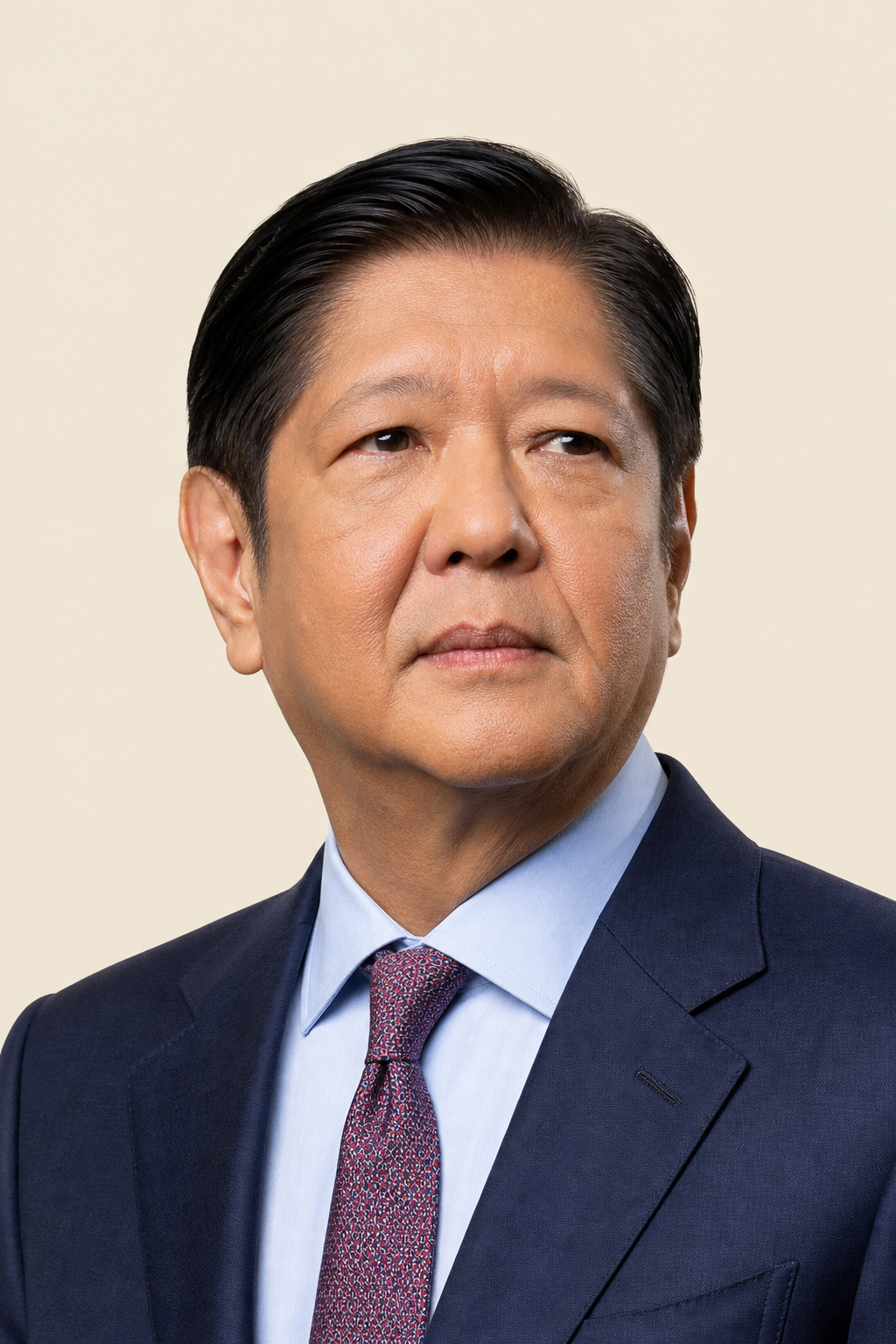
Bongbong Marcos
Closed the Philippines' ASEAN chairmanship by hosting Trump for expanded U.S. defense ties, sealing a China trade upgrade, and conceding the South China Sea code of conduct stayed unfinished.
Ferdinand Marcos Jr. closed the Philippines' year as ASEAN chair on Nov 17, handing the 2027 gavel to Singapore's Lawrence Wong after summit diplomacy built on one balancing act: lock in deeper security ties with Washington while keeping Beijing at the table.
He received Donald Trump at Malacañang Palace with a 21-gun salute and talks on military aid and security commitments, with new initiatives on intelligence-sharing, cybersecurity and military command systems expected. The centerpiece is Pax Silica, a U.S.-led plan for China-independent AI supply chains anchored at a New Clark City tech hub that Marcos says will create 190,000 jobs. It has drawn protests in Manila and Cebu over Ayta community displacement, and Senator Imee Marcos warns its legal framework could violate the Constitution.
With China he worked both tracks. He co-chaired the China-ASEAN summit with Premier Li Qiang, sealing a trade upgrade that takes effect Dec 1, and pressed for self-restraint and international law at sea. He conceded the South China Sea code of conduct stayed unfinished, roughly 85-90 percent negotiated, and pledged to keep following the 2002 declaration until all parties sign. Xi Jinping skipped the Manila gathering; a meeting may come at APEC in Shenzhen.
The harder fight is domestic. Growth slowed to 2.1 percent in the third quarter, the weakest since the pandemic, inflation sits at 7.8 percent, and the peso hit record lows before Marcos pledged foreign-exchange reserves to defend it, telling the public not to panic. He has flagged food and fuel prices as problems the country cannot solve alone, and his suspension of excise taxes on kerosene and LPG remains the main buffer. Term-limited in 2028, he is pushing alliances and a missile buildout, with final-stage talks underway with India for five more BrahMos systems.
On their plate
Marcos chaired the 49th ASEAN Summit and 21st East Asia Summit in Manila and Pasay from Nov 14-17 under the theme 'Navigating Our Future, Together,' then passed the 2027 chairmanship to Singapore's Prime Minister Lawrence Wong at the Nov 17 handover ceremony. He capped the connectivity agenda by delivering the signed Digital Economy Framework Agreement, the world's first region-wide legally binding digital economy pact covering 680 million people, to ASEAN Secretary-General Kao Kim Hourn. Ahead of the gatherings he asked Metro Manila residents for patience over rerouted traffic and roughly 300 canceled or rescheduled flights, arguing temporary inconvenience is outweighed by long-term economic gains and regional cooperation.
Marcos received Trump at Malacañang Palace with a 21-gun salute for talks on military aid and security commitments, with new defense initiatives on intelligence-sharing, cybersecurity and military command systems expected to be announced. Trump's visit also fronts Pax Silica, the U.S.-led initiative for China-independent AI supply chains centered on a tech hub in New Clark City, which Marcos claims will create 190,000 jobs. The project has drawn protests in Manila and Cebu over Ayta community displacement and resource strain, and Senator Imee Marcos warns its legal framework could violate the Philippine Constitution.
Marcos is defending Philippine maritime rights under international law, running joint patrols and hosting U.S. Coast Guard cutter deployments against Chinese Coast Guard aggression near Scarborough Shoal, where Filipino vessels faced water cannons and military-grade lasers; Manila summoned China's ambassador in October over a thinly veiled threat of force. He pressed for self-restraint and international law at the China-ASEAN Summit he co-chaired with Premier Li Qiang, but conceded the South China Sea Code of Conduct stayed unfinished during his chairmanship, with negotiations 85-90 percent complete and stuck on geographic scope and binding force. His Foreign Ministry has since ordered officials to leave diplomatic direction to the president alone after Beijing complained of anti-China rhetoric, and Xi Jinping, who declined his ASEAN invitation, may meet him at APEC in Shenzhen.
The economy grew 2.1 percent in the third quarter, the slowest since the pandemic and a fifth straight quarter of deceleration, with inflation at 7.8 percent and public construction shrinking as flood-control investigations delay spending. After the peso hit record lows of 64.17-64.18 to the dollar in late October, Marcos convened central bank and government officials, pledged to deploy foreign-exchange reserves to defend the currency and urged the public not to panic, blaming a stronger dollar and Middle East fuel prices. The Makati Business Club is pressing him to accelerate infrastructure and strengthen governance, and his executive order suspending excise taxes on kerosene and LPG remains the government's main mitigation for imported fuel costs.
Marcos has pivoted Philippine foreign policy toward the U.S. and its allies, holding joint military drills and deploying anti-ship missile systems as tensions with China escalate. In Manila he sat down with South Korea's President Lee Jae Myung, agreeing to explore expanded collaboration in cybersecurity, space, energy and the defense industry. His buildout continues with final-stage talks for five more BrahMos missile systems from India, worth an estimated 700 to 800 million dollars, aimed at deterring China in the West Philippine Sea.
Key relationships
Hosted the U.S. president at Malacañang Palace with a 21-gun salute and scheduled a one-on-one meeting before Trump flies on to Shenzhen, with new defense initiatives on intelligence-sharing, cybersecurity and command systems expected.
Xi turned down Marcos's invitation to the ASEAN gathering he hosted; the two may meet at APEC in Shenzhen as their countries trade accusations over the South China Sea.
Invited the Chinese premier to Manila despite Beijing's complaints, then co-chaired the 29th China-ASEAN Summit with him, producing the FTA 3.0 Upgrade Protocol that enters force Dec 1 and a 2027 Year of AI designation, while pressing for restraint at sea.
Held a bilateral meeting with the South Korean president in Manila, agreeing to explore expanded collaboration in cybersecurity, space, energy and the defense industry.
Passed the 2027 ASEAN chairmanship to Singapore's prime minister at the Nov 17 handover ceremony in Manila, closing the Philippines' chair year.
The senator publicly challenged his Pax Silica AI initiative, warning its legal framework could violate the Philippine Constitution.
