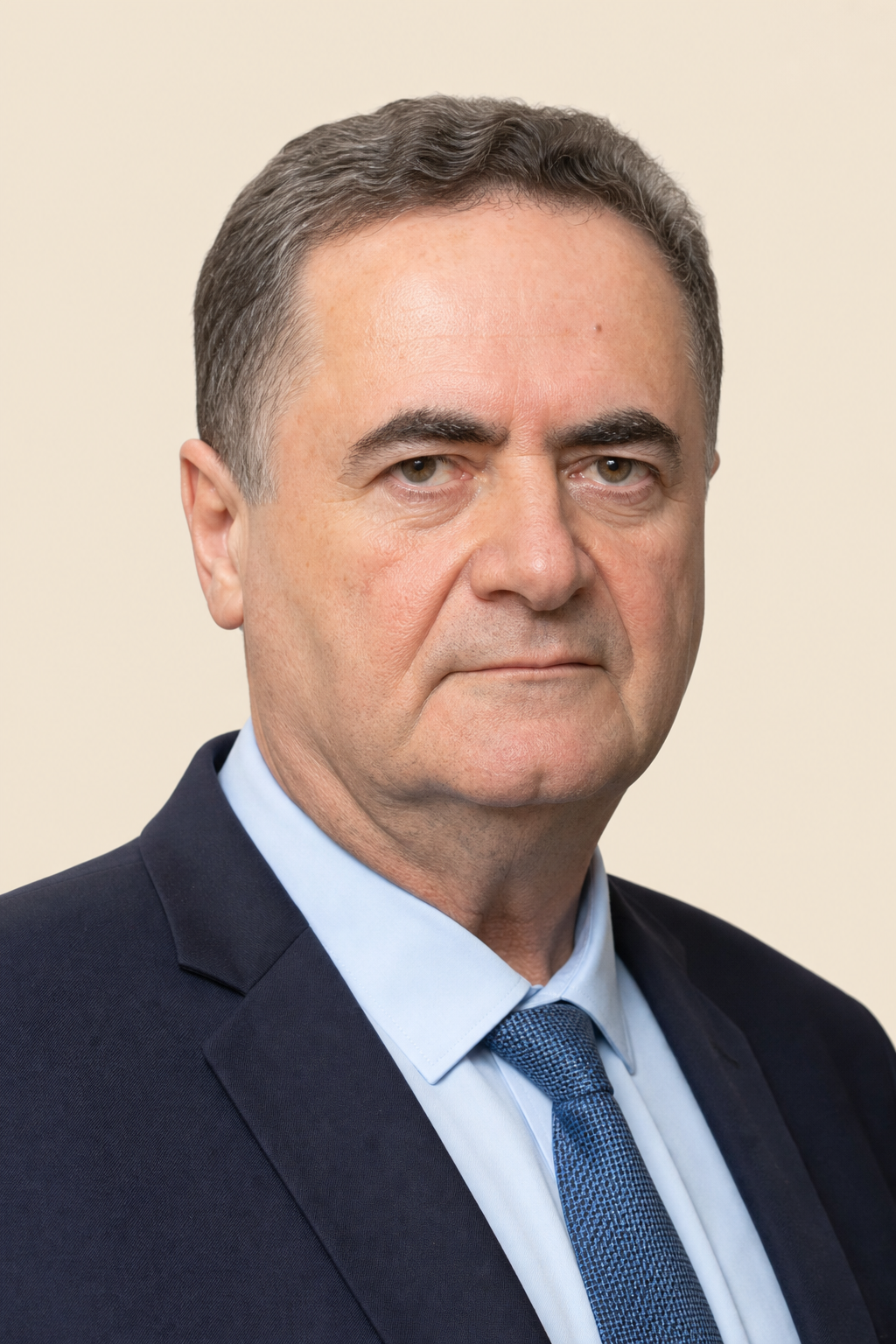
Israel Katz
Israel Katz is directing IDF operations across Lebanon, Syria, Gaza, and Iran's threatened infrastructure, vowing permanent security zones and maximum retaliation while defying U.S. ceasefire demands and clashing with American envoys, all within a two-week span.
Israel Katz is running Israel's defense portfolio on a permanent-occupation footing across four fronts, defying U.S. ceasefire pressure while escalating threats against Iran. His most recent moves came September 6, when he threatened that any further Iranian attacks would prompt Israeli strikes on all national military and civilian infrastructure to "return Iran to the Stone Age," as U.S.-Iran hostilities intensified and Brent crude climbed. Days earlier, after U.S. strikes on Iran and Tehran's effective closure of the Strait of Hormuz, Katz warned Israel would "cripple" Iran's military and energy facilities if Tehran launched attacks, coordinating the high-alert posture with Netanyahu while the IAF prepared to strike.
On Lebanon, Katz oversaw the IDF seizure of the Ali al-Taher ridge in southern Lebanon, clearing a Hezbollah underground nerve center, and vowed no withdrawal until Hezbollah is disarmed throughout Lebanon. He ordered the IDF to prepare for a long-term presence with nine bases in a 10km-deep zone covering roughly 5% of Lebanese territory, refusing to pull back even if the U.S. demands it. He escalated demolition of Hezbollah's fortified Shiite-village infrastructure, saying some southernmost villages will "disappear."
On Gaza, Katz backed Netanyahu's rejection of the U.S.-backed ceasefire and the order to expand IDF control from 60% to 70%. He asserted the government is prepared to remove Palestinians via sea or air and that migration is the only real solution, drawing joint condemnation from eight nations. He ordered evacuations of any Gaza neighborhood launching kites or balloons, treating them as drones, directly defying Trump's call for Israel to stop striking in Gaza.
On Syria, Katz visited IDF troops and warned Syria's presidency that Israel will hold Mount Hermon and the security zone indefinitely against jihadist threats, rejecting Damascus's push for a return to the 1974 disengagement agreement. He publicly clashed with U.S. envoy Tom Barrack over Golan Heights remarks until Barrack retracted, and clashed with IDF chief Eyal Zamir over a senior appointment. A UN human rights report accused Israel of ethnic cleansing in the West Bank, citing Katz's February 2025 order to occupy refugee camps, which the government rejected as "misinformation."
On their plate
Katz threatened that any Iranian attack would trigger Israeli strikes on all military and civilian infrastructure including energy, to "return Iran to the Stone Age." He is coordinating the high-alert posture with Netanyahu while the IAF prepares to strike Tehran, vowing Israel can act independently of the U.S.
Katz oversaw the IDF seizure of the Ali al-Taher ridge, clearing a Hezbollah underground nerve center, and ordered preparations for a long-term presence with nine bases in a 10km-deep zone. He vowed no withdrawal until Hezbollah is disarmed throughout Lebanon, even if the U.S. demands it, and escalated demolition of fortified village infrastructure.
Katz backed Netanyahu's rejection of the U.S.-backed ceasefire and ordered IDF control expanded from 60% to 70%. He stated the government is prepared to remove Palestinians via sea or air and that migration is the only real solution, drawing condemnation from eight nations. He ordered evacuations of neighborhoods launching kites or balloons, defying Trump's call to stop striking.
Katz visited IDF troops in southern Syria and warned Syria's presidency that Israel will hold Mount Hermon and the security zone indefinitely against jihadist threats. He rejected Syria's push for a return to the 1974 disengagement agreement and defended the strike on Abu Duhur airbase as blocking Turkish entrenchment.
Katz approved Maj. Gen. Dado Bar Kalifa to lead IDF Central Command in 2027, replacing Avi Bluth, whom he criticized as too harsh on Jewish extremist settlers, sparking a clash with IDF chief Eyal Zamir over timing. He publicly contradicted U.S. envoy Tom Barrack over Golan Heights remarks until Barrack retracted.
Key relationships
Katz and Netanyahu jointly ordered Gaza strikes, evacuations, and the rejection of the U.S.-backed ceasefire; they are coordinating the high-alert posture against Iran.
Katz clashed with IDF chief Zamir over the timing of the Bar Kalifa appointment announcement.
Katz directly defied Trump's Gaza peace plan and call for Israel to stop striking, ordering evacuations of Gaza neighborhoods launching kites or balloons while Trump asserted Israel should not be striking and that Hamas had agreed to lay down weapons.
Katz publicly called Barrack's podcast remarks on the Golan Heights "full of inaccuracies" and contradicted Trump policy; Barrack retracted. Katz also rejected Barrack's claim that the Abu al-Duhur strike was Netanyahu baiting Turkey.
