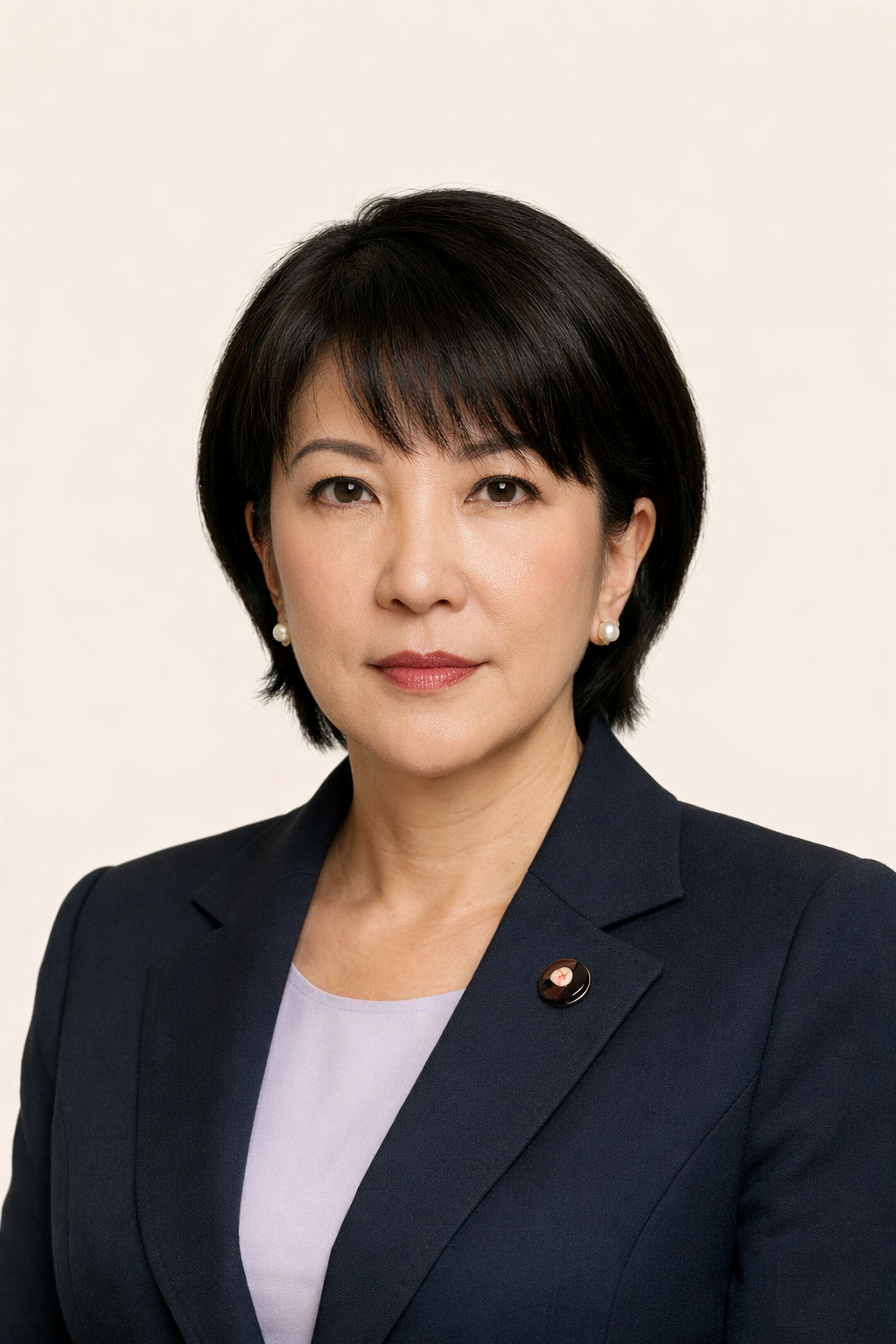
Sanae Takaichi
Declared the reflationary era over in parliament, rebooted a DOGE-style fund review and capped new debt as yields hit multi-decade highs; Beijing brands her security agenda neo-militarism.
Sanae Takaichi has taken reflation off the table and is asking bond markets to believe her. She told parliament Japan no longer needs monetary easing and fiscal expansion, calling fiscal sustainability the prerequisite of her "responsible and proactive" policy, and rebooted a DOGE-style review of 201 special-purpose funds holding about ¥7 trillion. New debt is capped at ¥40 trillion against record spending requests, and fund managers are unwinding the "Takaichi trade" of buying stocks and selling bonds as U.S. pressure for fiscal restraint constrains her agenda.
Beijing is attacking her by name: her warning that Japan could militarily intervene if China invaded Taiwan has firms exiting China at a historic rate, amid Beijing's mineral curbs and detained executives. She calls China an "important neighbour" and demands "responsible behaviour" while pressing maritime claims, and Foreign Minister Wang Yi says a Japan that glorifies war criminals has no future to speak of.
After a 20-year-old U.S. Marine was arrested for the strangling murder of an Okinawan woman, she condemned it as extremely brutal and serious and lodged a strong protest with Washington. The fallout strains the alliance as she revises three security documents by year-end, weighs a 3.5 percent defense target, and uses two Trump summits to keep American focus on Asia. She called Putin's visit to the Northern Territories "absolutely unacceptable" but imposed no new penalties, citing Russian gas, and reaffirmed Japan's backing for the ICC after Russia sought its Japanese president's extradition; she defended skipping a short-notice G7 call by noting substitutes attended and others were absent too.
Rapidus signed 17 design partners ahead of 2-nanometre production, Saudi Arabia and the UAE joined her oil-stockpiling framework, and her India visit deepened technology and critical-minerals ties. The $2.3 trillion plan's cost breakdown and her population-decline strategy are due by year-end.
On their plate
One year into her term, she told parliament Japan no longer needs monetary easing and fiscal expansion, calling fiscal sustainability the prerequisite of her "responsible and proactive" policy as the 30-year bond yield hit a record 4.235 percent. The pivot runs through Finance Minister Satsuki Katayama, whom she directs to tell overseas observers she is no reflationist, and a rebooted DOGE-style review of 201 special-purpose funds holding about ¥7 trillion, with new debt capped at ¥40 trillion against record ¥143 trillion in spending requests and a food consumption-tax cut from April 2027. Fund managers are unwinding the "Takaichi trade" of buying stocks and selling bonds as U.S. pressure for fiscal restraint constrains her agenda, with Katayama also working to dispel Treasury Secretary Scott Bessent's "reflationist" label, and she remains cautious on further Bank of Japan hikes with the policy rate at a 31-year-high 1.25 percent.
Her warning that Japan could militarily intervene if China invaded Taiwan triggered Beijing's mineral export curbs and the detention of Japanese executives, and Japanese firms are exiting China at a historic rate: 4,137 full withdrawals in two years, leaving 10,118 operating firms, the lowest count since 2010. In her October 5 policy speech she called China an "important neighbour", pledged a constructive and stable relationship, asserted Japan will firmly press its claims in the East and South China Seas and demanded "responsible behaviour". Beijing's defense and foreign ministries brand her security agenda, from removing the enemy state clause in the UN Charter to revising three security documents by year-end, as neo-militarism and nuclear provocation, with Foreign Minister Wang Yi warning that a Japan which glorifies war criminals cannot face the world.
She is revising three national security documents by year-end, weighing a midterm defense target of 3.5 percent of GDP and spreading the buildup over 10 to 15 years to avoid unsettling financial markets, while negotiating host-nation support for U.S. forces on a nearly ¥9 trillion budget request. After a 20-year-old U.S. Marine was arrested for the strangling murder of an Okinawan woman, she condemned it as extremely brutal and serious and lodged a strong protest with Washington, with the fallout straining the alliance and threatening the Futenma relocation to Henoko. She has secured two summit-level talks with Donald Trump to keep American focus on Asia, even as Trump presses Japan for increased defense spending and investment, and she defended her absence from a last-minute G7 online meeting by noting substitutes attended and other leaders were also absent.
She condemned Vladimir Putin's surprise visit to the disputed Northern Territories, his first in a quarter-century of rule, as "absolutely unacceptable", but refrained from new penalties because Japan relies on Russian liquefied natural gas, even as Moscow expands military exercises nearby. After Russia requested the extradition of ICC President Tomoko Akane and eight court officials, she reaffirmed Japan's support for the court in parliament, while her government called the request unjust and pledged further protests; Tokyo also protested a Chinese provincial delegation's visit to Russian-held Iturup. At the UN General Assembly she demanded the Security Council be transformed "without delay" to reflect current realities, pressing Japan's permanent-seat bid, which drew Foreign Minister Sergey Lavrov's rejection of seats for countries on "the path to militarism and revanchism".
Rapidus, the $15 billion state-backed chip venture central to her plan to rebuild Japan's semiconductor industry, signed 17 design partners including Synopsys and Infosys ahead of 2-nanometre contract production starting in the second half of next fiscal year, and her government is drafting the first five-year cost breakdown of its 14-year, $2.3 trillion investment initiative. Saudi Arabia and the UAE joined her 11-partner Asian oil-stockpiling framework, which she backed with $10 billion in April after the U.S.-Iran war closed the Strait of Hormuz, though Taiyo Oil chief Takahiro Yamamoto argues that relying on the Middle East for over 90 percent of supply remains the most cost-effective peacetime strategy. Her India visit deepened technology, energy and critical-minerals supply-chain commitments as Japanese firms retreat from China, and she personally congratulated Narendra Modi on 25 years of continuous government leadership.
Key relationships
Her finance minister and the executor of the fiscal pivot: Takaichi kept her through the September cabinet reshuffle, personally directs her to tell overseas observers the prime minister is no reflationist, and publicly backed her appointment as the first Japanese chair of the IMF-World Bank Development Committee.
She condemned his surprise visit to the disputed Northern Territories, his first in a quarter-century of rule, as "absolutely unacceptable", but held back new penalties because Japan relies on Russian liquefied natural gas, even as he pressures Tokyo with expanded military exercises nearby.
Two summit-level talks anchor her push to keep American focus on Asia and prevent China from dictating regional policy; both leaders reaffirmed concern over the yen's undervaluation, but Trump presses Japan for increased defense spending and investment, and her agenda is driven by worry he might concede to China on Taiwan for economic gains ahead of the U.S. midterms.
China's foreign minister directly attacked her course, warning that if Japan refuses to learn from historical lessons, challenges the post-war pacifist Constitution, denies its history of aggression or glorifies war criminals, it cannot face the world.
