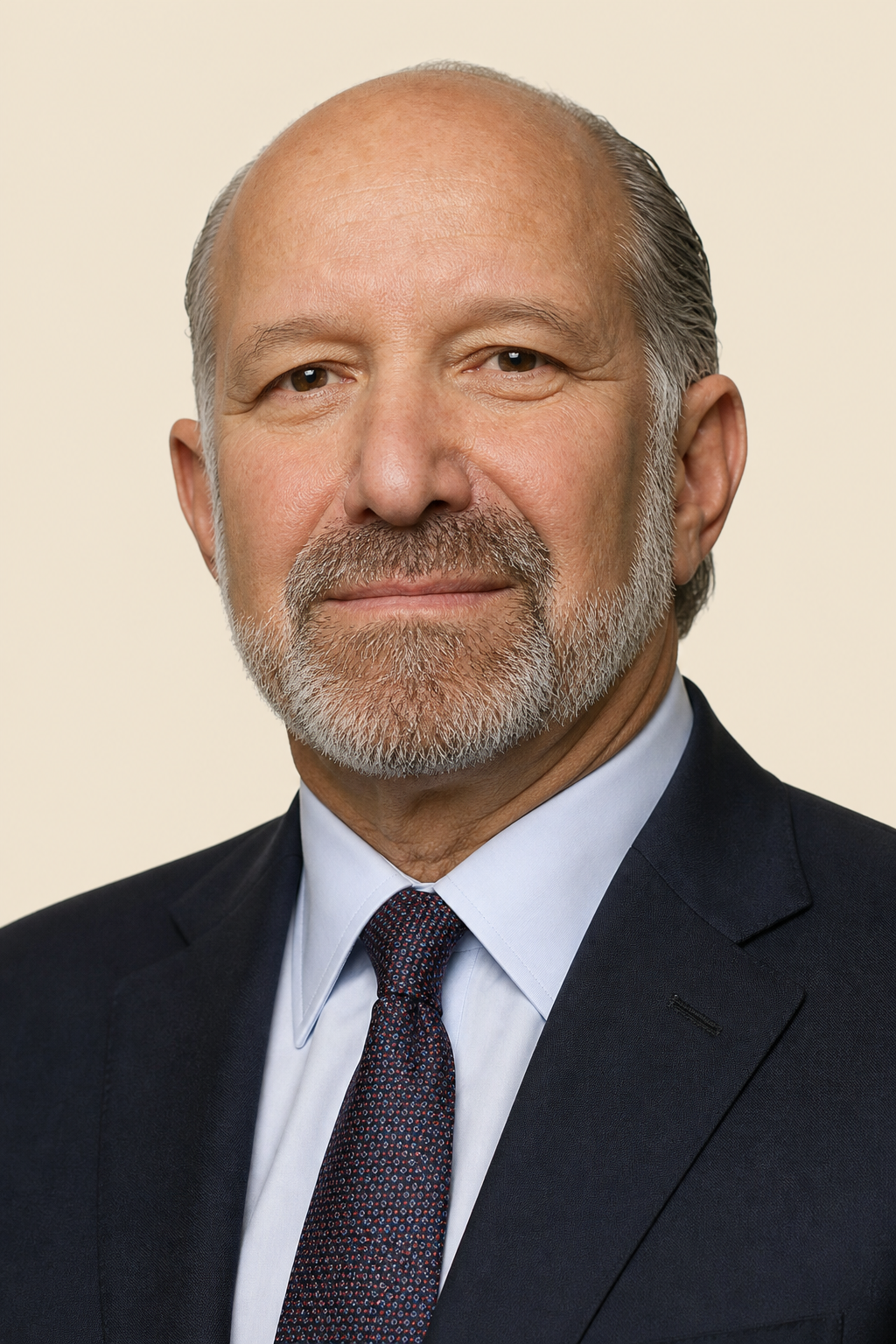
Howard Lutnick
He announced targeted semiconductor tariffs at the G20 ministerial he hosted and finalized steep solar duties on India, Indonesia and Laos, part of his push to force production onto U.S. soil.
Howard Lutnick is running Commerce's tariff wall, betting access to the U.S. market can force factory construction at home. At the G20 innovation ministerial he hosted in Chapel Hill, he announced targeted semiconductor tariffs: build U.S. facilities and pay nothing, or "expect to pay to enter the greatest market in the world." He is aiming the same leverage at Samsung and SK Hynix to build U.S. memory-chip plants.
Canada is his sharpest fight. He accused Canadian negotiators of sabotaging a nearly finalized interim trade deal, saying Canada treated President Trump "disrespectfully" and will change its tune after mid-October elections. The collapse left U.S. tariffs on $20 billion of Canadian imports, with Trump threatening a further 50% vehicle tariff from January 1. Prime Minister Mark Carney retorted that "appointed, unelected cabinet members in the United States are experts on Canadian politics."
On September 12 he finalized steep anti-dumping duties on solar cells and panels from India, Indonesia and Laos, building on earlier tariffs on Cambodia, Malaysia, Thailand and Vietnam, with final orders due in November.
He confirmed Japan faces no additional tariffs beyond its $550 billion investment pact at his Washington meeting with Trade Minister Ryosei Akazawa, alongside USTR Jamieson Greer, and separately met Mexican Economy Minister Marcelo Ebrard on the Chapel Hill G20 sidelines to negotiate auto and steel tariff cuts ahead of the USMCA review.
He declared trust restored in Anthropic after months of conflict, negotiating the reconciliation directly with co-founder Tom Brown: "They've done what we asked."
Scrutiny is mounting: his ethics filing shows at least $250 million in income last year and about 40 companies still under his leadership, the Pentagon has assigned him to review its Cerberus-linked transactions, and a shareholder lawsuit over Chips Act equity stakes targets him personally.
On their plate
At the G20 Innovation Ministerial he hosted in Chapel Hill, Lutnick announced targeted semiconductor tariffs: companies that build U.S. facilities pay nothing, and those that don't should "expect to pay to enter the greatest market in the world," with the policy possibly extending to finished products containing chips like AI servers and laptops. He is pressuring Samsung and SK Hynix with tariff threats to build more memory-chip factories in the U.S., a push that could derail their three domestic megaprojects in Yongin and Honam. South Korean Industry Minister Kim Jung-kwan insists Korea will not be disadvantaged versus competitors, while four U.S. companies are committing $2 billion to Korean projects under a reciprocal-investment framework and the U.S. has already reached a similar investment-linked tariff deal with TSMC.
Lutnick publicly accused Canadian negotiators of sabotaging a nearly finalized interim trade deal for domestic political gain, saying Canada treated President Trump "disrespectfully" and will change its tune after mid-October once its elections are behind them. The talks collapsed on August 21, triggering U.S. tariffs on $20 billion of Canadian imports, Canadian dollar-for-dollar retaliation, and Trump's threatened 50% tariff on Canadian motor vehicles and auto parts starting January 1. Prime Minister Mark Carney retorted that "appointed, unelected cabinet members in the United States are experts on Canadian politics," while saying Canada is "ready to sit down and strike that deal when the Americans are ready."
Lutnick announced the administration has restored trust in Anthropic, declaring: "They've done what we asked. They're back on the right side. So the answer is: Yes... We trust Anthropic." The turn followed months of conflict that included Commerce Department export controls on its Fable 5 and Mythos 5 models in June, and an August court ruling overturning the Pentagon's supply-chain-risk blacklisting that had blocked its military contracts. He negotiated the reconciliation directly with co-founder Tom Brown, alongside National Cyber Director Sean Cairncross; Brown joined him at a G20 tech event in North Carolina, praising Trump's view of data centers as prosperity sources and urging data center construction permits.
On September 12 Lutnick finalized steep anti-dumping and countervailing duties on solar cells and panels from India, Indonesia and Laos, saying the measures aim to stop Chinese dumping and push production to the U.S., with final duty orders expected in November pending an ITC injury determination by October 14. The duties build on his earlier tariffs on Cambodia, Malaysia, Thailand and Vietnam, aimed at stopping Chinese producers from circumventing trade laws. The wall is drawing domestic pushback: the Orthodox Union warned him that proposed tariffs on vegetable-based fatty acids from Indonesia and Malaysia would disrupt the kosher food supply chain and raise costs for staples like margarine and mayonnaise, and at a Senate committee hearing he agreed to consider Airbus's production needs after Senator Katie Britt raised concerns about tariffs hitting Alabama manufacturers, though USTR currently has no exemption process.
His annual ethics filing discloses at least $250 million in income last year, mostly from his prior Cantor Fitzgerald ownership including a $190 million distribution, and shows he still heads about 40 companies after stepping down from hundreds of leadership roles. The Pentagon formally assigned him to review and approve all Defense Department transactions with Cerberus-affiliated companies, an oversight arrangement meant to exceed standard ethics policy and address conflict-of-interest concerns around Deputy Defense Secretary Steve Feinberg, even as Cantor Fitzgerald keeps a prime-broker role for Cerberus funds. He is defending the government's equity stakes in companies including Intel, MP Materials and Trilogy Metals against a shareholder lawsuit that targets Intel, the Commerce Department and him personally, calling the Chips Act equity demands "extortionary."
Key relationships
Serves Trump as Commerce Secretary and publicly defended Trump's push to rename the Kennedy Center after U.S. District Judge Christopher Cooper ruled the renaming requires an act of Congress, backing the Justice Department's warnings that the venue might need demolition if the renaming plan is blocked.
Britt raised concerns at a Senate committee hearing about tariffs hitting Alabama manufacturers and lobbied for exemptions; Lutnick agreed to consider Airbus's production needs, though USTR currently has no exemption process.
Lutnick accused Canadian negotiators of sabotaging a nearly finalized interim trade deal and treating Trump "disrespectfully"; Carney retorted that "appointed, unelected cabinet members in the United States are experts on Canadian politics," while saying Canada is "ready to sit down and strike that deal when the Americans are ready."
Runs trade negotiations jointly with Greer; the two met Japan's Trade Minister Ryosei Akazawa in Washington to confirm no additional tariffs on Japan beyond the $550 billion investment pact.
Met the Japanese trade minister in Washington alongside USTR Jamieson Greer, confirming Japan faces no additional tariffs beyond the existing $550 billion investment pact, with a third tranche of projects now aimed at semiconductors and AI.
Met the Mexican economy minister on the sidelines of the G20 innovation gathering in Chapel Hill to negotiate reductions in U.S. auto and steel tariffs, which Mexico contends are unjustified and contrary to North America's integrated manufacturing supply chains, as both nations pursue the USMCA review.
Lutnick negotiated Anthropic's reconciliation directly with Brown, alongside National Cyber Director Sean Cairncross, then declared the administration trusts the company; Brown joined him at a G20 tech event in North Carolina, praising Trump's view of data centers as prosperity sources and urging data center construction permits.
Co-negotiated the Anthropic reconciliation with Lutnick in direct talks with company co-founder Tom Brown.
