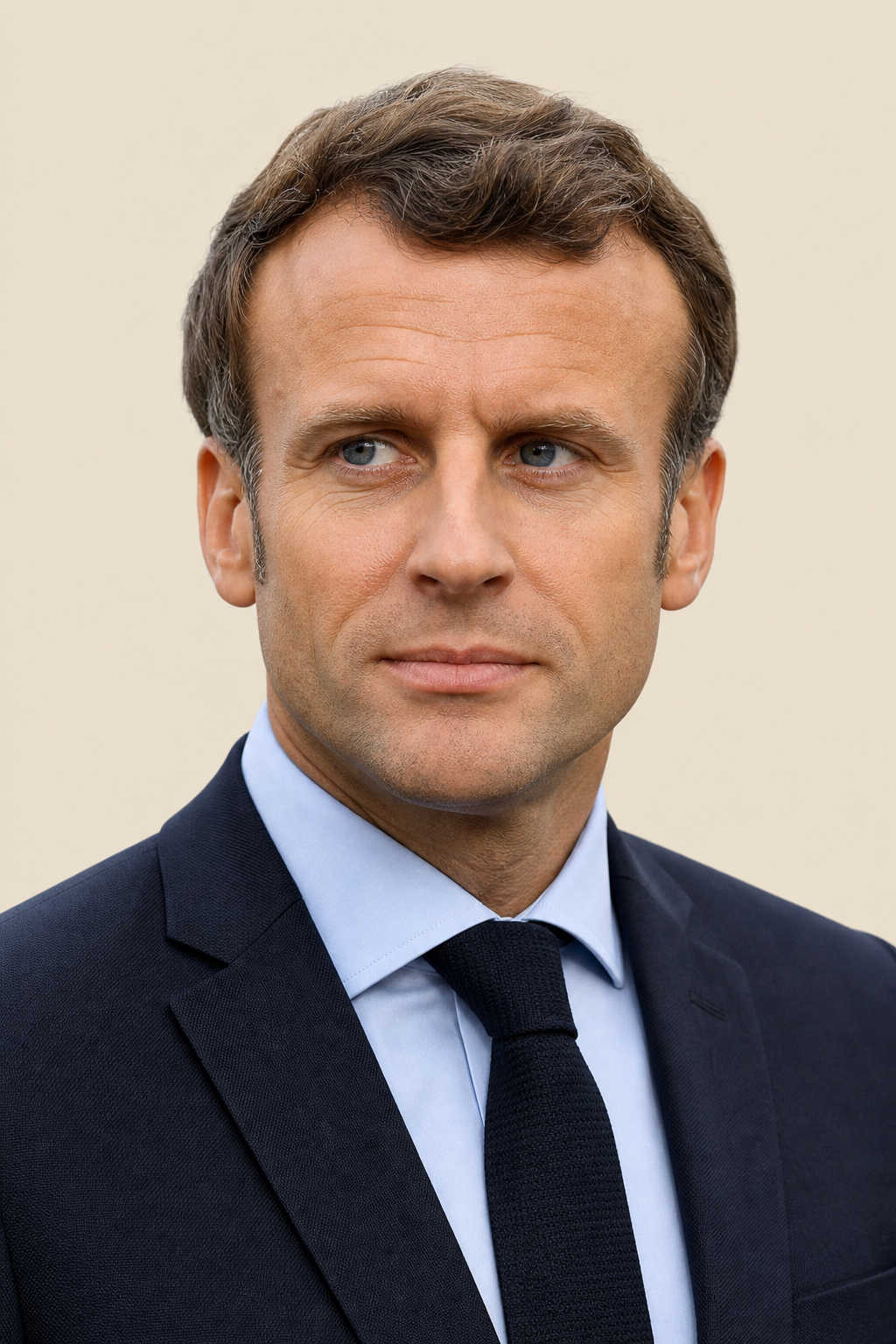
Emmanuel Macron
With France's debt at 119 percent of GDP and his approval at a historic 18, Macron is announcing a Russian tanker seizure, authorizing an M51.3 missile test, and demanding government answers to student protests.
Emmanuel Macron is steering France through the final stretch of his presidency with a bond-market emergency at home and hard-power moves abroad. French sailors boarded the Russian shadow-fleet tanker DF Peak on October 12, about 450 nautical miles south of Réunion Island, on suspicion it was sailing under a false flag, and Macron announced the seizure, vowing to fight the shadow fleet "everywhere in the world." The Russian embassy in Paris called the operation piracy. Days earlier he authorized an M51.3 strategic ballistic missile test off Finistere and called it a "loud and clear message," drawing Kremlin spokesman Dmitry Peskov's warning that Europe is "obsessed with militarization."
His standing at home is the weakest of his tenure. Approval has sunk to a historic low of 18 percent, while Marine Le Pen leads first-round polling for the April 2027 election at 35 to 36 percent. Ten-year yields spiked in early October after a poorly received budget plan, widening the spread over German debt to 1.55 percentage points. Public debt has reached 119 percent of GDP, business investment has fallen two quarters running, and analysts trace the gridlock to his mid-2024 snap election, which left successive governments unable to pass budgets. He has appointed several prime ministers to steady the finances, and analysts say any ECB bailout would demand a credible adjustment program.
He is also managing three weeks of student protests, which he says political forces are exploiting, though he calls the students' grievances legitimate, and he has ordered his government to answer with concrete measures within weeks. In Brussels, he and Chancellor Friedrich Merz are pressing the European Commission for a new trade-diversification instrument despite China's warning that "protectionism cannot enhance competitiveness," and he is urging the EU to remove government-deemed false content more forcefully, a drive Commission vice president Margrethe Vestager backs.
On their plate
Macron says political forces are exploiting three weeks of nationwide student protests ahead of the April 2027 election, while calling the students' own grievances legitimate. He has ordered his government to produce concrete responses to the unrest within weeks. The protests have turned violent on both sides: a 15-year-old lost a hand in Lens, a 16-year-old was blinded in Tours, 36 internal investigations into police violence are open, and nearly 900 officers have been injured.
Public debt has reached 119 percent of GDP, business investment fell 0.3 percent in the second quarter after a 0.8 percent first-quarter drop, and ten-year yields spiked in early October to a 1.55 percentage point spread over German bunds after a poorly received budget plan and Le Pen's widening poll lead. Analysts trace the gridlock to Macron's mid-2024 snap election, which left successive governments unable to pass budgets; he has appointed several prime ministers to stabilize the finances, and any ECB bailout would require a credible macro adjustment program. His approval sits at a historic low of 18 percent, with 75 percent of voters calling government aid for long-distance drivers insufficient amid the fuel crisis, while Le Pen leads April 2027 first-round polling at 35 to 36 percent.
Macron announced the French Navy's October 12 interception and boarding of the DF Peak, a Russian shadow-fleet tanker suspected of sailing under a false flag about 450 nautical miles south of Réunion Island, the latest seizure after the Tagor and Deliver, and vowed France is determined to fight the shadow fleet everywhere in the world; the Russian embassy in Paris called the seizure piracy. Days earlier he authorized an M51.3 strategic ballistic missile test off Finistere and called it a loud and clear message, drawing Kremlin spokesman Dmitry Peskov's warning that Europe is obsessed with militarization.
Macron and German Chancellor Friedrich Merz co-signed a letter to Commission President Ursula von der Leyen urging a new EU trade-diversification instrument and strengthened trade defenses, drawing a direct warning from China's commerce ministry that protectionism cannot enhance competitiveness and decoupling supply chains will backfire. He separately supports EU tariffs on Chinese electric vehicles to counter state subsidies, even as recent Beijing trade talks produced an understanding to explore lower tariffs on certain products and Chinese brands doubled their presence at the Paris Motor Show.
Macron is pressing the EU to censor government-deemed false content more extensively and more forcefully, defending the Digital Services Act and attacking the American free-speech model as the opposite of free speech. Commission Executive Vice President Margrethe Vestager has publicly backed his push.
Key relationships
Macron's trade demands land on the Commission president's desk: with Merz, he has urged her to build a new EU trade-diversification instrument and strengthen trade defenses.
The German chancellor is Macron's partner in the push for harder EU trade defenses; the two co-signed a letter to Commission President Ursula von der Leyen urging a new trade-diversification instrument and strengthened trade defense measures.
The Kremlin spokesman answered Macron's authorized M51.3 missile test by warning that Europe is obsessed with militarization and that Russia is taking necessary security measures; Macron called the test a loud and clear message.
The Commission executive vice president has publicly backed Macron's push for the EU to remove government-deemed false content more extensively and more forcefully.
